As an Amazon Associate I earn from qualifying purchases. Purchases through these links may earn me a commission at no extra cost to you.
A wool beret should rest on the head, not perch on the crown or press a flat line into the forehead. Start with a crown deep enough to hold a little air above the hair, a soft inner band that stays secure without headache pressure, and a diameter that leaves the face visible rather than swallowing it. For chestnut waves, set the beret slightly back from the hairline and choose chocolate, tobacco, deep olive, or warm charcoal before icy grey. Try it with the coat you actually wear: the right beret balances a long lapel and keeps its shape when you step indoors.
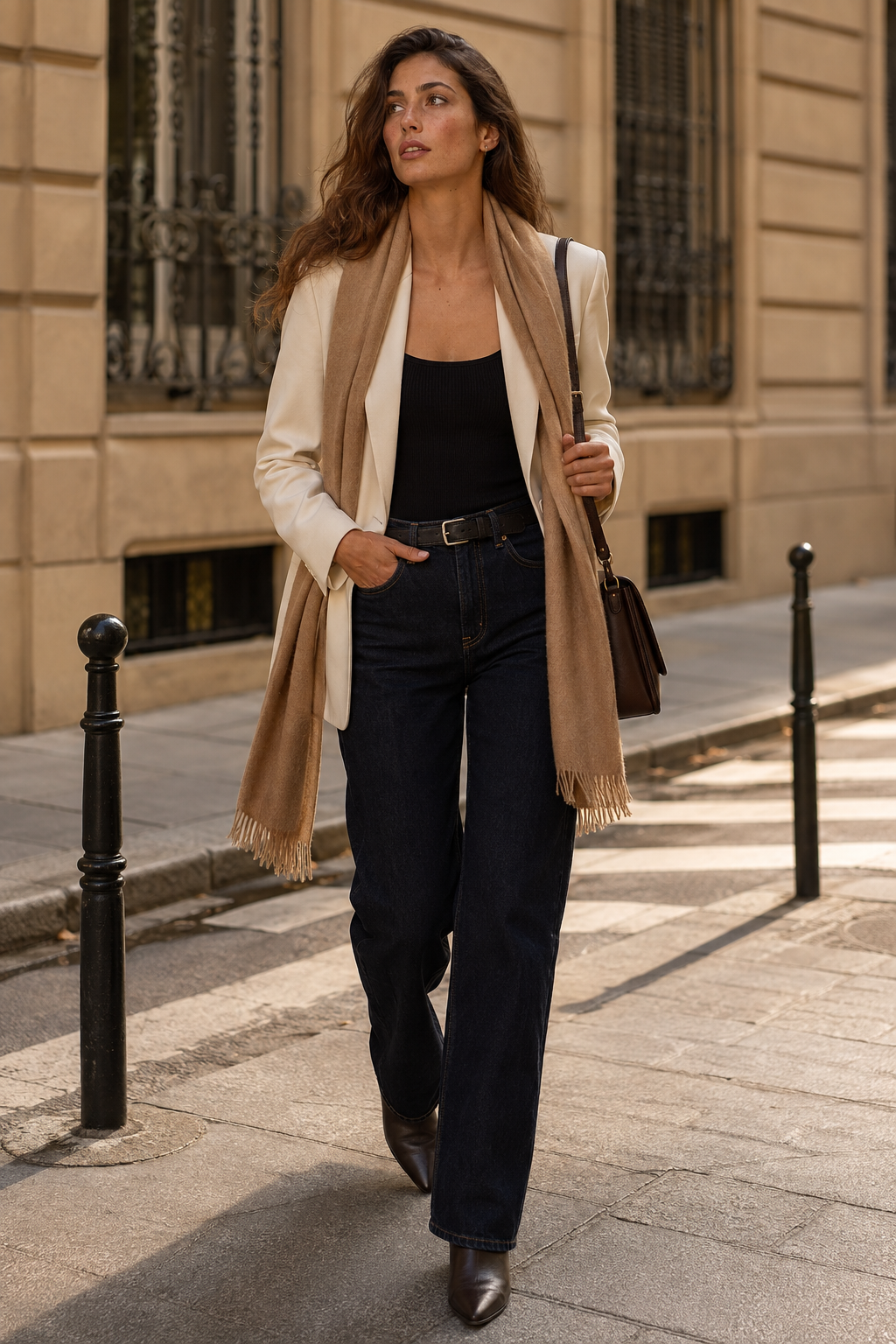
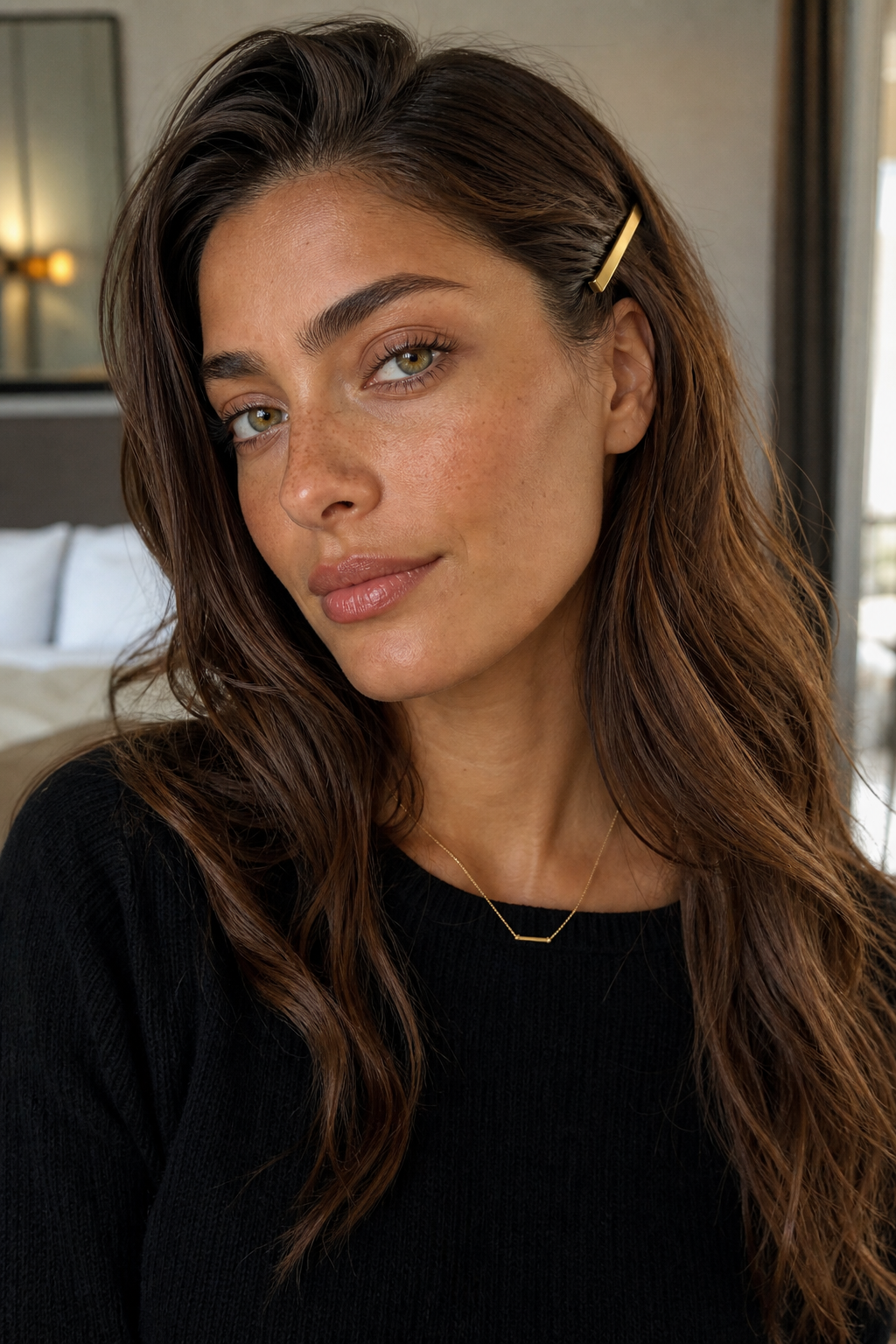
Lila Voss is a Brazilian-Italian fashion model and style editor, and she treats a hat as part of the outfit’s architecture, not a last-minute weather fix. Against warm olive skin and hazel-green eyes, a warm wool tone can make chestnut waves look fuller and tailoring look softer. The useful version survives a taxi, a windy street, a café table, and a dinner reservation without demanding a perfect mirror or an elaborate hairstyle. That is quiet luxury in a real closet: good fabric, a considered proportion, and repeat wear.
The shopping cards below open Amazon searches for the named hat styles rather than fixed offers. Confirm the exact fiber blend, crown diameter, size range, lining, seller, delivery total, care directions, and return terms on the listing you select. Editorial images show Lila’s styling context, not the exact marketplace products.
Choose crown depth before color
Crown depth decides whether a beret looks relaxed or borrowed. A shallow crown sits high and can make the head look wider; a very deep, floppy crown can hide the face and collapse against a coat collar. Lila begins with a moderate depth that lets the wool settle gently over one side while leaving the brow and cheekbone visible. Product photos rarely show this clearly, so look for a side view, an inside measurement, and customer images before adding a hat to the cart.
If your hair is thick, curly, or worn in loose chestnut waves, leave enough interior room for the roots to stay easy. Crushing the top of the hair makes even a beautiful coat feel too controlled. Fine hair may prefer a beret with a lightly structured band and a crown that does not slide forward. The goal is a line that looks effortless on camera and remains comfortable through an ordinary day.
Use the inner band as the real fit test
A beret has no tailored shoulder seam or trouser inseam, so the inner band does most of the practical work. It should touch the head evenly without leaving a red ridge at the forehead or pushing the hat upward. Move your head, look down at your phone, and take the coat on and off. If the beret creeps toward the eyes or rides backward with every movement, the band, size, or crown balance is wrong for you.
Check whether the listing gives a circumference range, an adjustable tab, or only one-size language. Those details are not interchangeable. A little give can be useful, but elastic that is too aggressive changes the crown shape and can make the wool look puckered. Lila keeps the fit calm: secure enough for a city walk, light enough that she forgets she is wearing it by the time she reaches dinner.

Match wool weight to your actual coat and weather
A dense boiled-wool beret has more structure and can hold its outline beside a sharp trench or tailored coat. A cashmere blend feels softer and lighter, which is beautiful with a fine knit, but it may need gentler packing and a little more attention to recovery. Neither is inherently more luxurious; the useful choice is the one that matches the temperature, the coat, and the care routine you can maintain.
Read the fiber label as closely as you read a sweater label. Wool, cashmere, acrylic, nylon, and lining fibers each affect warmth, texture, and how the crown returns after being folded into a tote. Avoid buying on a vague claim alone. A fabric that looks plush in a close product image can feel thin once daylight, wind, and a long outdoor wait enter the plan.
Pick a warm color that keeps the face awake
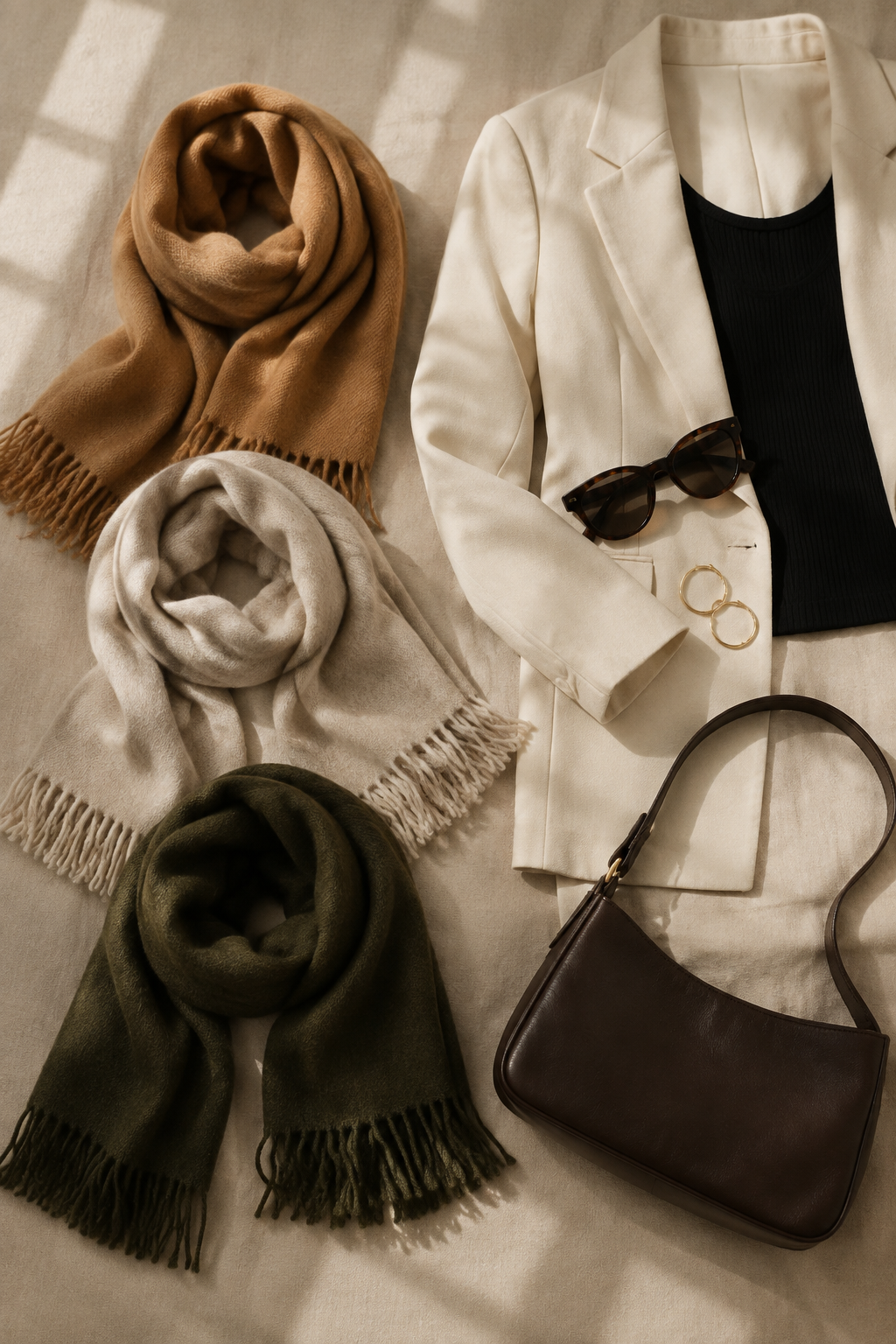
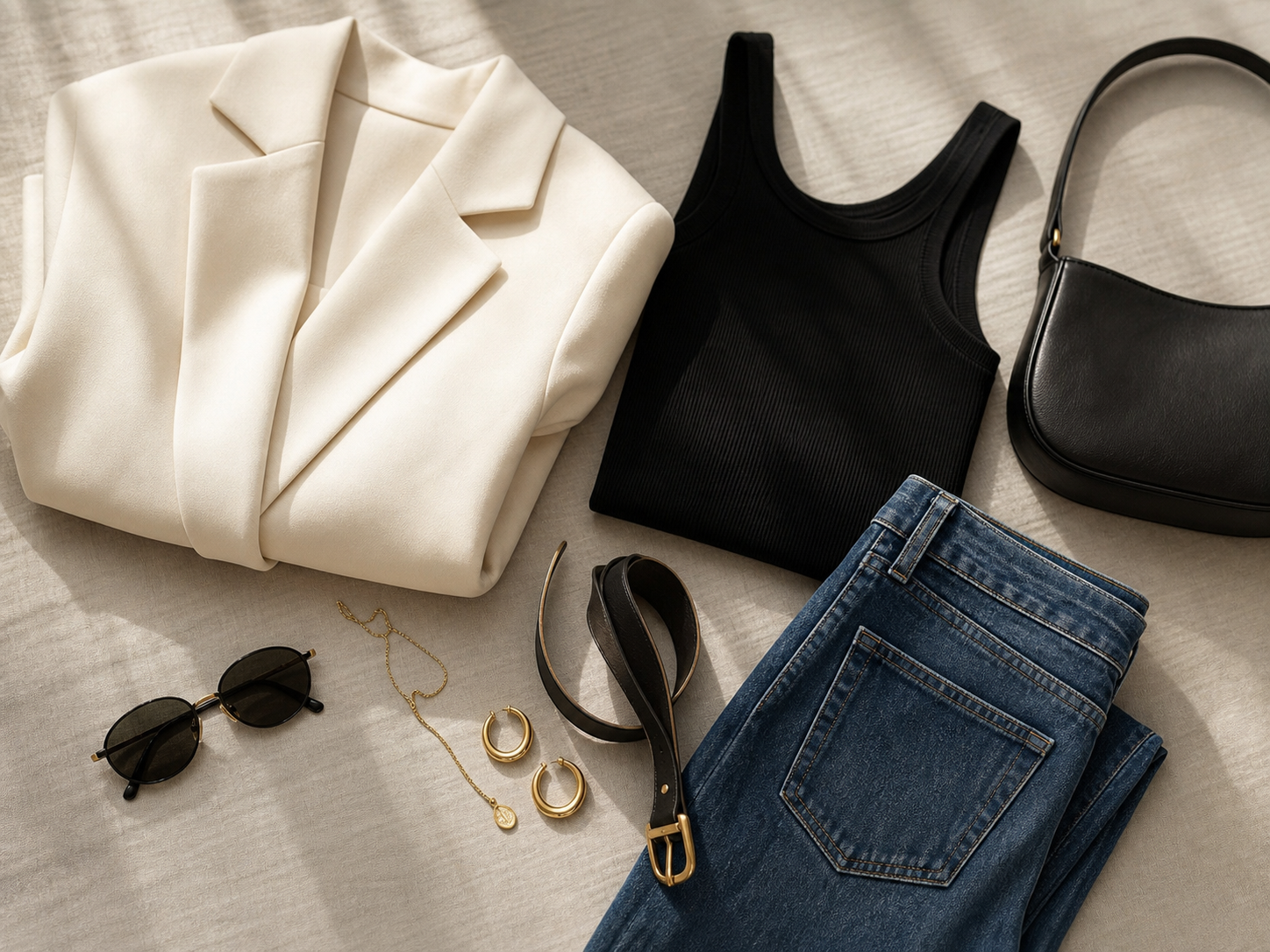
For warm olive skin, chocolate, espresso, tobacco, deep moss, oxblood, and warm charcoal are easier partners than blue-grey or stark optic white. They echo chestnut hair and keep hazel-green eyes visible without asking the makeup to do all the work. Lila likes a warm neutral beret with a cream coat, a black knit, or dark denim because it creates a soft frame around the face instead of one hard block of color.
Hold the chosen shade near your face in daylight if possible. A neutral can still be wrong when it turns too yellow, dusty, or cool against the skin. Look at the hat beside the scarf, lipstick, and coat collar you normally reach for. A hat sits higher than a bag or shoe, so its undertone matters more in photographs and in the mirror.
Keep the coat collar and hair volume in proportion
A beret works best when it is one soft curve inside an otherwise clear outerwear silhouette. With a classic trench, set it slightly to one side and leave the collar open enough to create a vertical line. With a high wool coat collar, keep the crown smaller and let some hair show at the temples. If the coat, scarf, and hat all become bulky at once, the face disappears and the outfit starts looking like weather equipment rather than fashion.
For Lila’s model-off-duty travel days, chestnut waves stay loose beneath the beret, a fine scarf sits close to the neck, and the bag remains structured. That mix of soft hair, matte wool, and a clean leather line is more camera-ready than piling on extra texture. It also behaves better when you move from an airport platform to a meeting or dinner.

Compare a beret with a wool cap before buying
A classic wool beret is the stronger choice when you want a softer, more editorial frame for tailoring, a slip dress under a coat, or a simple black knit. A cashmere-blend version can be useful for lighter cold days and travel, provided it springs back after being packed. A wool baseball cap answers a different question: it gives the eyes more shade and a firmer brim for rain or casual errands, but it reads more relaxed beside polished clothing.
Use your existing wardrobe as the deciding factor. If you repeat long coats, gold jewelry, dark denim, and compact shoulder bags, the beret may earn more wears. If you spend most wet weekends in sneakers and a practical tote, the cap may be the honest choice. Shopping becomes more precise when the product answers a real calendar rather than an imagined street-style moment.
Shop the listing like an editor
Before checkout, save the crown diameter, inner circumference, fiber percentages, care instructions, and photos of the inside band. Compare them with a hat that already fits. Inspect whether a lining is shown, whether the color name describes the actual shade, and whether return conditions allow a calm at-home fitting with your coat and scarf. Marketplace results often mix costume berets, thin fashion caps, and different fabric blends under one search phrase.
Lila’s final test is practical. Put the hat on with the coat, carry the bag, take a daylight photo, sit down, then remove it and put it back on without rebuilding the hair. Keep the one that stays comfortable, makes the face look awake, and works with at least three outfits already hanging in the closet. A good cold-weather accessory should support the wardrobe, not create another styling task.