As an Amazon Associate I earn from qualifying purchases. Purchases through these links may earn me a commission at no extra cost to you.
To shop leather that ages well, start with the material line, then inspect the edges, lining, hardware, and the way the piece holds its shape in customer photos. Full-grain, top-grain, genuine leather, bonded leather, and faux leather are not interchangeable descriptions, and none replaces a close look at construction. For a jacket, check shoulder mobility and finish; for a bag, check strap attachment, opening, and base; for a belt, check width, hole spacing, and edge paint. Lila Voss chooses leather for a real closet: it should look better with denim, tailoring, and dinner clothes after repeated wear—not only in a perfectly lit product image.
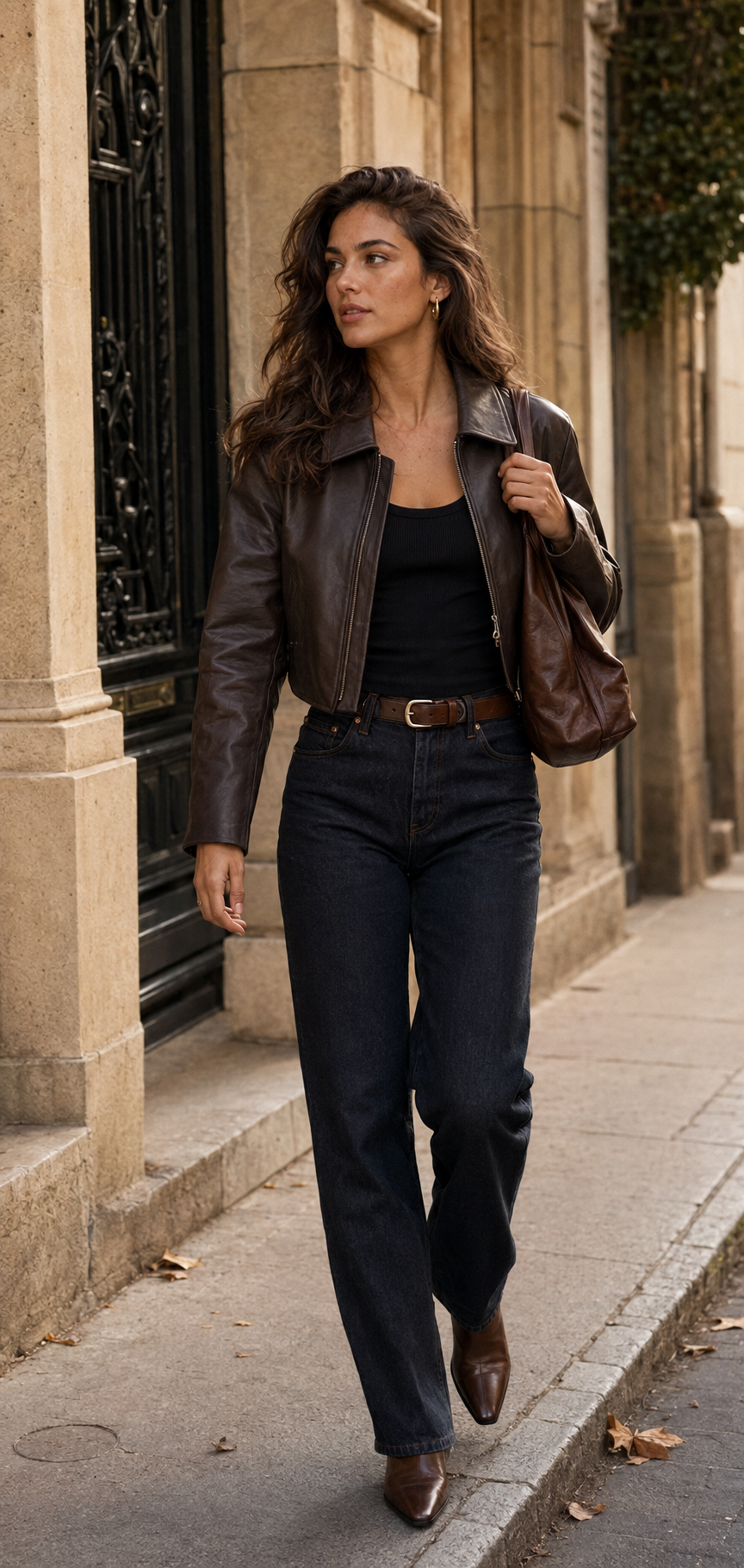
As a Brazilian-Italian fashion model and style editor, Lila notices how leather changes under daylight, flash, a taxi seat, and a hand resting on a restaurant table. Her warm olive skin, hazel-green eyes, and chestnut waves sit naturally beside espresso, tobacco, black, and deep olive, but color only matters after fit and make. A quiet-luxury leather piece should feel composed in motion, photograph with depth rather than glare, and have a clear role in the outfits already hanging in the closet.
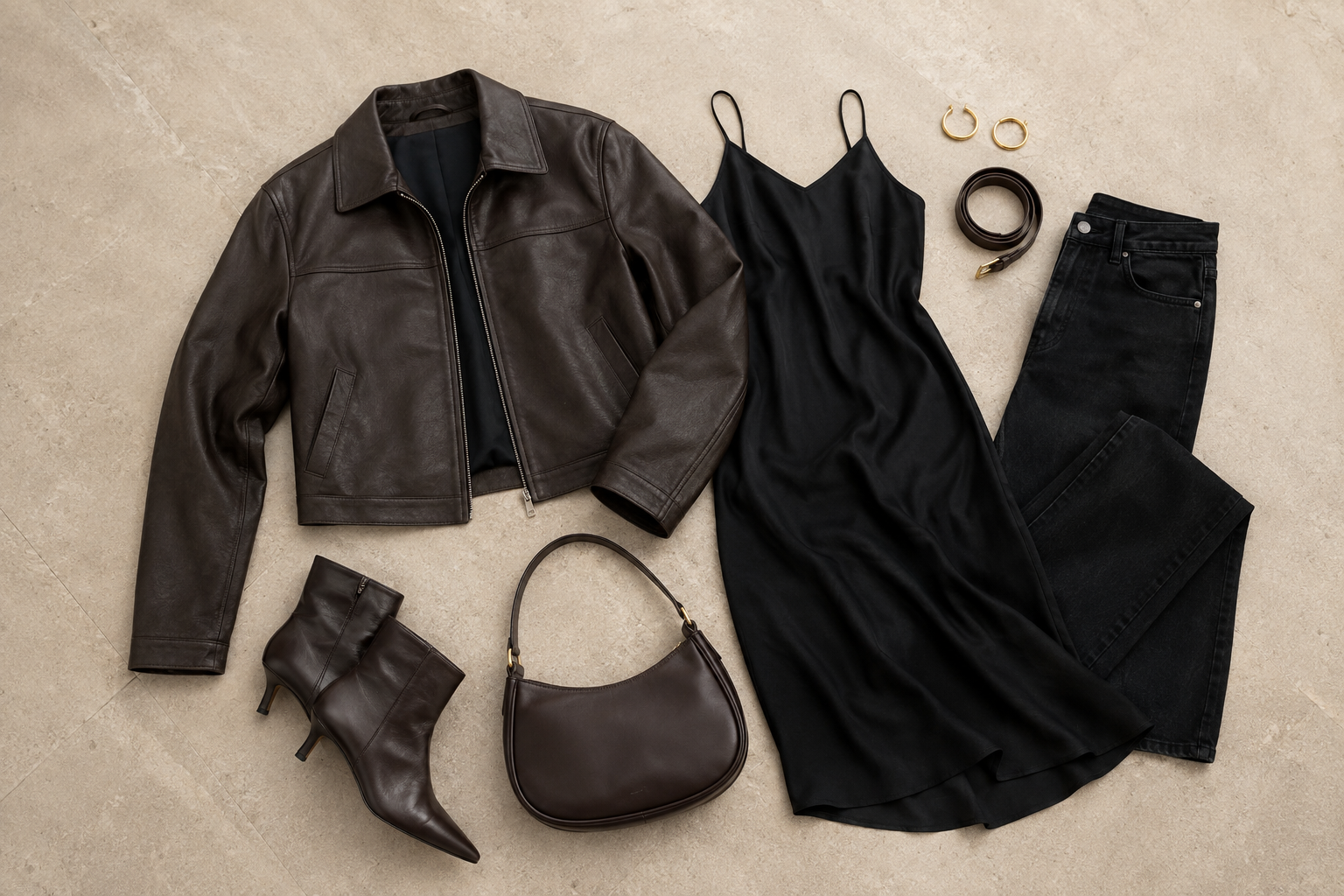
The shopping cards below open Amazon searches for useful leather formats, not a claim that Lila personally tested every listing. Confirm the exact material, dimensions, hardware, seller, current price, care instructions, and return conditions before checkout. The editorial images show Lila’s wardrobe context rather than the exact products sold by a marketplace listing.
Compare the shopping options
| Option | Best for | Advantage | Consider before buying |
|---|---|---|---|
| Cropped Leather Jacket | A defined outer layer over denim or a dinner dress | Adds structure and a sharper waistline | Shoulder movement and finish need an in-person test |
| Minimal Shoulder Bag | Day-to-dinner essentials in a close body shape | Keeps the outfit line clear | Opening and loaded volume can be smaller than photos suggest |
| Classic 25 mm Leather Belt | Denim and medium-width trouser loops | Visible but controlled waist definition | Measurement method and loop clearance must be confirmed |
Read the material line before falling for the color
Leather wording is a starting point, not a verdict. Full-grain generally refers to a hide surface left more intact, while top-grain is commonly corrected or sanded; both terms still need the support of clear construction, thickness, and finishing information. 'Genuine leather' describes leather but does not tell you the grade, cut, or longevity on its own. Bonded leather usually combines leather fibers with other materials, and faux leather is a separate synthetic category. Read the listing’s actual material field rather than letting one attractive close-up decide the purchase.
Lila treats vague language as a reason to slow down. If a jacket listing never states what the outer is made of, if a bag says only 'premium material,' or if a belt calls itself leather without a clearer composition, comparison becomes difficult. That does not automatically make the piece wrong for you; it means the price and expected wear should be judged with more caution. A transparent listing gives you a better basis for shopping, especially when a return will involve repacking a bulky jacket or arranging a bag pickup.
Look at edges, seams, and hardware in the closest images
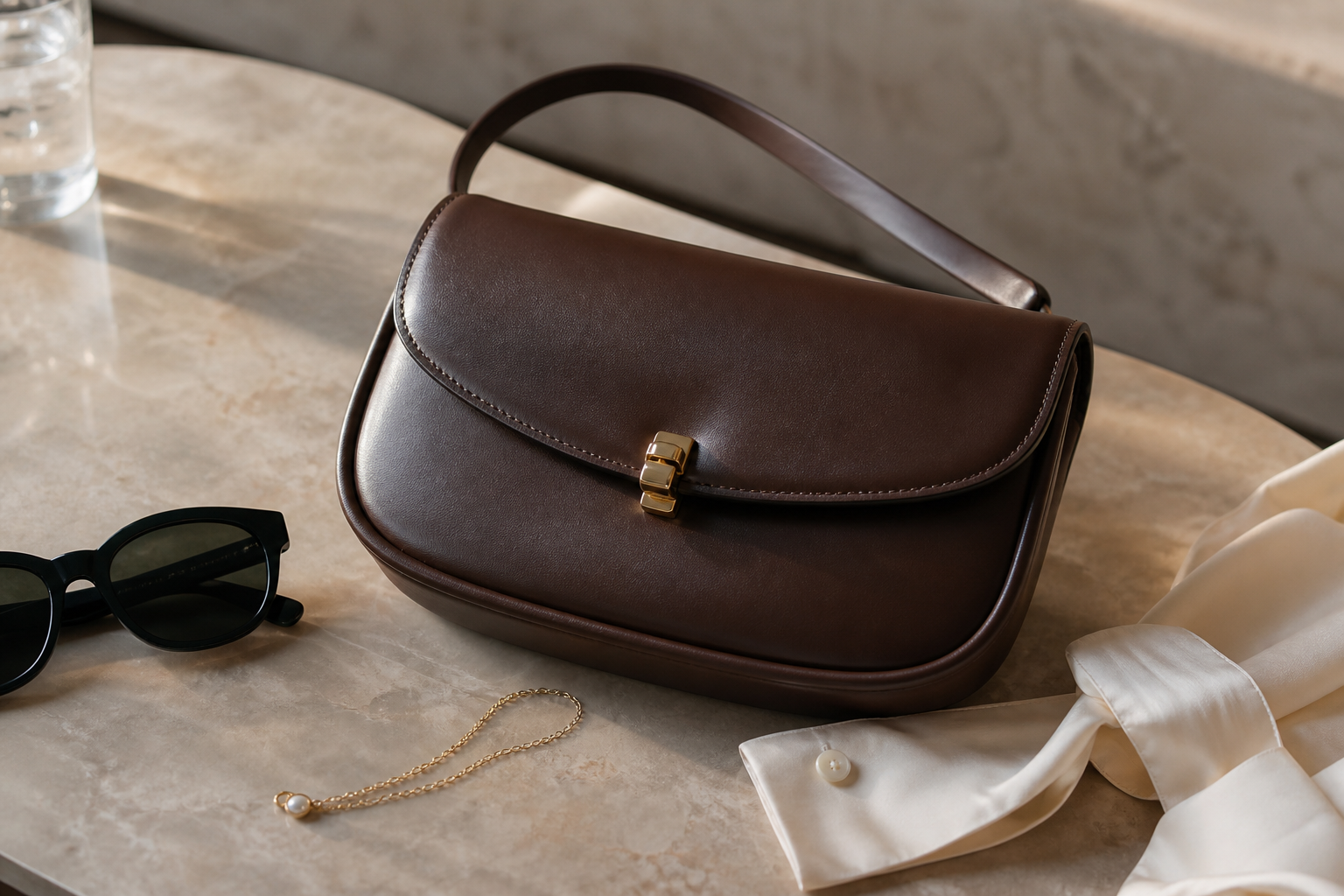
The small construction points often tell the most useful story. On a bag, zoom in on the strap tabs, edge paint, stitch spacing, zipper tape, feet, and where the handle meets the body. On a belt, look for an even edge, clean hole finish, a secure keeper, and a buckle that lies flat. On a jacket, inspect the pocket corners, sleeve seams, collar edge, zip track, and lining. A single slightly irregular stitch is less meaningful than a pattern of rough finishing, wavy edge paint, or hardware that looks thin beside the leather.
Camera-readiness depends on these details. Glossy plastic-looking edges or very bright hardware can catch light before the rest of the outfit, while a softer finish lets the silhouette and fabric do the work. Lila photographs an accessory from arm’s length and from several steps back. In a close image, neat edges read considered; in a street frame, the hardware should support the bag or belt rather than announce itself. Customer photographs are useful here because they often show scale and surface in less controlled light.
Choose a finish that belongs to your real wardrobe
A smooth finish, a softly pebbled grain, suede, and patent leather create different amounts of light and visual weight. Smooth leather can give a shoulder bag or belt a crisp, edited line, but a very hard shine may feel severe beside matte knitwear or daytime denim. A fine pebble can be forgiving for a daily bag, provided the shape and edge work remain neat. Suede brings a rich, dry texture to autumn outfits, while patent is best chosen for a deliberate high-shine role rather than as a default neutral.
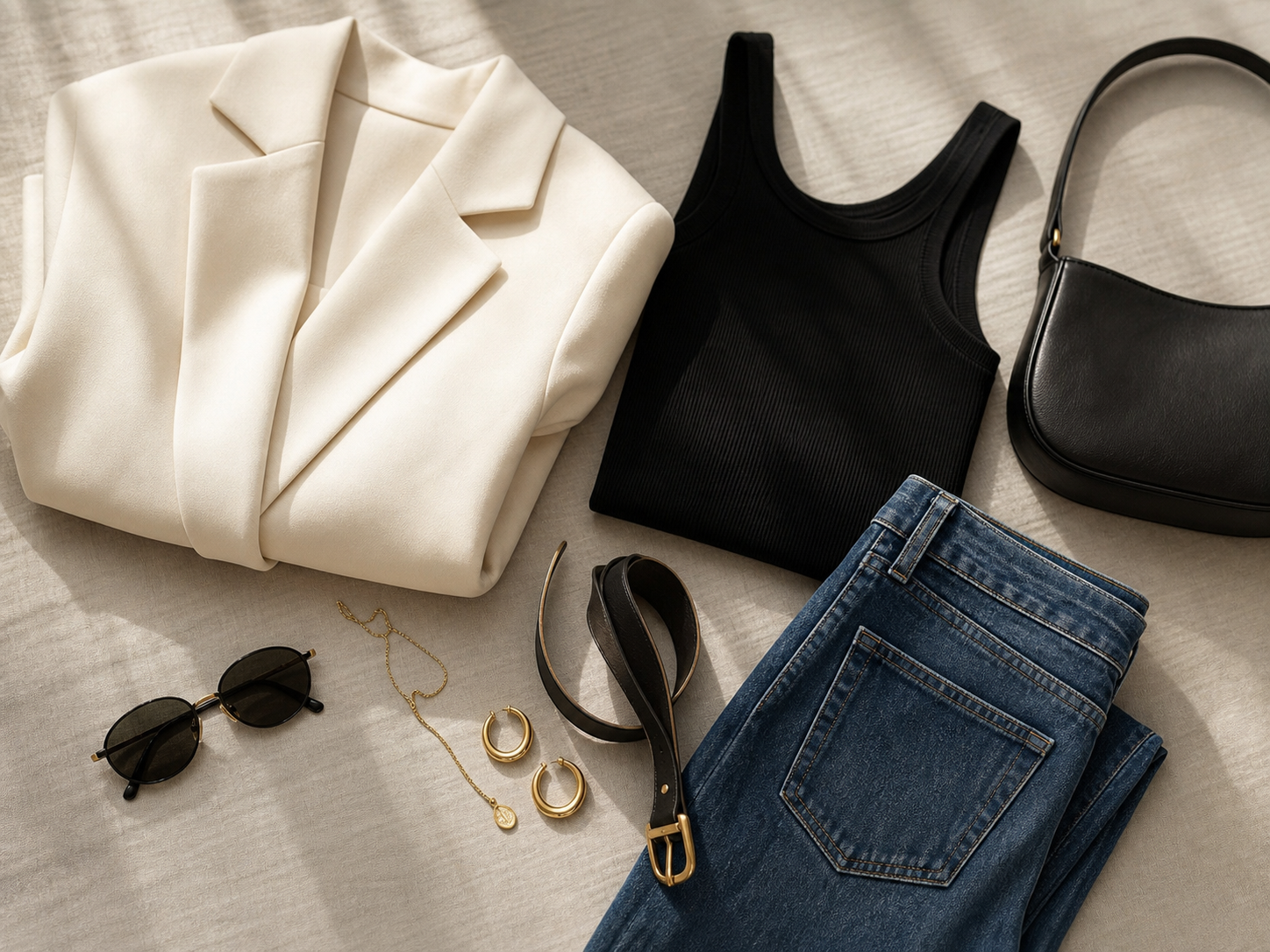
For Lila’s warm olive skin and chestnut hair, espresso, tobacco, dark chocolate, softened black, and deep olive are reliable starting points because they keep warmth near the face without demanding exact matching. She checks a candidate beside the shoes, bag, and jewelry she already wears. A brown that turns orange under indoor light or a black that reads blue-grey can disconnect the outfit. The best color repeats calmly with a cream blazer, dark denim, a black slip dress, and warm gold jewelry across several real days.

Shop a leather jacket for movement, not just attitude
A cropped leather jacket should let you reach for a coffee, sit in a car, and carry a bag without lifting the whole garment toward the ears. Start with the shoulder seam, armhole, and sleeve length over the top you will actually wear beneath it. Then zip or close it, raise one arm, and look at the waist from the side. If the jacket pulls hard across the chest, twists at the sleeve, or lands below the point where you need your waist back, sizing up alone may not fix the underlying cut.
Lila prefers a matte or lightly burnished finish that gives a black slip dress, cream tailoring, or straight-leg denim a sharper outline without turning the look into costume. The jacket has to remain useful after an editorial fitting or an evening shoot: it should layer cleanly, fold over an arm without looking exhausted, and still leave room for chestnut waves and a simple hoop near the face. Shop the product measurements, not only a model’s pose. A good return policy matters because shoulder shape and movement cannot be fully known from a screen.
Shop a shoulder bag by strap, opening, and loaded shape
For a leather shoulder bag, the first question is not whether the front photograph is beautiful; it is whether the bag works once it carries your phone, card holder, keys, sunglasses, and lip color. Check the opening width, closure type, interior depth, strap drop, and whether the strap can sit over the jacket you wear most. A bag that looks compact while empty can become awkward when the zipper only opens halfway or the strap twists under a blazer sleeve.
Lila likes a close, softly structured shoulder shape because it keeps the body line clear under tailoring and makes a dinner dress feel grounded. Put similarly sized items into a bag you own and compare that volume with the listed dimensions before buying. Then consider how the leather will look as it bends at the shoulder. A little natural movement can be beautiful; a bag that collapses or develops harsh creases from ordinary contents may not serve the polished, repeat-wear role you expect.
Shop a belt by its working measurements
A leather belt must fit the rise where it will actually sit. Measure through the loops of your high-rise denim or trousers, then compare that number with the seller’s stated measurement method. Some listings state total strap length, others measure to the middle hole, and others use a body-size range. Those figures answer different questions. Lila aims to fasten near the middle holes, leaving room for a tucked poplin shirt, a seated dinner, and a different trouser rise without making the end of the belt look excessive.
A classic 25 mm belt is a useful shopping lane for many jeans and medium-width loops, but measure the narrowest part of the loop before treating that width as universal. Inspect the buckle prong, keeper, and hole spacing in the images, then check whether the leather description and return conditions are clear. A belt should restore proportion to denim or a dress, not pinch the waist or become a reflective focal point. The best option works with the bag and jacket you already own, even when you wear it on an ordinary weekday.
Give leather a repeat-wear test before checkout
Before adding a leather piece to cart, build three complete looks with it. A cropped jacket might need to work with dark denim and a white shirt, a black slip dress for dinner, and cream trousers on a travel day. A shoulder bag may need to move from a café to an evening reservation without changing the line of the coat. A belt should make sense with your most-worn jeans and one tailored look. This test prevents a beautiful object from becoming an isolated purchase that only works in one imagined photograph.
Finally, read the care information and return terms before you remove tags or use the piece outdoors. Leather responds to moisture, friction, heat, and storage differently depending on finish, lining, and construction, so follow the selected maker’s guidance rather than applying a universal treatment. Lila’s shopping rule is practical: buy the clearest material description, the best fit, and the quietest finish that serves your real life. When the piece supports proportion, palette, and movement, it will keep earning its place long after the product page closes.