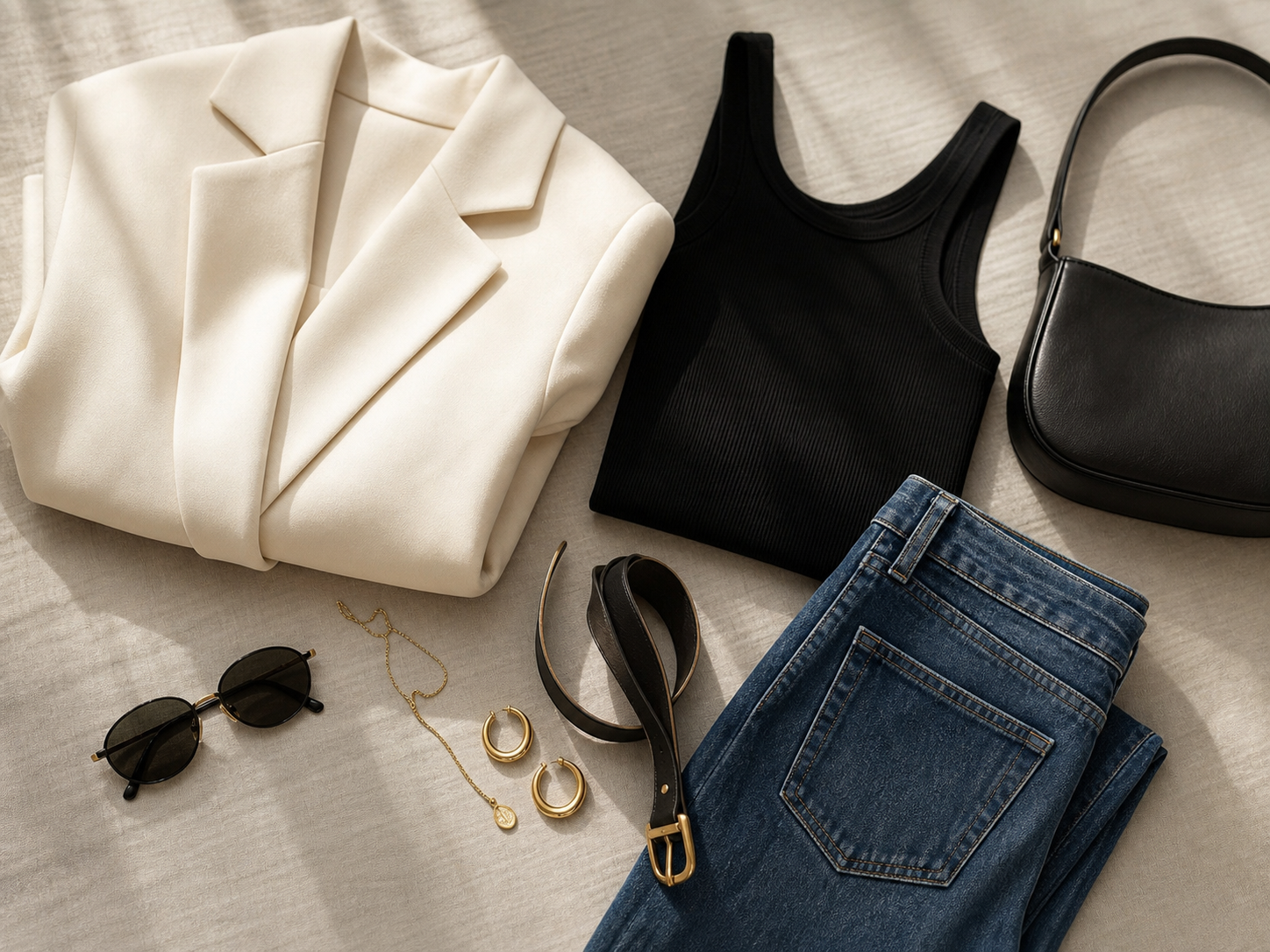
The best women’s leather belt is the one that fits the rise of the jeans or trousers you actually wear, slides through the loops without bunching, and closes at a comfortable middle hole. For a quiet-luxury wardrobe, start with a slim 18–22 mm belt for fine trousers and a roughly 25 mm option for denim, then choose a buckle that looks calm beside your jewelry. Lila Voss, a Brazilian-Italian fashion model and style editor, checks the belt while sitting, walking, and photographing the outfit from the side. A belt should define proportion, not make the waist feel cinched or interrupt a clean line.
Belts are small, but they sit at one of the most visible points in an outfit. On Lila’s warm olive skin, chestnut waves, and espresso-and-cream palette, a deep brown leather with softened gold hardware has more warmth than a bright, icy buckle. Still, the practical questions matter first: waist placement, loop width, hole range, and whether the belt will repeat with the clothes already in the closet.
The shopping links below open Amazon searches for three useful formats, not a claim that Lila personally tested every listing. Confirm the selected belt’s material, width, length, seller, delivered price, and return terms before checkout. The editorial images show outfit proportion and accessories, not the exact belts being sold.
Compare the shopping options
| Option | Best for | Advantage | Consider before buying |
|---|---|---|---|
| Slim Leather Belt | Fine trousers, dresses, and subtle waist definition | Low visual weight beside delicate fabric | May be too narrow for wide denim loops |
| Classic 25 mm Leather Belt | Straight-leg denim and medium loop widths | More visible definition without a wide statement strap | Confirm loop clearance and actual width |
| Reversible Leather Belt | Compact black-and-brown travel wardrobes | Two neutral directions in one accessory | Turning hardware and extra thickness need checking |
Measure the rise before you choose the belt size
A belt worn through high-rise denim sits in a different place from a belt worn low on relaxed trousers. Put on the garment, thread a soft tape through the loops, and measure where the belt will actually rest—not your smallest natural waist unless that is truly the intended position. Compare that number with the listing’s size method. Some sellers give belt length, some give the distance to the middle hole, and some give a body-size range; those are not interchangeable.
Lila prefers landing near the middle holes rather than fastening at either extreme. That gives a little flexibility after a dinner, over a tucked silk shirt, or when a different rise changes the circumference. If a listing does not explain its measurement point, treat the size as uncertain and look for a clearer option. A beautiful buckle cannot rescue a belt that only works on one exact day.
Match belt width to loops, fabric, and proportion
Width changes the visual weight of the outfit. A slim leather belt can disappear elegantly into tailored trousers or a fluid satin skirt, while a medium 25 mm belt has enough presence to anchor straight-leg denim. Before shopping, measure the narrowest part of the loops on your most-worn jeans. Leave enough clearance to thread the belt smoothly; forcing a thick strap through small loops makes both leather and waistband look strained.
Fabric changes the answer too. Dense denim can carry a more substantial leather edge, but a fine trouser waistband or bias dress often needs a narrower, quieter line. In editorials, Lila watches the full silhouette from a few steps back: if the belt cuts the body into two unrelated halves, it is too dominant. If it vanishes and the waistband still collapses, it may be too slight for the job.
Choose a buckle that supports the jewelry
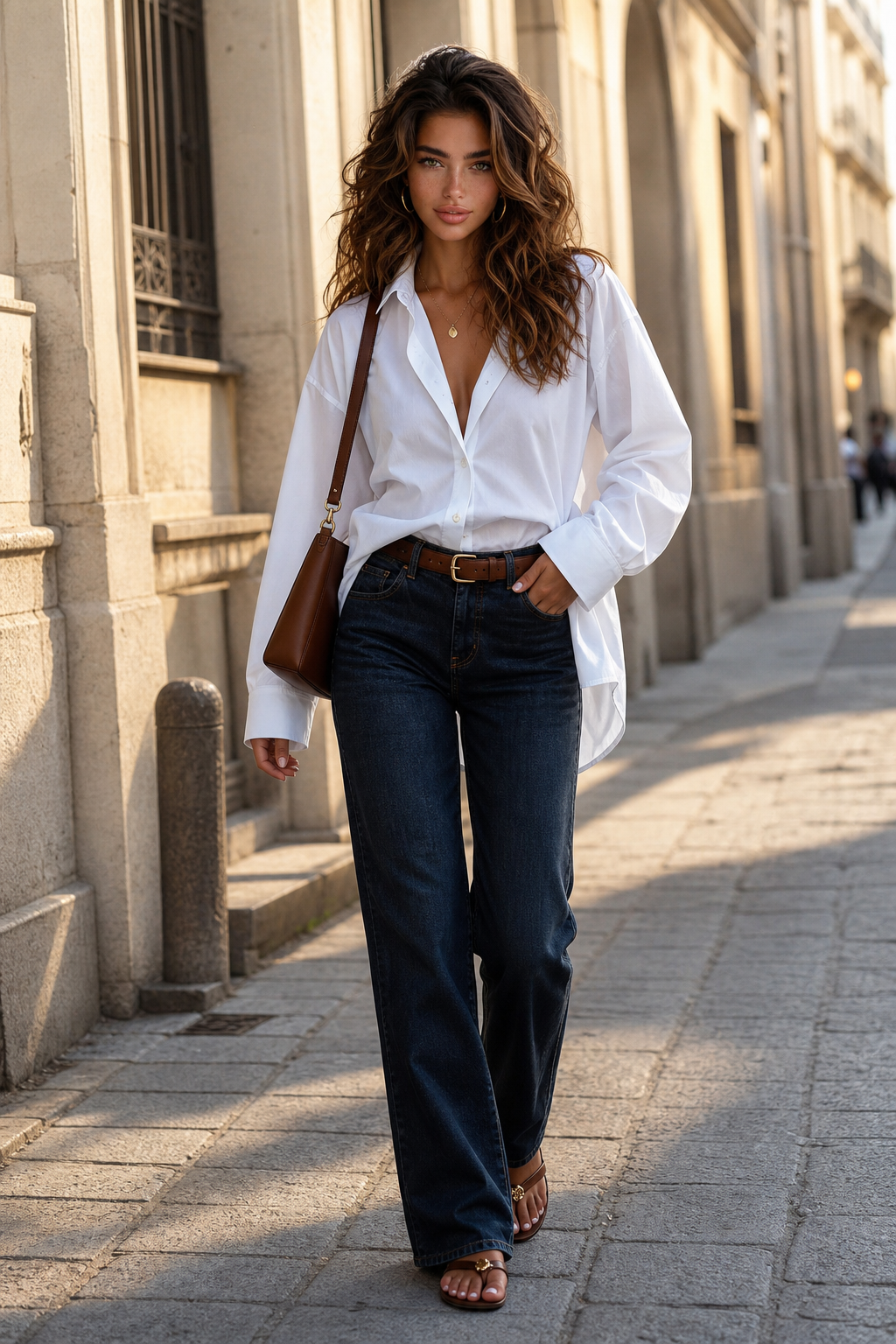
A buckle is a small piece of hardware close enough to the hands and bag that it reads with rings, hoops, and bag clasps. A softly rounded gold-toned buckle can echo warm gold jewelry around Lila’s hazel-green eyes without requiring every metal to match exactly. Black leather with a subdued silver-toned buckle can be equally useful when the rest of the outfit is cooler or more graphic.
Avoid judging the buckle from the product thumbnail alone. Zoom in for edges, prong placement, and plating tone. Oversized logo plates and reflective hardware can pull focus from a cream blazer or a clean white shirt. The best everyday option has enough definition to be found at the waist in a photograph, but not so much shine that it becomes the first thing the camera sees.
Build the first belt around dark denim
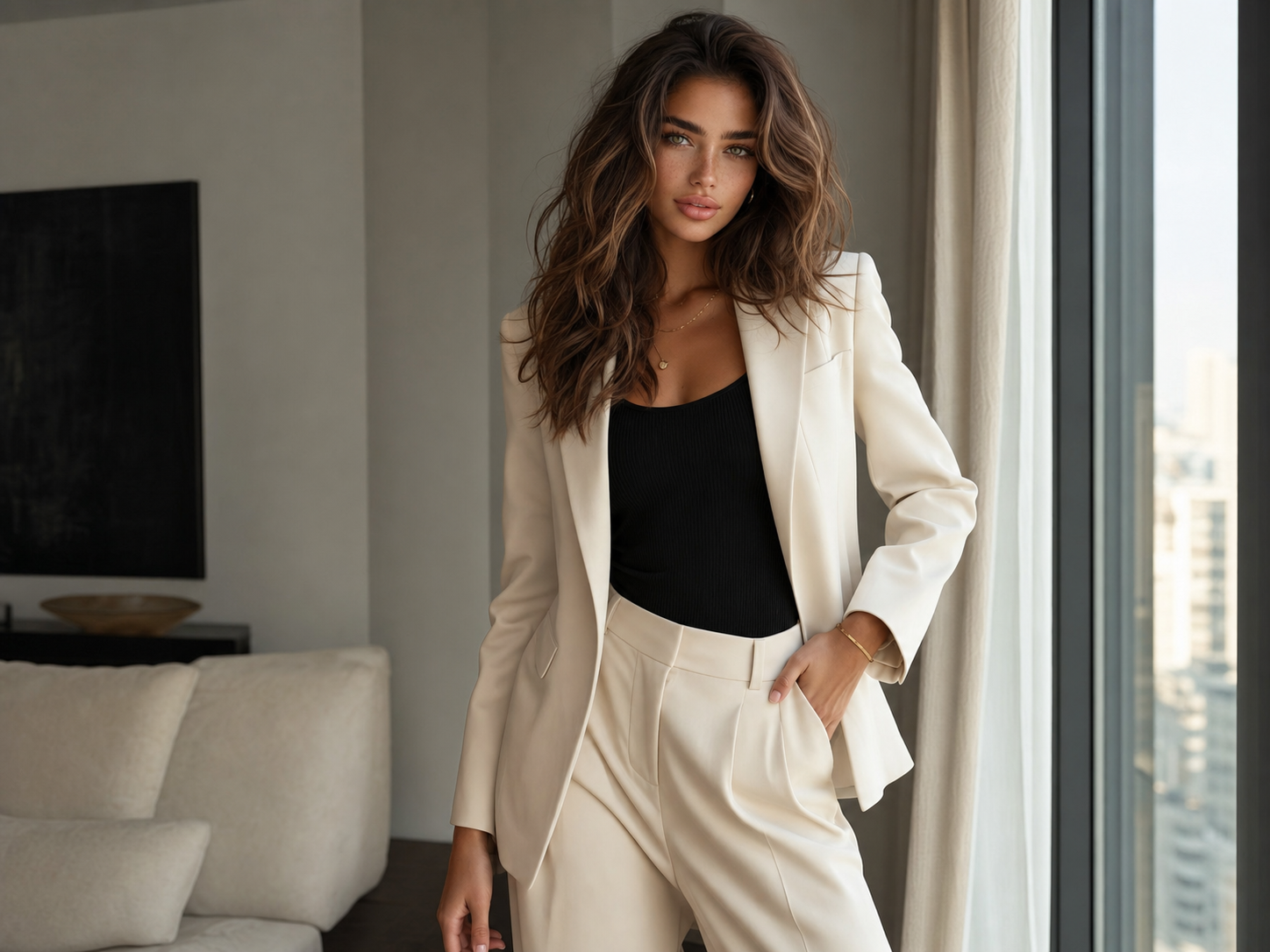
Dark straight-leg denim is the most honest test because it reveals whether a belt can give a waistline shape without looking decorative. Try the belt with the top you normally tuck, then with a ribbed tank and a cream tailored blazer left open. The tuck should stay comfortable when you sit, and the belt tail should not poke outward beneath the jacket.
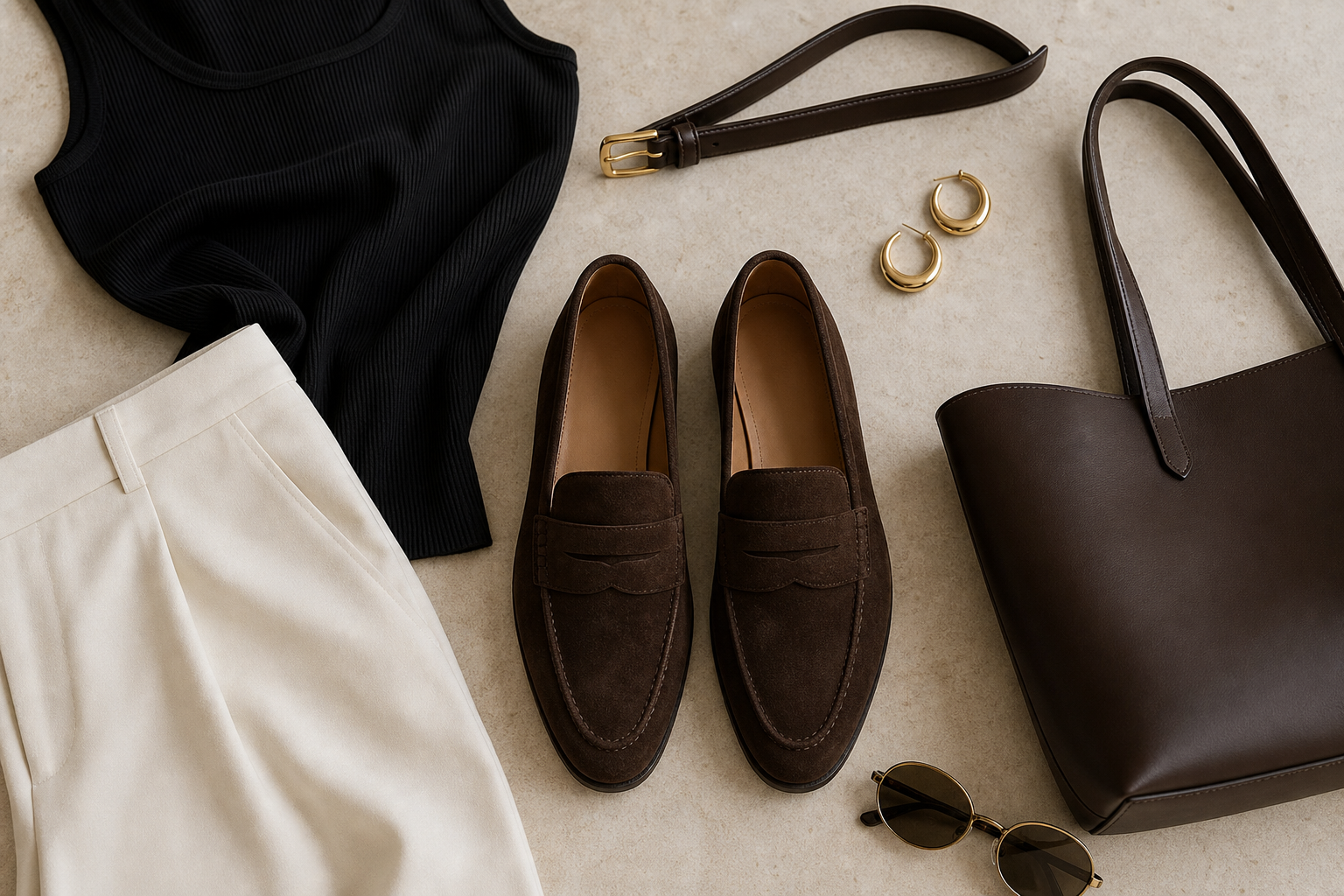
Chocolate or espresso leather works especially well with chestnut waves and a shoulder bag in the same warm family, but exact matching is unnecessary. Texture is more convincing than a perfect color set: matte leather, denim, smooth gold, and soft suiting create depth. A belt earns repeat wear when it solves a practical fit question and still makes the outfit look composed in daylight, elevator mirrors, and quick street photographs.
Use a narrower line for tailoring and dresses
With wide-leg trousers, choose a belt that respects the waistband rather than compressing it into a hard band. A slim strap can make the transition between a tucked silk button-down and fluid tailoring clearer while leaving the drape intact. Check the belt after walking and sitting; if the trouser front pulls or the buckle tilts, either the fit or the width is wrong for that garment.
For a dress, decide whether the belt is defining the natural waist, lowering the visual line, or simply holding a little excess fabric. Those are different styling jobs. Lila likes a restrained belt over a black slip dress only when the fabric can move and the buckle stays flat. A very stiff strap can make a soft dress look interrupted instead of intentional, particularly under restaurant lighting or close camera framing.
Decide if a reversible belt will really simplify travel
A reversible black-and-brown belt can make sense for travel when both sides work with the clothes already packed: dark denim, cream trousers, a black tank, and a brown shoulder bag. Check the turning mechanism before treating two colors as twice the value. The buckle should rotate cleanly, the leather should lie flat, and the extra thickness should still pass through your usual loops.
For a short editorial trip, Lila would pack one belt only if it works with at least three outfits and can survive a day of sitting, transfers, and dinner. A separate narrow brown belt can be smarter than a bulky reversible one if the wardrobe is already warm-toned. Shopping efficiency is not about owning fewer objects at any cost; it is about carrying the pieces that keep their role without demanding adjustment.
Read the listing like a fit document
Product titles often combine several widths, colors, and materials under one listing. Confirm the selected variation, total length, width in millimeters or inches, the hole range, and whether the buckle is included in the length. Read reviews for sizing consistency and surface wear, but do not treat a photograph as proof that a strap is full-grain leather or that the buckle will suit every body. Seller identity and return conditions matter when fit is the reason for the purchase.
Lila Voss shops accessories with the same editing discipline she brings to model work: one clear function, a good line, and enough comfort to repeat. The winning belt does not need to announce itself. It should refine denim, keep tailoring camera-ready, make a travel outfit feel finished, and let the rest of the closet do the talking.