
As an Amazon Associate I earn from qualifying purchases. Purchases through these links may earn me a commission at no extra cost to you.
For loafers and other structured leather shoes, choose a shoe tree that fills the toe gently, follows the shoe's approximate width, and uses light enough tension that it supports rather than stretches the upper. Cedar or wood forms make the most sense at home after a wear; soft foam shapers are better for ballet flats and travel because they protect the toe without asking a delicate shoe to hold a hard last. Lila Voss, the Brazilian-Italian fashion model and style editor behind this site, treats shoe storage as part of the outfit. A good tree keeps a loafer's vamp clean and a flat ready beside tailoring, dark denim, and a shoulder bag.
The crucial distinction is job, not price. A firm leather loafer benefits from shape support while it rests. A flexible ballet flat needs only enough filling to prevent a crushed toe. A suitcase needs low bulk, not a heavy cedar collection. That practical edit matters on real travel days, after wet pavements, and between dinners because shoes are seen at the end of every silhouette. If the toe collapses or the vamp creases harshly, even a beautiful cream trouser or black slip dress loses some of its calm line on camera.
The product cards below open Amazon searches for three formats to compare. They are not claims that Lila personally tested every listing, and the editorial photographs do not show the named products. Check the exact size range, material, mechanism, seller, and return terms before buying. Lila's warm olive skin, hazel-green eyes, chestnut waves, and quiet-luxury palette are useful styling context here, but shoe care is ultimately about preserving fit, fabric, proportion, and repeat wear in a real closet.
Start with the shoe's structure, not a universal shoe-tree size
A shoe tree is a support, not a corrective device. Start by looking at the shoe you own: the toe profile, the length from heel to vamp, the firmness of the leather, and the amount of room already in the forefoot. A pointed loafer needs a narrower front than a round-toe driving shoe. A tree that presses into the sidewalls can distort a soft upper; one that barely reaches the toe will not prevent the fold that forms when the shoe is left empty.
Lila checks the shoe after removing it, when the leather is warm from the body but not wet. If the loafer has been caught in rain, it should air-dry naturally away from direct heat before any insert goes inside. Shoe trees can help a dry shoe settle back into its intended line; they cannot rescue soaked leather or replace the maker's care instructions. That restraint is very model-off-duty: protect the pieces that work, rather than repeatedly replacing them.
Choose wood or cedar for leather loafers between wears
A spring-loaded wooden tree is worth comparing when a leather loafer is a repeat player with cream tailoring, straight-leg denim, or a wool trouser. The practical benefit is steady, even shape support through the toe and vamp while the shoe rests. Cedar is often chosen for its natural aroma, but the shopping decision should still begin with sizing and pressure. A beautifully scented tree that is too long for the shoe is not a luxury; it is a poor fit.
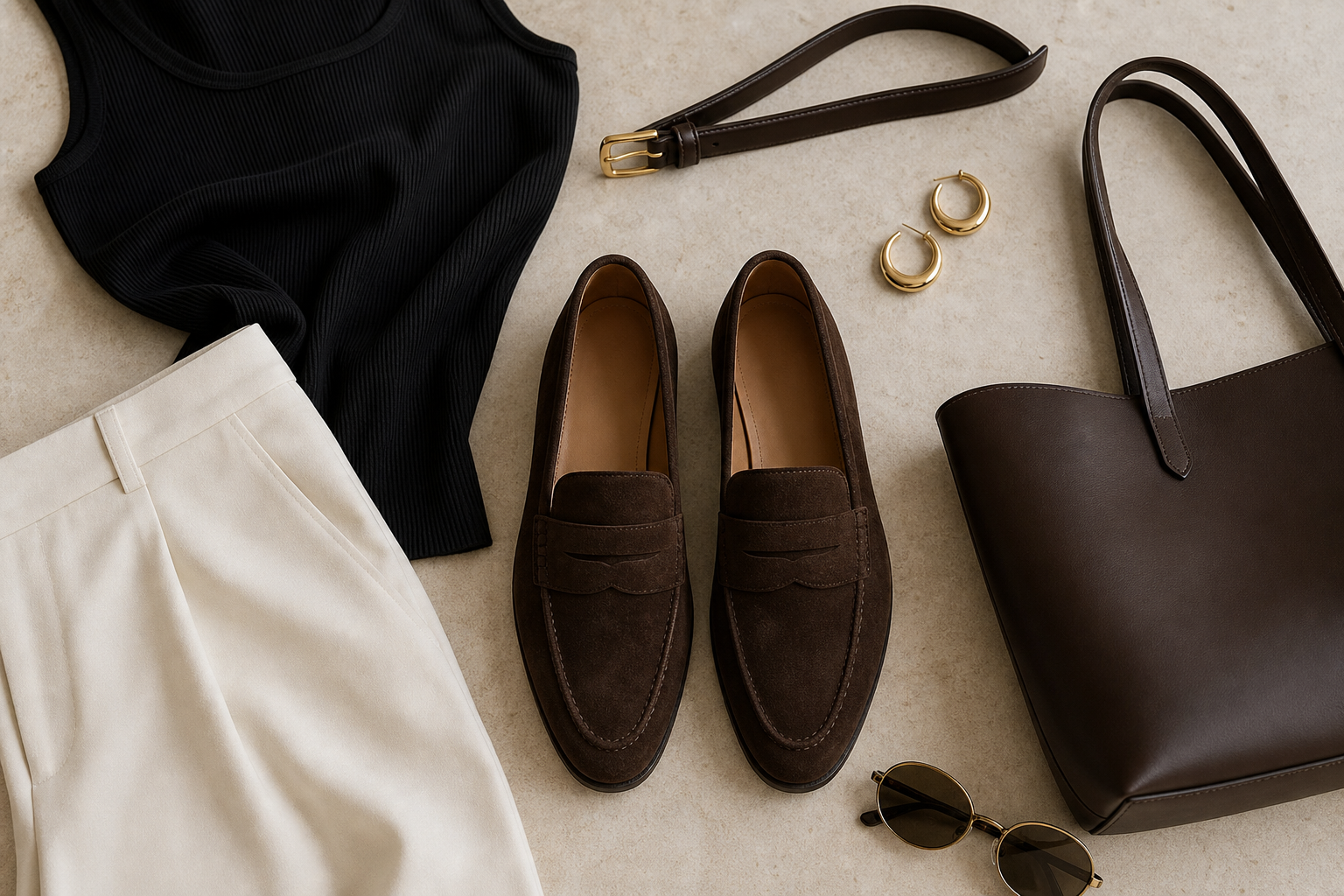
Insert it slowly. Place the toe section first, compress the heel mechanism only as much as needed, and release it without forcing the back of the shoe. Look along the topline and side seam. The leather should look smooth, not pulled taut. On Lila, espresso suede loafers keep an elegant low line beneath a cream trouser, so preserving that relaxed structure matters more than making the shoe look artificially rigid.
Give ballet flats a softer kind of support
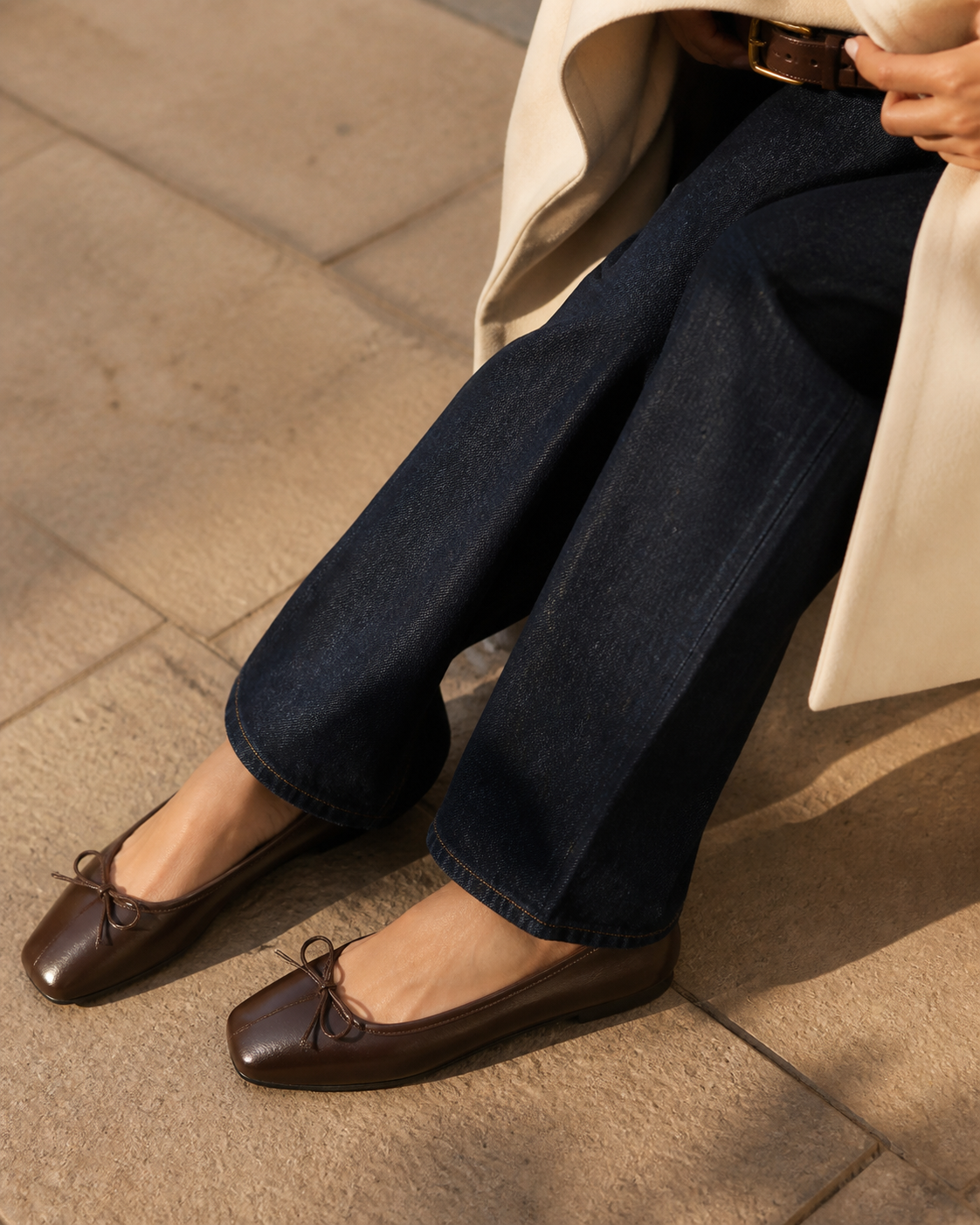
Ballet flats are not miniature loafers. Their softer binding, shallow vamp, and flexible sole can be damaged by an overly firm or broad form. For a delicate leather, satin, or suede flat, a light foam shaper or acid-free tissue used loosely in the toe can be the more intelligent choice. The purpose is to stop the front from being flattened by a shelf, shoe bag, or stacked pair, not to stretch the shoe into a different size.
This matters visually because a creased or collapsed flat makes the ankle line look heavier. Lila pairs an espresso flat with dark denim or a satin midi skirt when she wants the shoe to disappear into the outfit's proportion. Keeping the toe smooth lets the hem, ankle, and shoe read as one long quiet line. It is a small wardrobe habit, but those are often the details that distinguish a real closet from a one-photo purchase.

Use travel shapers to protect toes without adding luggage weight
For travel, a heavy wood tree is usually the wrong answer. It consumes carry-on weight and can make a packed shoe bag bulky. A soft foam shaper is more useful for a ballet flat, a light loafer, or a low slingback because it fills the vulnerable front of the shoe while staying almost weightless. Pack each pair clean and dry, with the soles separated from clothes, then place the shaper inside before the bag is compressed.
Think about the destination outfit before packing a second pair. One loafer that works with travel trousers, a white poplin shirt, and a blazer often earns more space than two specialty shoes. Lila's editorial work has taught her that the best travel wardrobe is not the most elaborate one; it is the one that arrives ready for a hotel mirror, a casting coffee, and dinner without panic. A small shaper supports that repeat-wear logic without pretending to be a cure for bad packing.
Match toe shape and tension to the shoe's actual silhouette
Marketplace listings often describe a shoe tree as adjustable, which does not mean it will suit every shoe. Compare the toe outline in the listing with the shoe on your foot, then read the stated size range. A round, generous form may work for a relaxed moccasin but crowd a slim almond toe. A forceful spring may be acceptable for a sturdier men's dress shoe yet too aggressive for a refined women's loafer. Keep the shoe's own proportions in charge.
Lila uses the same discipline she brings to shopping trousers online: measurements first, product photography second. Check a tree against the interior length, insert it once, and inspect the upper from all angles. If the topline flares, the toe looks stretched, or the heel counter feels pushed, return to a smaller or softer option. Good care should be nearly invisible in the finished outfit.
Store shoes clean, dry, and visible enough to wear again
Before storing any shoe, brush off surface dust and let moisture leave naturally. Do not trap a damp loafer in a box with a wooden form and expect the material to dry correctly. Keep pairs on a shelf where the toe cannot be crushed, or in breathable individual bags when the closet is crowded. A shoe tree is only one part of the system; space, ventilation, and a simple rotation matter just as much.
Lila keeps the palette calm—espresso, black, cream, and soft tobacco—so footwear can repeat with almost everything. That only works if the shoes remain visible and ready. A preserved loafer can move from a daytime editorial to a late dinner with dark denim and gold jewelry; a protected flat can make a travel look feel feminine without becoming precious. Buy storage support for the pairs that already prove their value, then let the rest of the cart stay edited.