As an Amazon Associate I earn from qualifying purchases. Purchases through these links may earn me a commission at no extra cost to you.
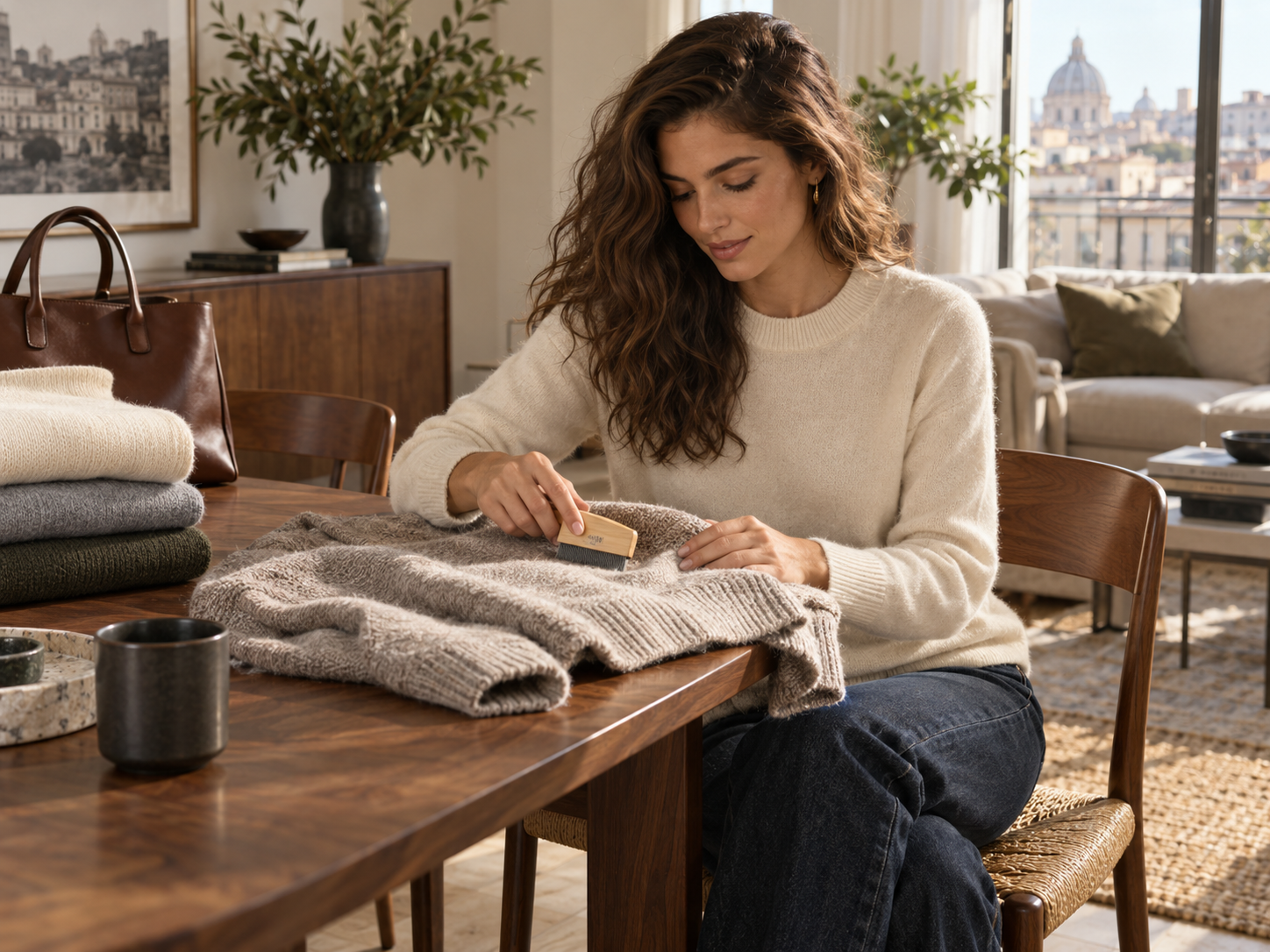
To remove pilling from a sweater without making it worse, read the care label, lay the knit flat, and start with the gentlest tool the fiber can tolerate. A manual cashmere comb is a controlled option for suitable wool or cashmere; an electric fabric shaver can be useful for sturdier knits when the maker’s care instructions allow it. Lila Voss, a Brazilian-Italian fashion model and style editor, works in short, light passes and stops after each one to check the surface. The goal is not to make a beloved sweater look factory-new. It is to keep the knit smooth enough for repeat wear, close camera work, and real life without thinning the fabric.
Pills are small fiber tangles created by friction, not proof that a knit is automatically poor quality. They often appear under the arms, along a shoulder-bag strap, at the side seam, or where a coat sleeve rubs. The useful shopping decision is therefore about control: choose a tool that matches the garment’s fiber, gauge, and amount of wear, then use it carefully. A sweater that looks good under a cream blazer, on a travel day, or at dinner has to keep its shape and surface, not merely survive a dramatic before-and-after video.
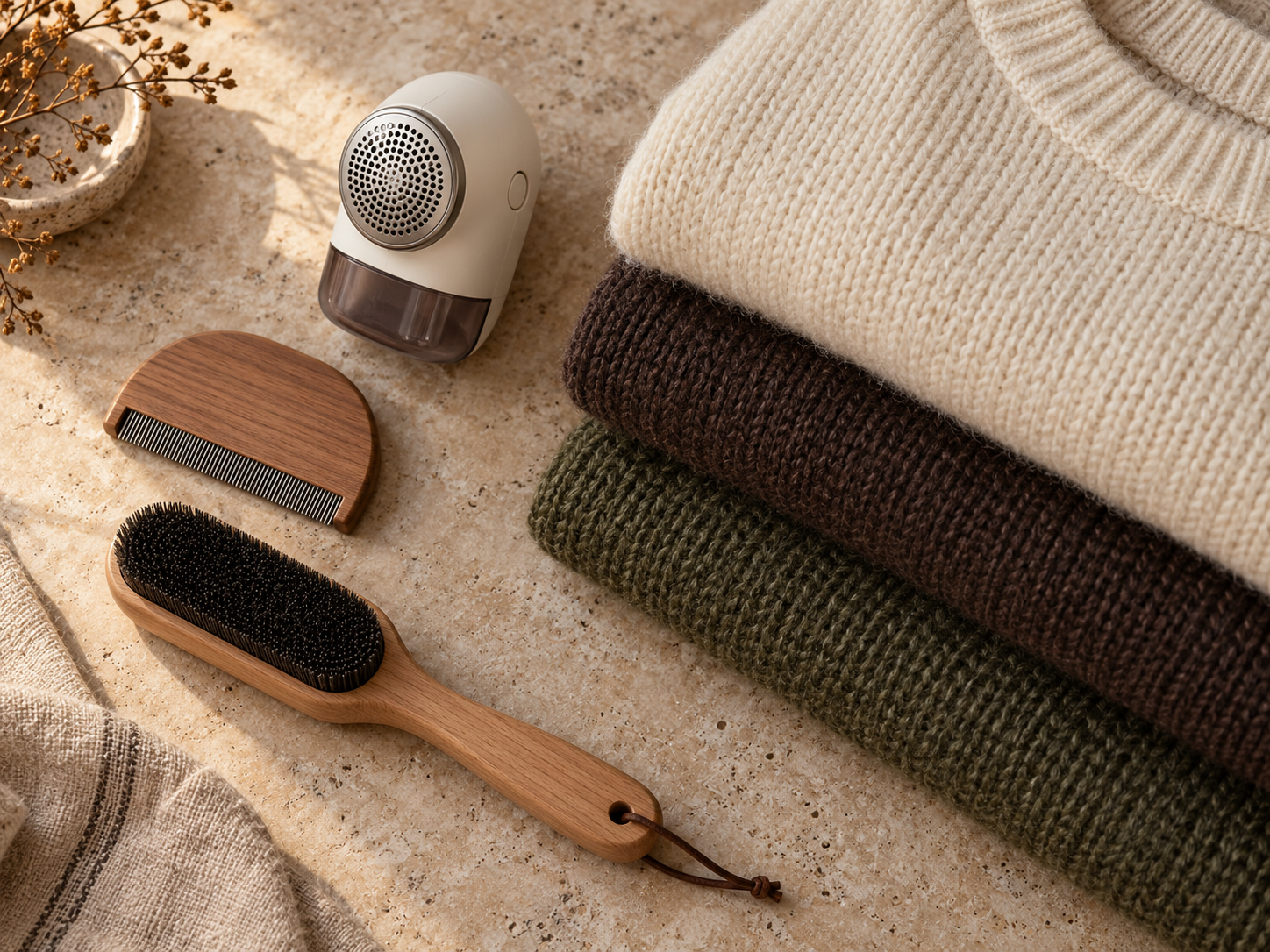
The product cards below open Amazon searches for the named care-tool formats. Exact accessories, power sources, seller terms, and fabric guidance can differ between listings. Lila’s editorial images show the warm olive, cream, espresso, and chestnut palette of a working wardrobe; they do not show the exact branded tools. Check the selected listing and your garment label before you buy, and test any tool in an inconspicuous area before treating a front panel.
Compare the shopping options
| Option | Best for | Advantage | Consider before buying |
|---|---|---|---|
| Gleener On the Go Fabric Shaver & Lint Brush | Shoppers wanting a manual multi-purpose knitwear-care format | Interchangeable-edge and lint-brush concept to compare | Requires careful, garment-specific use and a hidden-area test |
| Philips Fabric Shaver GC026 | Appropriate sturdier knits needing wider-area upkeep | Compact electric format for comparison | Power format and fiber suitability must be confirmed before use |
| Cashmere Comb for Sweater Care | Small areas where controlled manual care matters | Light, deliberate passes on suitable knitwear | Metal teeth can be too aggressive when pressure or fabric choice is wrong |
Know what pilling is before you reach for a tool
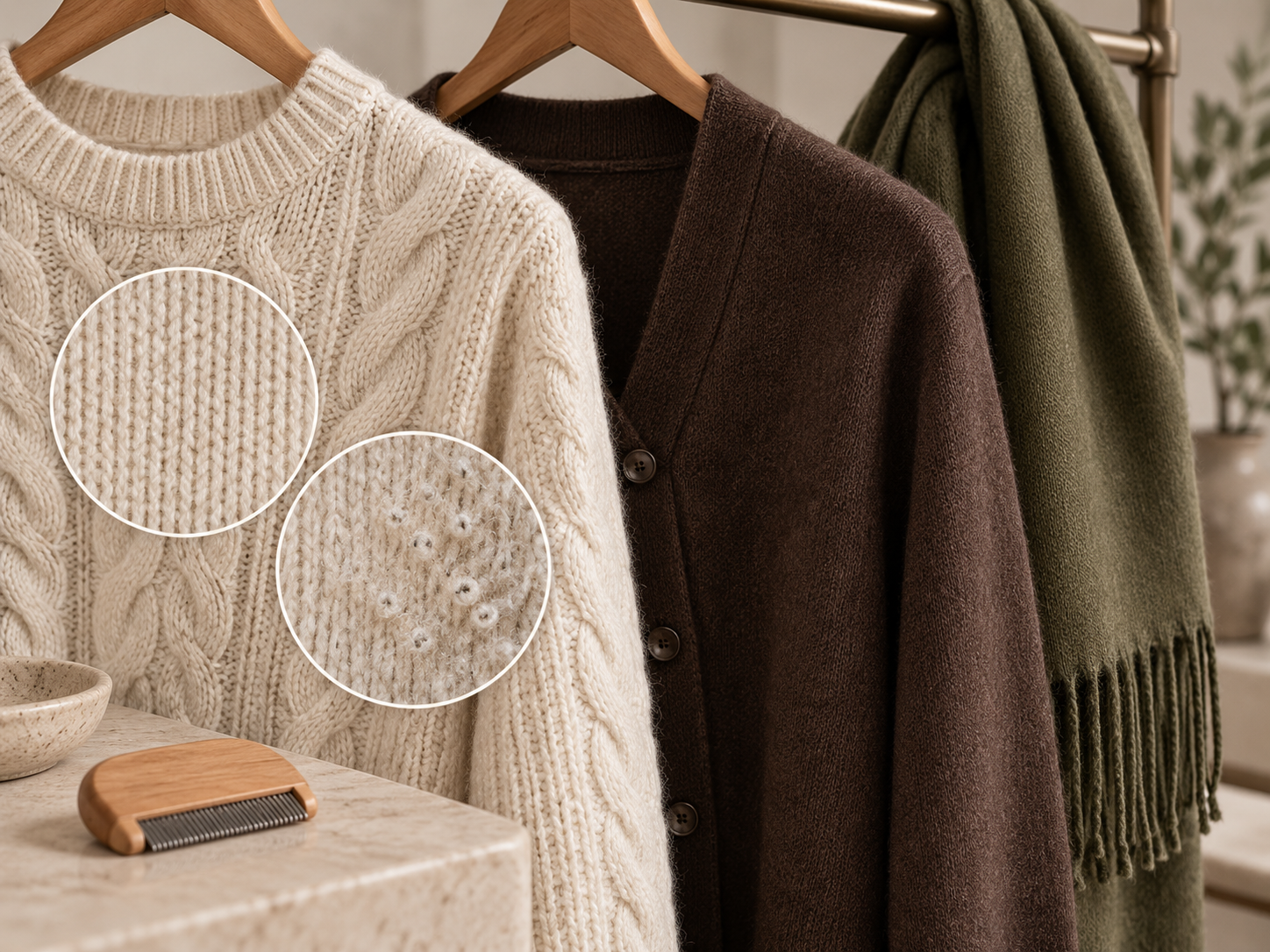
Pilling is the little cluster of loose fibers that gathers when a knit rubs against itself, a bag strap, a desk edge, or another garment. Fine merino can pill around the underarm; softer cashmere can show it where a coat closes; chunky wool may develop a more obvious texture simply because the yarn has more surface. Treat those situations differently. A sweater can be beautifully made and still need occasional care because it is being worn rather than displayed.
Start with a close look in daylight. If you see a few loose pills sitting above an otherwise stable surface, gentle removal may be appropriate. If you see a pulled stitch, a thinning spot, a hole, or yarn that has already broken, put the tool down. That is a repair or professional-cleaning question, not a chance to shave harder. Good wardrobe care protects the lifespan of the garment; it should never turn a small surface issue into a visible weak patch.
Match the tool to the fiber and knit gauge
A cashmere comb gives the most deliberate manual control because you can feel the resistance as you move. It is worth comparing for a suitable cashmere or wool knit when you want to work slowly across a small, flat area. Keep the garment supported, draw the tool lightly in one direction, and inspect between passes. The closer and more delicate the knit, the less pressure it needs. Do not assume that a metal comb is gentle simply because it is small; tooth spacing and hand pressure matter.
An electric fabric shaver is better treated as a speed tool, not a universal solution. It can make sense for a more robust sweater, sweatshirt, jersey layer, or travel knit that develops widespread surface fuzz. Check the garment maker’s advice first, keep the fabric taut but not stretched, and use the lightest workable contact. If the knit catches, drags, or looks newly fuzzy after a pass, stop. The strongest ecommerce description cannot tell you how a particular yarn will react at home.
Prepare the sweater so the result stays even
Work on a clean, dry garment laid flat on a smooth table or ironing board. Button a cardigan, turn the sleeves so the seams are supported, and remove necklaces or rings that could snag the fibers while you handle it. Avoid treating a sweater while wearing it. The tension of a body underneath changes the surface and makes it much easier to take too much fiber from one point.
Lila uses a mirror-check approach from fittings: assess the whole garment, then isolate the area that needs attention. Start below the arm or near a side seam, not at the center of the chest. Clean in small zones, lift away the loosened pills, and step back. A fine-gauge olive sweater should still look like a living textile, not a glossy synthetic panel. Keeping some natural softness makes the piece look expensive in person and more believable in editorial photographs.

Use a light hand around high-friction zones
The underarm, side body, elbow, cuff, and shoulder-bag side of a sweater deserve the most patience. These are the places where movement and accessories create friction, so removing every sign of texture aggressively can thin a garment faster than you expect. On a long travel day, a crossbody strap and seat belt can do more to a soft knit than an hour of quiet wear at home. Rotate the sweater and check both sides before you decide where care is actually needed.
For Lila’s model-off-duty uniform, that matters because the pieces repeat. A cream knit might sit under tailoring for a showroom appointment, meet dark denim for a coffee, then return with a satin skirt for dinner. If the front is smooth but the side seam has been overworked, the imbalance shows in a candid photograph. Controlled maintenance keeps the proportion and fabric integrity steady, which is far more useful than chasing a perfectly blank surface.

Prevent fresh pills with smarter outfit choices
You cannot remove every source of friction, but you can notice patterns. Carrying the same rough strap on the same shoulder, wearing a heavy bracelet at the cuff, or pressing a soft knit beneath a coarse jacket lining can create repeated abrasion. Switch shoulders when it is practical, let a delicate sweater rest between wears, and choose a smooth base layer when the fabric feels prone to catching. These are small choices, but they preserve the camera-ready finish of a knit wardrobe.
Color and fiber also affect how visible pills look. Cream, camel, espresso, and muted olive are generous colors for Lila’s warm olive skin, hazel-green eyes, and chestnut waves, yet each reveals texture differently in sun. Hold the sweater at arm’s length near a window before checkout or before deciding it needs more care. A lightly textured cashmere can look soft and rich; an untreated fuzz patch against a clean trouser line is what begins to look tired.
Choose a compact tool for travel only when it earns its place
A manual fabric tool can be sensible in a hotel pouch when you travel with one or two knit layers that will appear across several outfits. Think of a flight in cream trousers and an olive sweater, followed by a meeting where the same knit has to sit cleanly under a coat. A compact option is more useful than an oversized gadget if it fits beside a lint brush and does not need special charging arrangements. Confirm the actual dimensions and included covers before adding one to cart.
Do not treat a hotel room as a place for an anxious rescue session. If a sweater is badly matted, snagged, or stained, wear another layer and deal with it at home where you have stable light and the right surface. Lila’s travel standard is practical polish, not perfection. A smooth collar, clean cuff, and intentional palette read far better than a knit that has been overworked five minutes before a dinner reservation.
Make the buying decision around repeat wear and returns
The three product cards serve different shopping intentions. Compare the Gleener manual format when you want interchangeable edges and a lint brush in a non-electric tool. Consider the Philips fabric-shaver format when a compact electric option fits sturdier garments and your power preferences. Look at a cashmere comb when deliberate, small-area control is the priority. None is a guarantee for every fabric, and none replaces the garment’s own care label.
Before checkout, confirm the exact model, included accessories, fabric recommendations, power source where relevant, return terms, and seller. Then set one real test: does the tool make it easier to keep the three sweaters you already wear looking polished? If it only answers an imagined wardrobe problem, leave it. Lila Voss’s final editing rule is the same one she uses for clothes: buy the thing that supports repeat wear, proportion, fabric quality, and a calmer closet.