
As an Amazon Associate I earn from qualifying purchases. Purchases through these links may earn me a commission at no extra cost to you.
The best jewelry box is the one that lets you see, separate, and reach for the pieces you actually wear: small hoops, a fine chain, a watch, and one dinner ring. Start by measuring your dresser or drawer, then choose a layout with shallow ring rolls, earring compartments, and enough necklace length that chains do not knot at the bottom. Lila Voss shops storage by routine, not by a dramatic vanity photograph. A compact lidded box suits a surface; a modular tray suits a changing collection; a flat drawer organizer makes sense when the furniture already provides the structure.
As a Brazilian-Italian fashion model and style editor, Lila treats jewelry storage as part of getting dressed. Warm gold against chestnut waves, a clean hoop beside an open poplin collar, or a delicate chain over a black tank reads best when the piece is easy to find and still in good condition. The useful organizer should protect real accessories, make a quick camera check easier, and return every item to a consistent place after a long travel day or dinner.
This is a researched shopping guide, not a claim that Lila personally tested every listing. The buttons open Amazon searches for named storage formats, where colors, layer counts, bundles, and sellers can vary. Confirm the exact dimensions, materials, quantity, price, and return terms before buying. The editorial photographs show jewelry, outfit proportion, and beauty-storage context; they do not depict the recommended branded organizers.
Begin with the jewelry you repeat, not the jewelry you imagine owning
Empty the pouch, dish, or drawer where jewelry currently gathers. Make three small groups: daily pieces, occasional pieces, and items that need repair or a different care method. Count earrings as pairs, notice which necklaces tangle, and measure the longest chain laid straight. This is more useful than buying an oversized box because it photographs beautifully online. The right capacity is enough room for the collection you have, with a little breathing space around the things you reach for every week.
Lila’s quiet-luxury wardrobe is built around repetition, so the storage should support it. A medium hoop, a slim watch, and one warm pendant need faster access than a rarely worn statement earring. Put those everyday items where they can be lifted without moving three other pieces. On an early call time, that saves the fumbling that makes a polished outfit feel rushed. On a real dresser, it also makes a small collection look intentional rather than sparse.
Choose compartments for shape, scale, and fastening
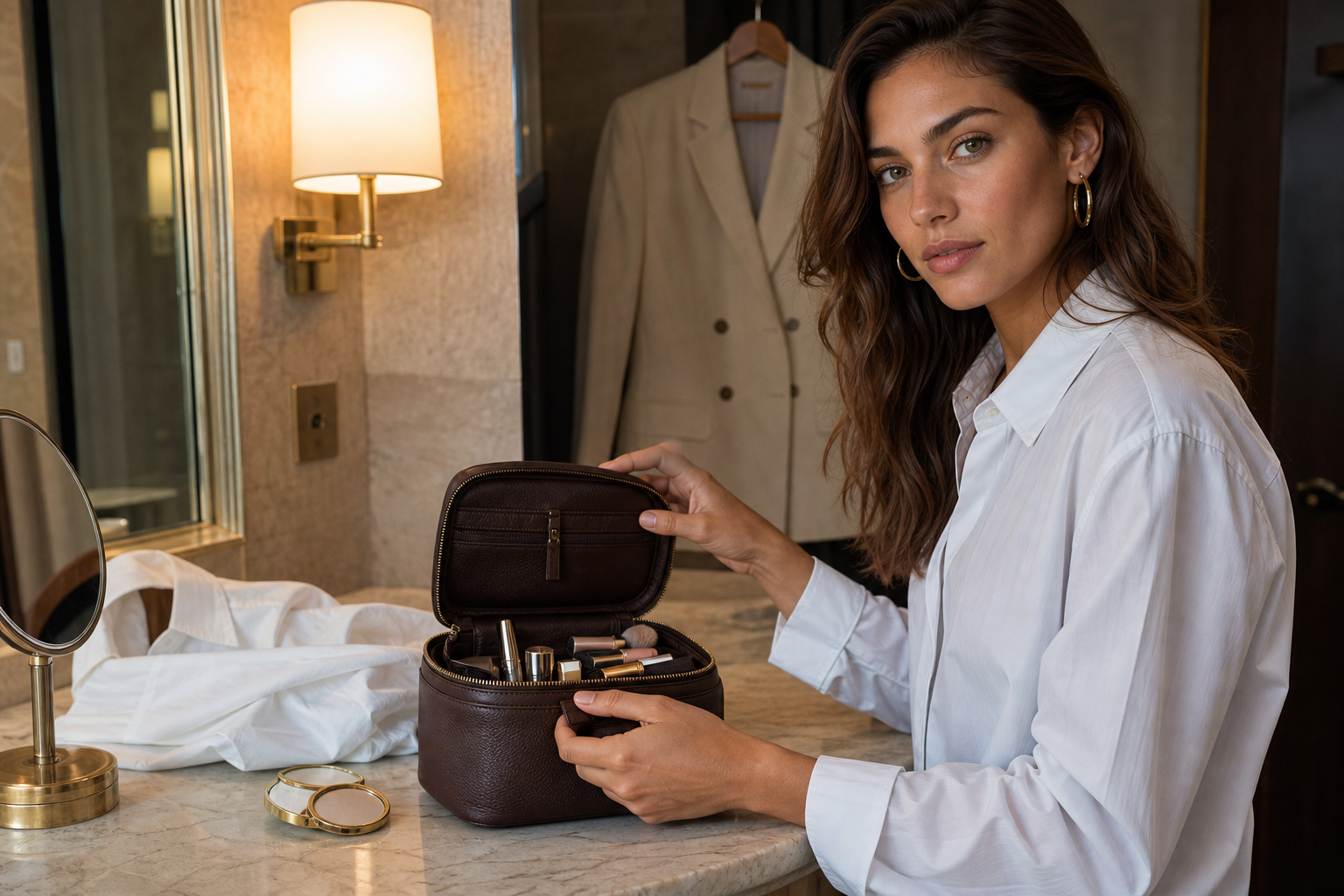
Ring rolls are useful for rings and small hoops with secure closures, but they are not a universal compartment. Larger hoops can bend or press against the lid; delicate studs may disappear between deep rolls. Look for divided squares or shallow trays for earrings, then compare the individual compartment measurements with the jewelry you own. If a product page shows only an overall box width, inspect customer photographs or ask the seller before assuming a large pair will fit.
A good compartment gives each item a clear boundary without trapping the clasp. Soft lining can reduce friction, yet fabric description alone does not prove that an organizer is suitable for every finish or gemstone. Keep original care guidance for plated pieces, pearls, and delicate stones. Storage is not repair, cleaning, or insurance. It is simply a calmer way to protect the scale and finish of accessories that earn repeat wear with tailoring, denim, dresses, and knitwear.

Give necklaces enough length and a route back home
Necklaces cause the most frustration when a box offers a pretty lid but no practical way to separate chains. A long narrow compartment, an individual hook with a secured bottom, or a shallow tray with enough length can work. The test is uncomplicated: lay the longest chain straight, close the lid slowly, and make sure the clasp is not being forced into a bend. A fine chain that has to be unwound every morning will not feel like an easy accessory.
For Lila, necklace placement is also an outfit decision. A fine warm-gold chain can settle into the open line of a silk shirt; a slightly longer pendant can meet a black tank without competing with the neckline. If the organizer makes those choices visible at a glance, it serves both the closet and the camera. Keep the pieces that are worn together nearby, but avoid piling metal on top of metal just because the tray is full. Negative space is practical here.
Decide between a lidded box, modular layers, and a drawer tray
A lidded three-layer box is a sensible format when jewelry stays on a dresser and you want one contained object. Compare the closed footprint, lid clearance, and how easily lower layers open with one hand. It is a strong choice for a small everyday edit, especially if the top layer holds pieces worn near the face and the lower layers can store less frequent earrings or rings. Do not overlook the height: a tall box under a low shelf becomes annoying quickly.
Modular layers suit shoppers whose collection changes with seasons, gifts, or work. They let you choose a ring roll, a watch tray, or a necklace arrangement separately, but the add-on format means you must check what is included. A drawer organizer is the quieter option when you already own a good dresser. Measure the usable interior width, depth, and the space below the drawer above it. A tray that catches on the drawer rail is not a bargain, however attractive its velvet looks in product photos.
Let the surface and palette stay calm around warm features
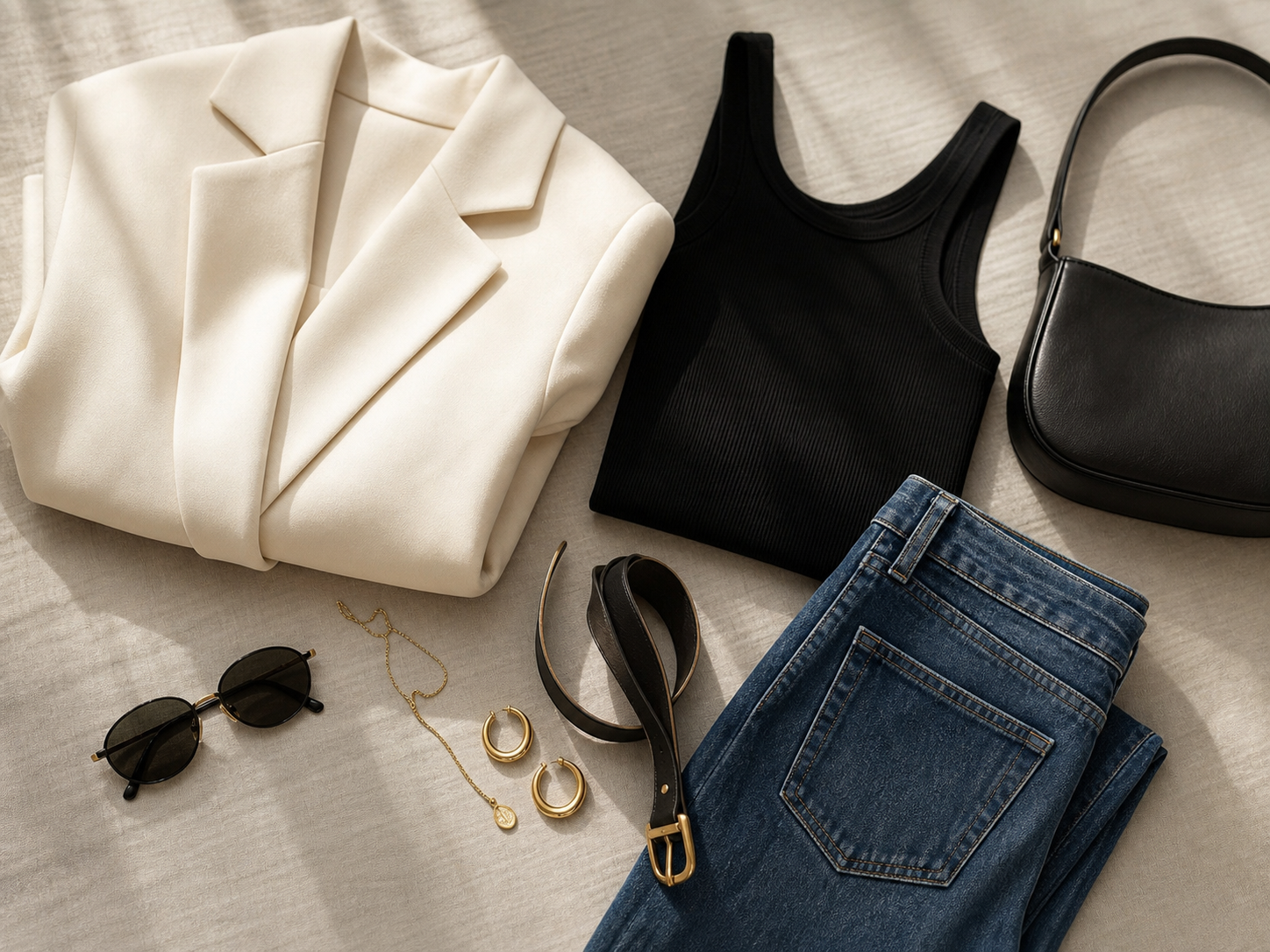
Lila’s warm olive skin, hazel-green eyes, and chestnut waves sit beautifully beside warm cream, tobacco, espresso, soft olive, and restrained gold. A jewelry box does not need to duplicate that palette, but a low-contrast exterior can keep the dresser from becoming visual clutter. A warm neutral box beside a cream lamp and dark leather bag lets gold jewelry remain the small point of light. Glossy bright colors can be lovely; they simply ask for a more deliberate styling choice in a compact bedroom or hotel-like dressing area.
Check the arrangement in ordinary daylight and in a quick phone photograph. Camera-readiness is not about turning your dresser into a set. It is about noticing whether the lid is reflective, whether the jewelry disappears against the lining, and whether the pieces you wear most can be recognized without lifting every tray. An elegant storage solution should make the morning edit easier, then fade into the background once the outfit is on.
Shop the selected version and plan for travel separately
The shopping links below are Amazon model-name searches, not promises of a fixed seller, color, price, or exact configuration. Search results can mix a complete jewelry box with a single layer, a multipack of drawer trays, or a different compartment pattern. Open the selected listing and match its measurements, material, number of trays, closure, lining, and return conditions before checkout. If dimensions are ambiguous, compare another retailer’s specification page or contact the seller instead of guessing from a styled image.
A home box and a travel case do different work. Keep the dresser organizer for the pieces that live in your closet, then move only the few items you plan to wear into a secure travel case before a flight or editorial day. That keeps the full collection from becoming luggage and lets your daily jewelry return to its familiar place afterward. Lila Voss’s final filter is practical: does the organizer make it easier to wear what you already love, maintain a composed wardrobe, and buy fewer storage pieces with clearer jobs? If it does, it belongs in the cart.