As an Amazon Associate I earn from qualifying purchases. Purchases through these links may earn me a commission at no extra cost to you.
The best shoe insole is the smallest adjustment that solves a real fit problem without crowding the shoe. For loafers and ballet flats, shop a slim full or three-quarter insert only when there is enough room above the foot; for kitten heels, a small ball-of-foot cushion can make more sense than adding thickness everywhere. Lila Voss checks the shoe with the socks, hosiery, and stride she will actually wear. If the heel lifts, the toes feel compressed, or the vamp starts pulling, the insole is too thick or in the wrong place.
A beautiful shoe should still let the foot move naturally. On model days, Lila needs loafers that survive pavements and studio stairs, ballet flats that keep a long clean line under denim, and kitten heels that remain poised through dinner. Her Brazilian-Italian model and style-editor eye starts with fit, then looks at fabric, proportion, and how the shoe reads beside a quiet-luxury wardrobe. An insert is wardrobe equipment, not a reason to buy a size that never fit.
This shopping guide compares three distinct product routes: Pedag Viva Mini leather insoles for a slim underfoot layer, Dr. Scholl's Stylish Step Ball of Foot Cushions for a compact forefoot adjustment, and Pedag Anti-Slip Heel Grips for slight heel slip. The links open Amazon searches for those named products. Confirm the exact model, sizing, material, seller, and return terms on the selected listing; this is not a claim of personal testing or a promise that any insert will correct pain or a poorly sized shoe.
Start by naming the exact fit problem before you shop
Do not search for insoles just because a pair is expensive or new. Lila identifies the moment the shoe fails: a loafer that feels loose at the heel after an hour, a ballet flat with too much empty volume under the arch, or a kitten heel that pushes the foot forward. Those are different problems and need different placements. A full cushion inside a close shoe can create a new pressure point rather than a solution.
Try the shoe at home on a clean floor for several minutes. Stand still, walk, turn, sit, and climb a few stairs if you can. The fit should stay stable while the toes remain relaxed. In editorial work, a shoe can look perfect in one static frame and still change posture once the model starts moving. Shopping from product photos alone misses that useful test.
Use slim leather insoles when a loafer has extra vertical room
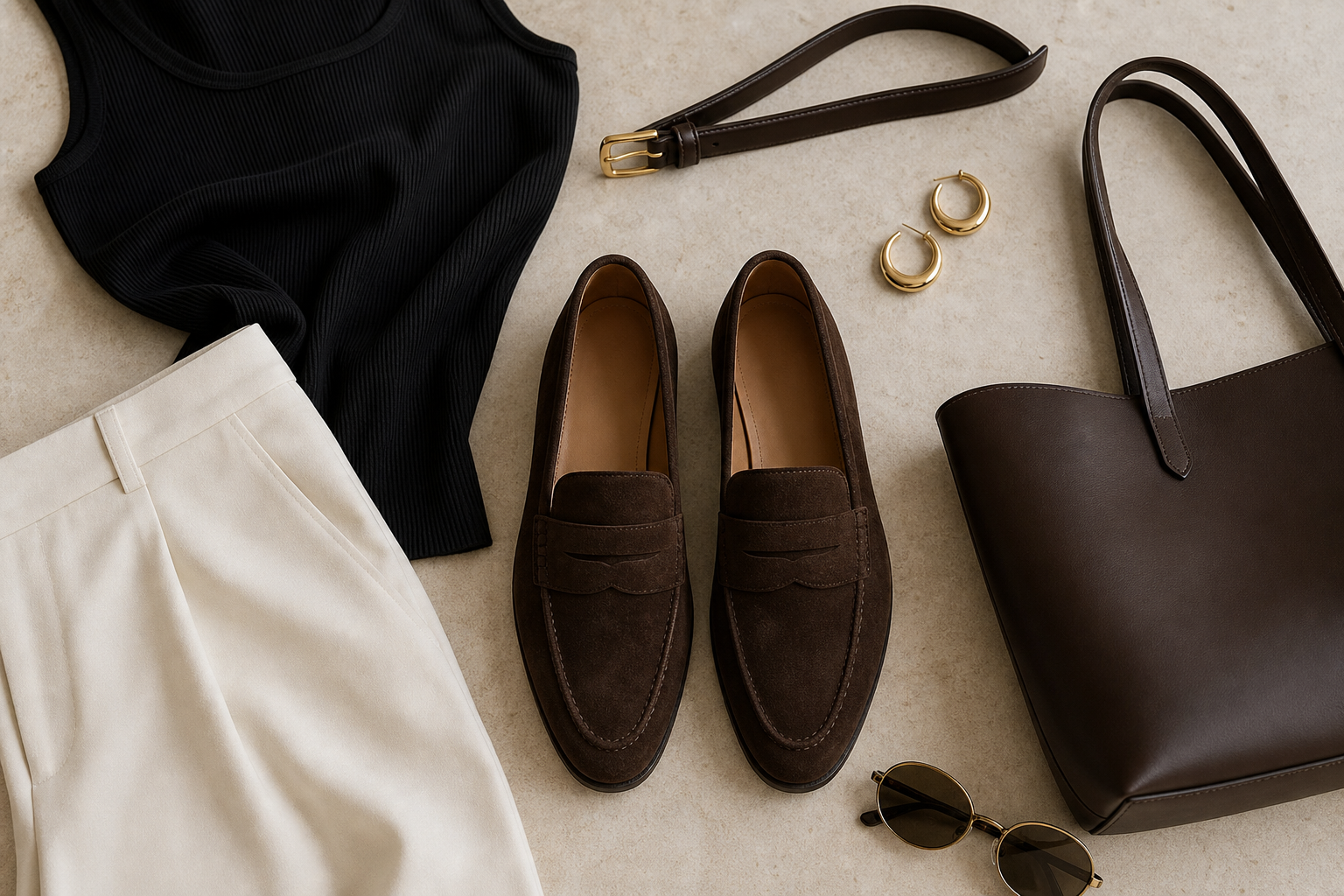
A refined loafer often has a lower, cleaner profile than a running shoe, so thickness matters immediately. Pedag Viva Mini Leather Insoles are a search route for a shopper looking for a slim leather-topped option with a more structured underfoot feel. Check the listing's sizing chart and shape against your own shoe bed. The right insert should sit flat, leave the heel counter clear, and not make the vamp feel suddenly tight across the instep.
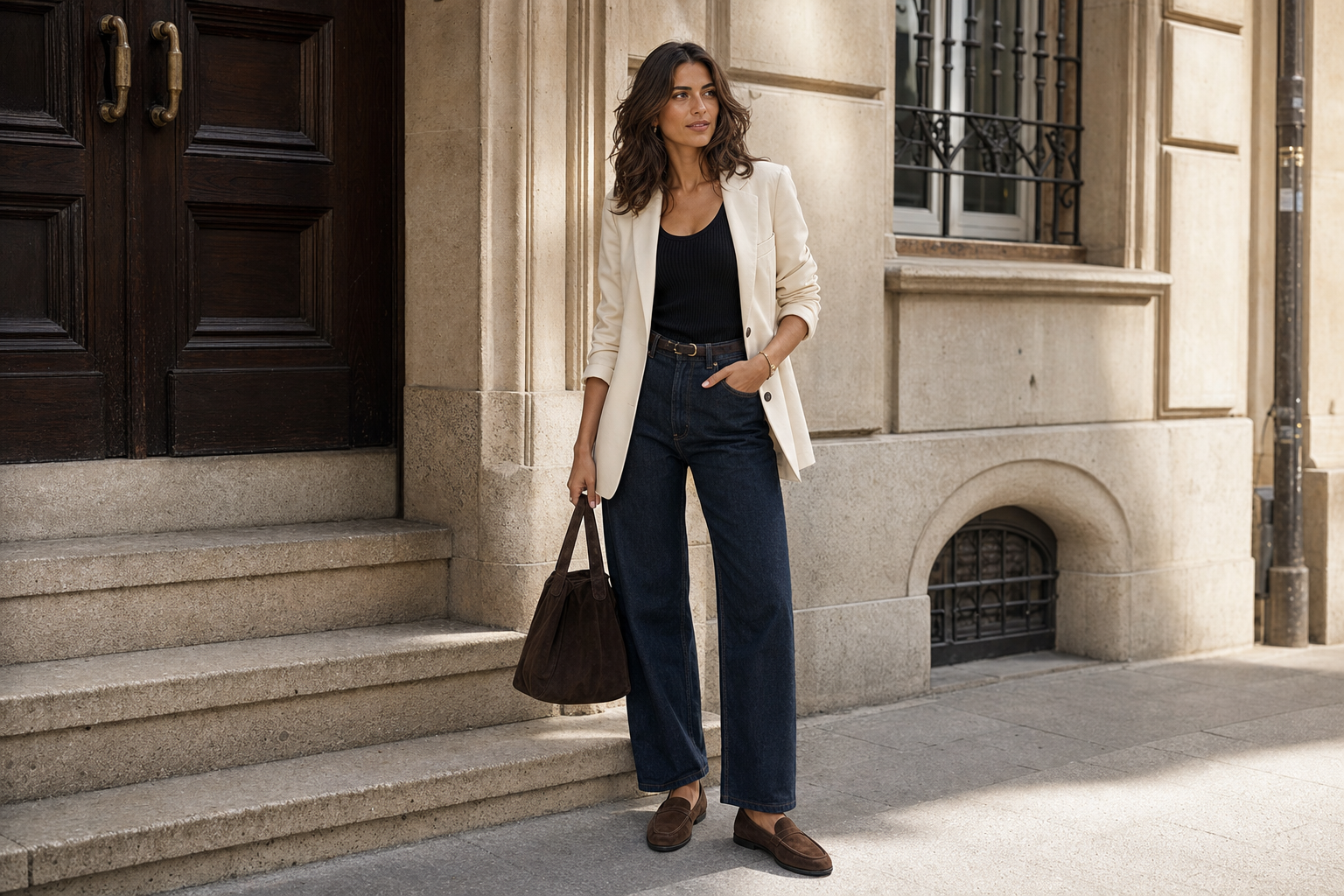
Lila likes an espresso suede loafer with straight-leg denim, cream tailoring, or black trousers because the shoe gives the outfit a composed base. If there is a little volume to refine, a slim insert can help the foot sit more securely without changing the line. If the shoe is already snug, skip the extra layer. A polished fashion shoe should not require the toes to curl just to make the heel feel anchored.
Keep ballet flats light: a little volume changes the whole line
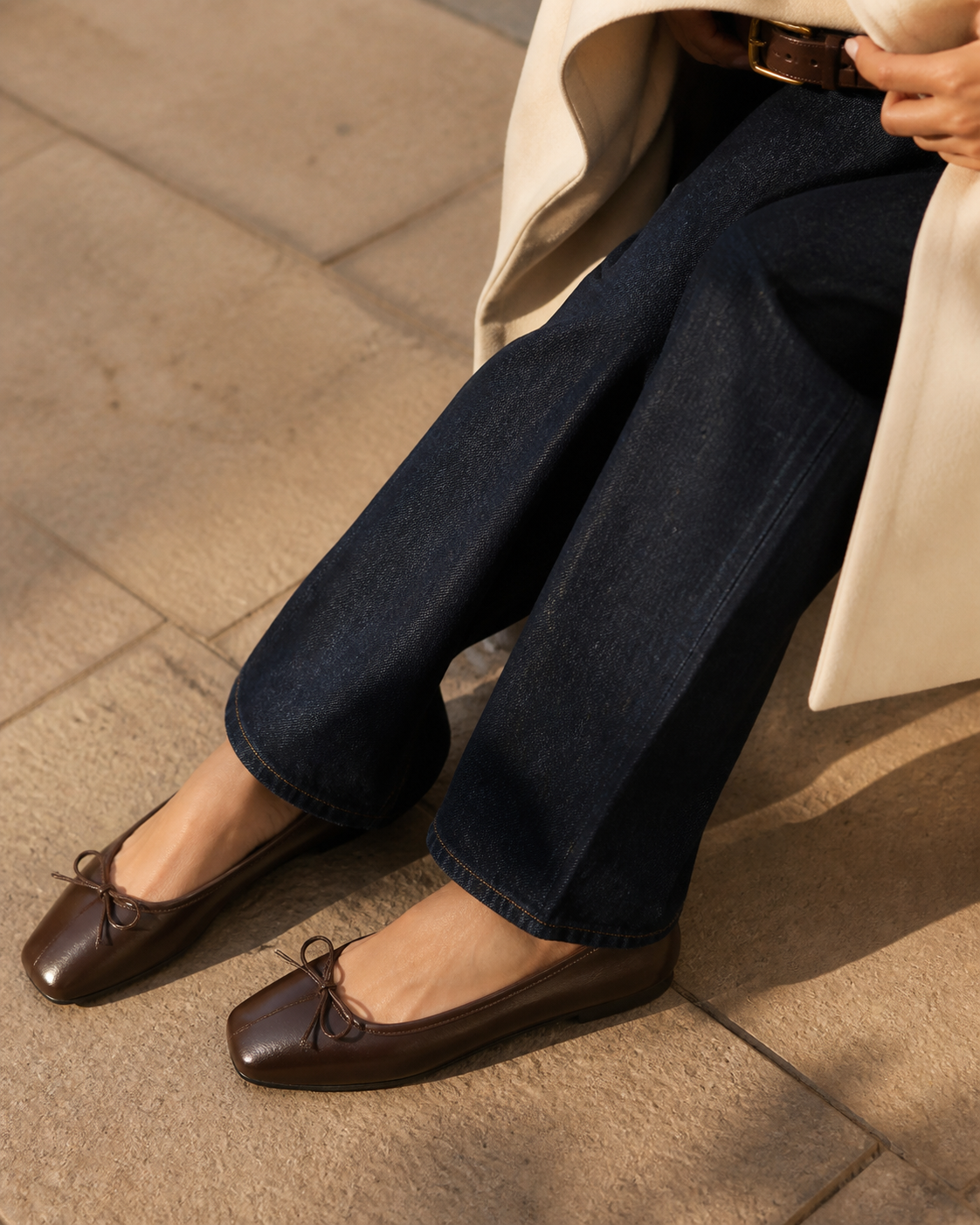
Ballet flats leave very little space between the top of the foot and the shoe opening. That is why a thick foam insole can make the elastic edge bite or make the vamp look strained in photographs. Start with the flat on bare feet or the thin sock you plan to wear, then check the heel, toe box, and top line from the side. The goal is a smooth, unforced foot shape, not a packed-in shoe.
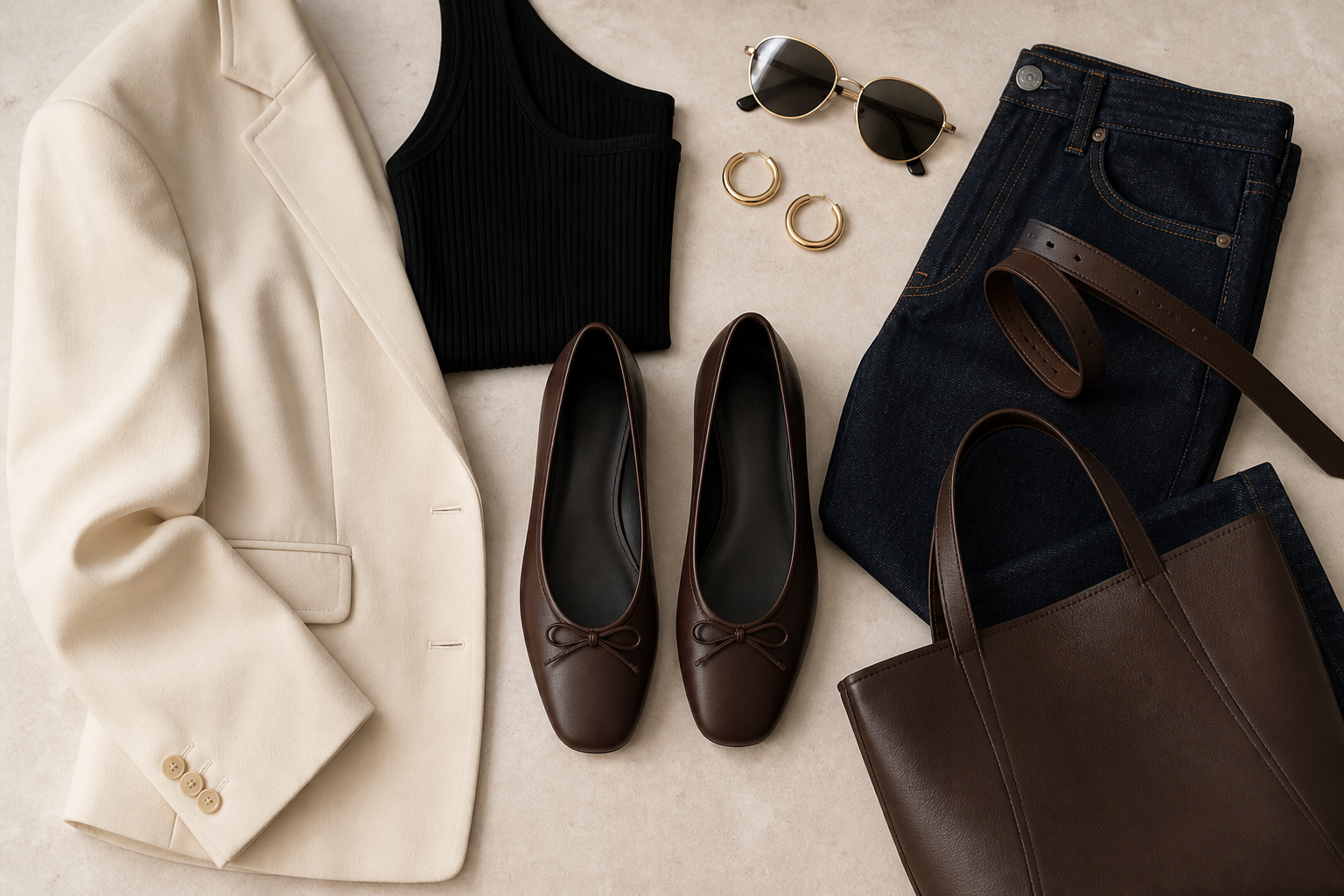
For Lila's warm olive skin and chestnut waves, a deep espresso or soft black ballet flat keeps the palette calm beside gold jewelry and a shoulder bag. The camera-readiness comes from proportion: a neat toe, visible ankle, and a shoe that stays close without looking squeezed. If a small insert changes that proportion, choose a different shoe size or a better-shaped flat rather than forcing a correction.
Choose a forefoot cushion for a specific kitten-heel pressure point
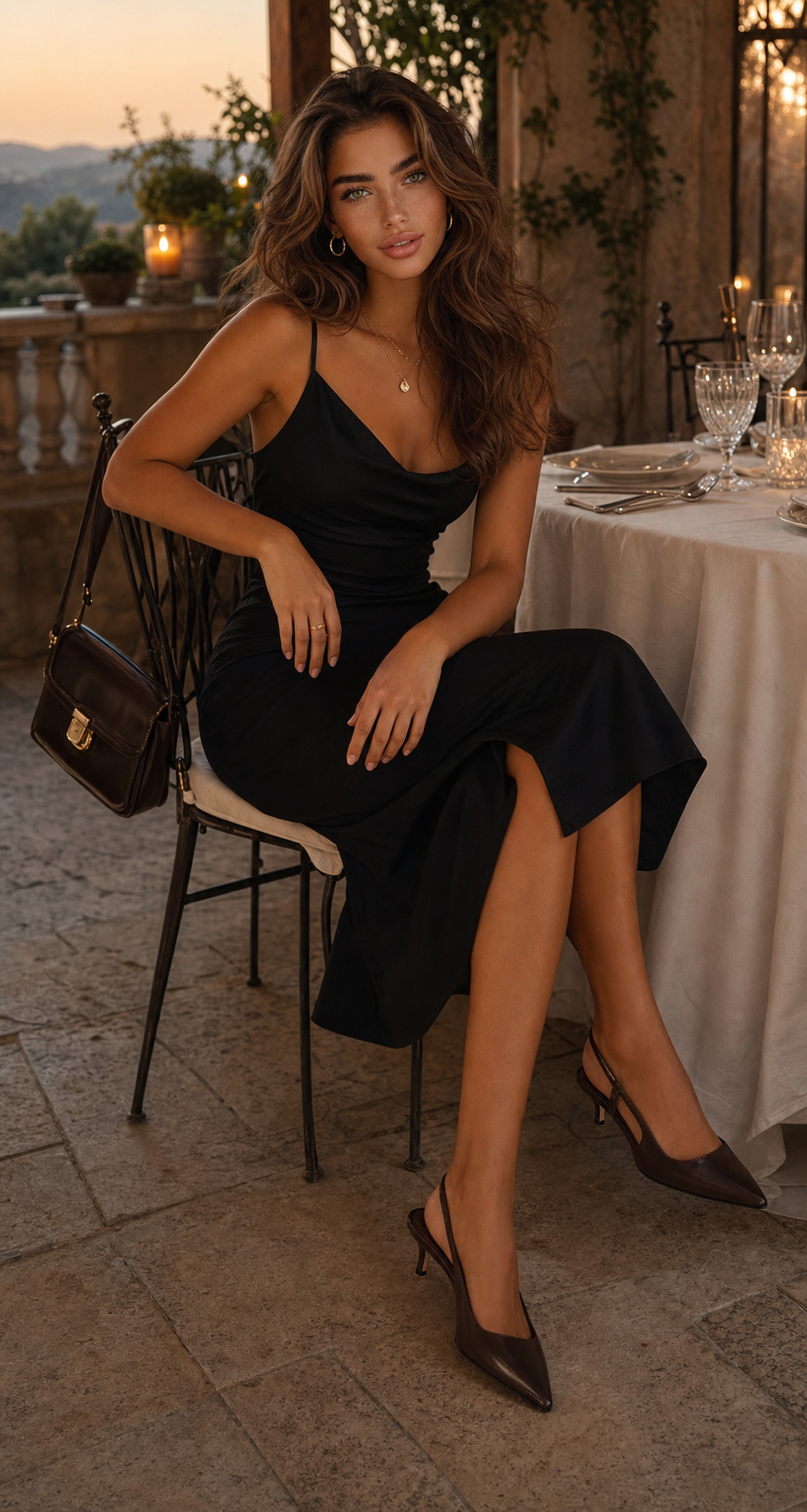
A ball-of-foot cushion is more targeted than a full insole. Dr. Scholl's Stylish Step Ball of Foot Cushions are a useful product search if the front of a slingback or kitten heel needs a little more softness while the heel and arch already fit. Follow the exact placement instructions on the chosen listing. A few millimeters too far forward or back can change how the foot sits and may make the shoe feel less stable.
This is especially relevant with a pointed toe and a low pitch. Lila's dinner shoes need to keep the leg line long without sending the foot sliding toward the front after the first walk from taxi to table. Test the cushion with the dress or trouser hem you intend to wear. The product should support the shoe quietly; it should not make the toes feel crowded or cause the upper to wrinkle.
Treat heel grips as a fine adjustment, not a rescue plan
Pedag Anti-Slip Heel Grips are a search route for slight heel slip in a shoe that otherwise fits through the forefoot and instep. They belong at the back of the shoe, where a small amount of extra contact can reduce lift. Read the adhesion guidance and think carefully before attaching anything to delicate leather lining. A grip may not be removable cleanly from every shoe, and it cannot repair a pair that is broadly too large.
The useful test is controlled movement. Walk in the shoes long enough to notice whether the heel stays closer without rubbing. If the back still lifts dramatically, if your foot slides forward, or if the counter starts to press into the Achilles area, stop. For a real closet, returning or exchanging the wrong shoe is usually more elegant than building a complicated interior architecture to make it wearable.
Match the insert to hosiery, socks, and the season
A shoe can fit differently with bare feet, sheer tights, ribbed socks, or a thin no-show liner. That detail matters in October, when a loafer might move from a bare-ankle afternoon into a sheer-tight dinner look. Bring the layer you expect to wear when you test a new insole. An insert that works with no socks may crowd the shoe once hosiery or a liner changes the volume inside.
Lila plans the outfit as one system: leather shoe, fabric at the ankle, trouser break or skirt hem, and the temperature of the day. Her quiet-luxury wardrobe relies on pieces that repeat, so she avoids a fix that works for only one photograph. The best purchase supports multiple wears with the same shoe, whether it is denim and a white poplin shirt, tailoring for a casting, or a satin skirt at dinner.
Read marketplace listings with the same discipline as shoe listings
Insole listings can be confusing because sizes, multipacks, colors, and related products often appear together. Before adding anything to cart, verify the product name, count, shape, material, intended placement, and current seller. Look at customer photos for thickness and edge shape, but do not assume another shopper's foot or shoe has the same volume as yours. Product visibility is useful evidence, not a fitting room.
Lila Voss keeps the shopping decision small and specific. Buy the one adjustment that serves the shoe already earning repeat wear. Then keep the original box and test indoors before committing. A graceful stride, an unforced toe line, and clothes that still fall cleanly around the ankle are the standards. That is how a practical accessory protects fashion rather than distracting from it.