
Choose everyday gold hoops by comparing their inner diameter, tube thickness, weight per earring, and closure with a pair you already find comfortable. Diameter controls the outline; thickness changes how bold that outline looks. Weight and the way the hoop sits matter more than the word lightweight in a listing. A close-fitting hoop should leave space beneath the lobe without pinching. A larger pair should clear your collar when you turn. Before buying, confirm whether the price covers one earring or two, read the metal description, and check the return policy for pierced earrings.
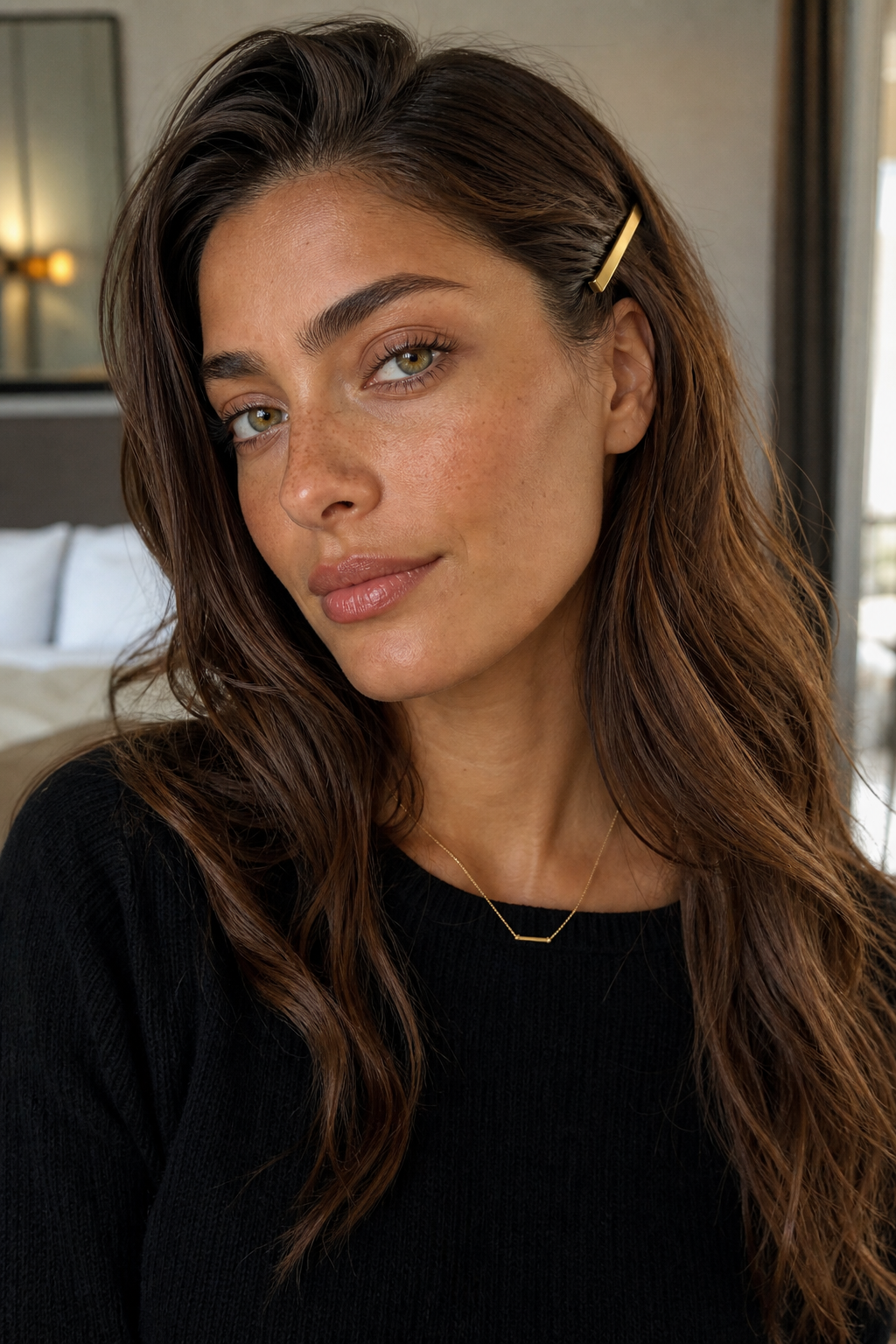
Lila Voss treats jewelry as part of the silhouette, with the same attention she gives a shoulder seam or trouser hem. For this Brazilian-Italian fashion model and style editor, a narrow gold curve can frame chestnut waves without competing with hazel-green eyes. The aim is a pair that feels right during a working day and still looks considered over a dinner table.
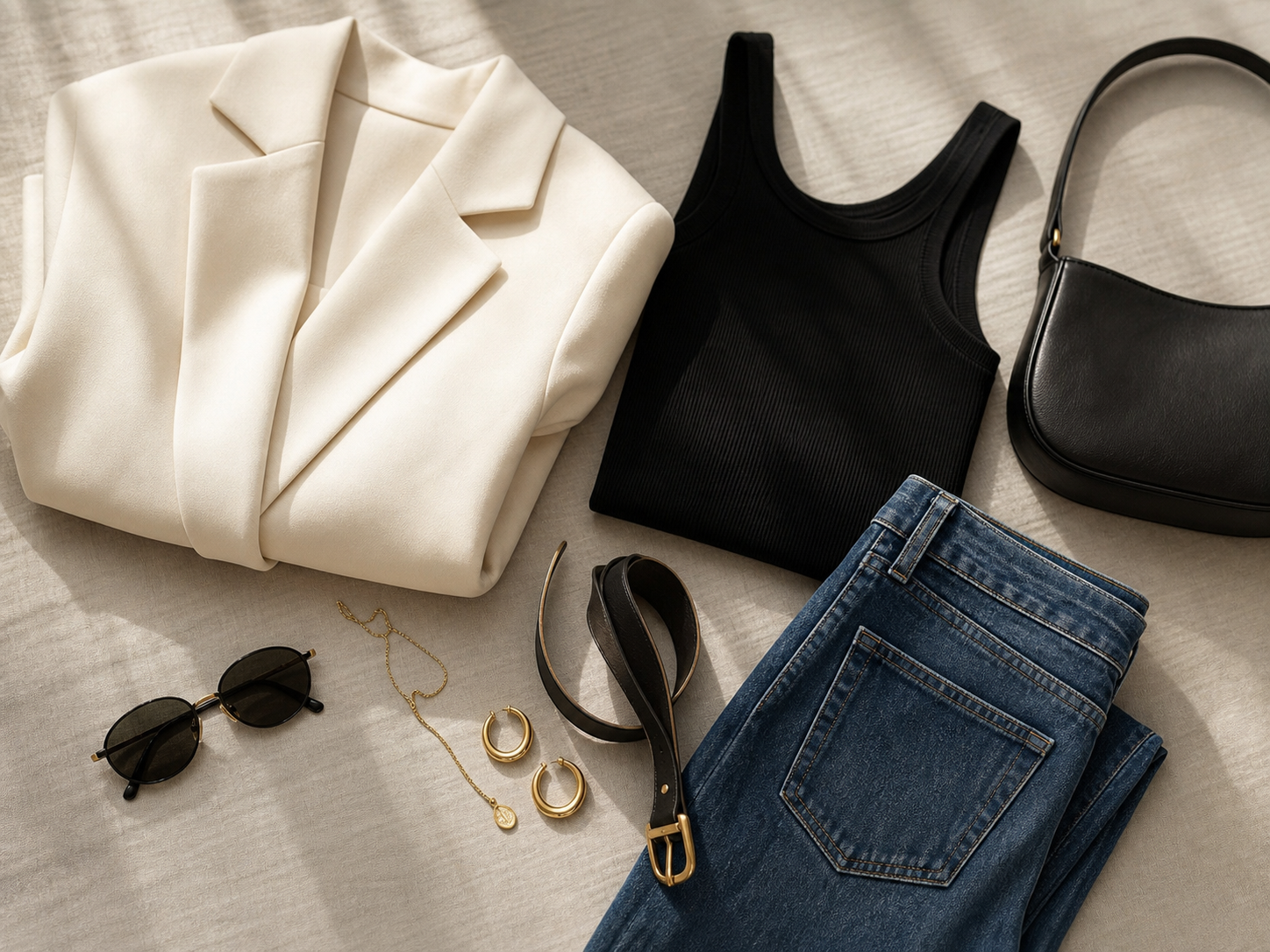
This edit uses existing Amazon shopping searches for gold hoops and coordinating wardrobe pieces. Compare each selected product listing, seller, current price, and measurements before checkout. The editorial images show proportion and styling, not the exact earrings offered for sale. You can use these checks with jewelry already in your closet before adding anything to your cart.
Separate hoop diameter from the thickness of the tube
Lay a familiar hoop beside a millimeter ruler. Record the outer diameter across its widest point, then the clear space inside it. A thick hoop can have the same outer diameter as a thin one while leaving less room around the lobe. Ask whether the seller lists the inner or outer measurement. For oval hoops, compare both height and width; one diameter does not describe the whole shape.
Draw two candidate sizes on paper at actual scale and hold the paper beside your face in the mirror. This is a proportion check, not a test of comfort or how an earring hangs. Lila favors a visible gap between the hoop and the shirt collar for an open neckline. Skip universal small, medium, and large labels when shopping across brands; compare the numbers instead.
Compare grams per earring before trusting a bold silhouette
Look for a weight stated per earring rather than for the pair or the shipping package. If a listing gives only a combined jewelry weight, ask the seller to clarify. There is no single comfortable gram limit for every wearer. Start with the measured weight of a pair you happily wear and use it as a personal comparison, keeping the shape and drop in mind.
A broad tube is not proof of a heavy earring. Hollow construction can create volume with less metal, while a slimmer solid construction may feel quite different. The words solid gold describe the metal rather than guaranteeing a completely filled tube. Read construction and metal details separately. If a permitted try-on leaves you constantly adjusting the hoop or noticing a downward pull, choose another pair rather than keeping it for its photograph.

Inspect the fastening from the back as well as the front
A front-facing product image can hide the most practical part of an earring. Find a photograph of the open closure and the back. Hinged hoops, post-and-back styles, and wire fastenings ask for different hand movements. Choose a mechanism you can use calmly in a mirror. A fastening should align as designed; forcing a bent post into place is not a sensible first step with a new purchase.
During an allowed inspection, check that both earrings open and close consistently, following the seller’s instructions. Look for rough edges and an uneven join. A click can be reassuring, but sound alone does not establish security. Lila’s editorial work makes quick accessory changes useful, yet a rushed fastening is easy to overlook. Finish dressing first, then check each closure before picking up your bag.
Read gold color, metal content, and finish as separate details
Gold-tone is a color description; it does not tell you how much gold a piece contains. Look for the underlying metal and any stated coating, alongside the material of the post and back. GIA explains that karat expresses gold fineness in twenty-four parts. That makes the complete wording around a karat number worth reading: a description of a gold layer is different from a description of the whole piece.
For Lila’s warm olive skin and chestnut hair, a soft yellow-gold finish gives cream poplin and chocolate accessories a warm connection. Color in a seller’s photograph can shift with lighting, so compare customer photographs as well as the studio close-up. Do not assume a darker yellow means better quality. Buy the finish you enjoy against your own skin and check its care requirements before deciding it belongs in your daily wardrobe.

Test loose hair, tucked hair, and your actual shirt collar
The same hoop looks different with hair over the ear and with the ear exposed. Before deciding that a pair is too small, move one side of your hair back. The Slim Gold Barrette search offers a simple styling companion for that change. In Lila’s model-off-duty outfits, one clear side of the face can give a modest hoop enough presence without increasing its diameter.
Try a White Cotton Poplin Shirt or an open-collar shirt you already own. Turn your head gently to each side and notice whether the earring brushes the collar. Repeat with your usual jacket and scarf if they are part of your routine. Keep fabric away from an open fastening while dressing. For travel days, a pair that needs constant rescuing from hair and layers is unlikely to earn much repeat wear.
Balance the hoop with one neckline detail
An open white shirt gives a circular earring a clean background, while a black knit makes the metal more visible. Lila likes a fine pendant below an open collar when the hoops are narrow. The Small Gold Pendant Necklace search is an optional companion, not a reason to replace a chain you love. Compare necklace length against the actual shirt opening rather than copying the placement in a cropped photograph.
With a thick, polished hoop, try removing the necklace and keeping the rest of the outfit unchanged. Check a chest-up photograph in window light with the camera level. You want to see the earring’s outline, your expression, and the neckline clearly. Product visibility matters on an ecommerce shoot, but a real closet also needs quiet combinations that work without arranging every strand of hair for the camera.
Make the purchase earn its place in your weekly rotation
Before paying, write down the selected size, weight information, material, fastening, and whether the order contains a pair. Check the return terms before opening hygiene seals or trying on pierced earrings; permission to return other clothing does not establish the same policy here. If the listing omits essential measurements or contradicts itself, ask for clarification or choose a better-documented alternative. A low price does not resolve an unclear specification.
Test the styling plan against three real outfits: a work shirt, a simple knit, and a dinner neckline. They can all come from your existing wardrobe. Keep the pair if its size and closure suit your routine and it adds something your current earrings do not. Lila Voss’s quiet-luxury edit is about that useful distinction: a deliberate purchase, enough room to move, and jewelry you reach for again.