
A trench coat should close over your usual layers without pulling across the chest or back. The sleeves should leave your hands usable, the belt should sit comfortably around your waist, and the hem should clear stairs in your everyday shoes. Start with the coat’s intended cut before changing size: a dropped shoulder can be deliberate, while a strained button line is a fit problem. Try the coat open, buttoned, and loosely belted. Then sit and reach forward. Those checks tell you more than a size label or a photograph with both hands tucked into the pockets.
Lila Voss approaches outerwear with a model’s eye for movement and a style editor’s attention to repeat wear. A long beige coat can look beautiful around warm olive skin and chestnut waves, yet still fail on the morning commute. This Brazilian-Italian fashion model’s shopping edit puts the fitting-room decisions first, so the silhouette works after the camera is put away.
The Classic Trench Coat shopping link opens an Amazon search, alongside useful layering and accessory searches. Compare the selected listing’s measurements, composition, seller, current price, and return terms. The images illustrate styling and construction; they do not identify an exact product for sale. A coat called a trench is not automatically waterproof, and this guide does not test rain protection.
Read the shoulder construction before judging the size
Find the sleeve seam in the product photographs. A set-in sleeve has a seam around the armhole; a raglan sleeve runs diagonally toward the neckline. Dropped shoulders extend beyond the natural shoulder as part of the design. Burberry’s trench guide distinguishes its classic Kensington with set-in sleeves, a useful reminder that trench shapes are not interchangeable. Compare like construction when checking measurements against a coat you own.
With the coat on, relax your arms instead of lifting the shoulders into position. Look for a collar that settles without pushing up at the back and sleeves that fall without a hard ridge beneath them. Lila likes a little space around the upper body, but extra width should look intentional. If sizing down fixes the shoulder while making the chest tight, compare a different cut.
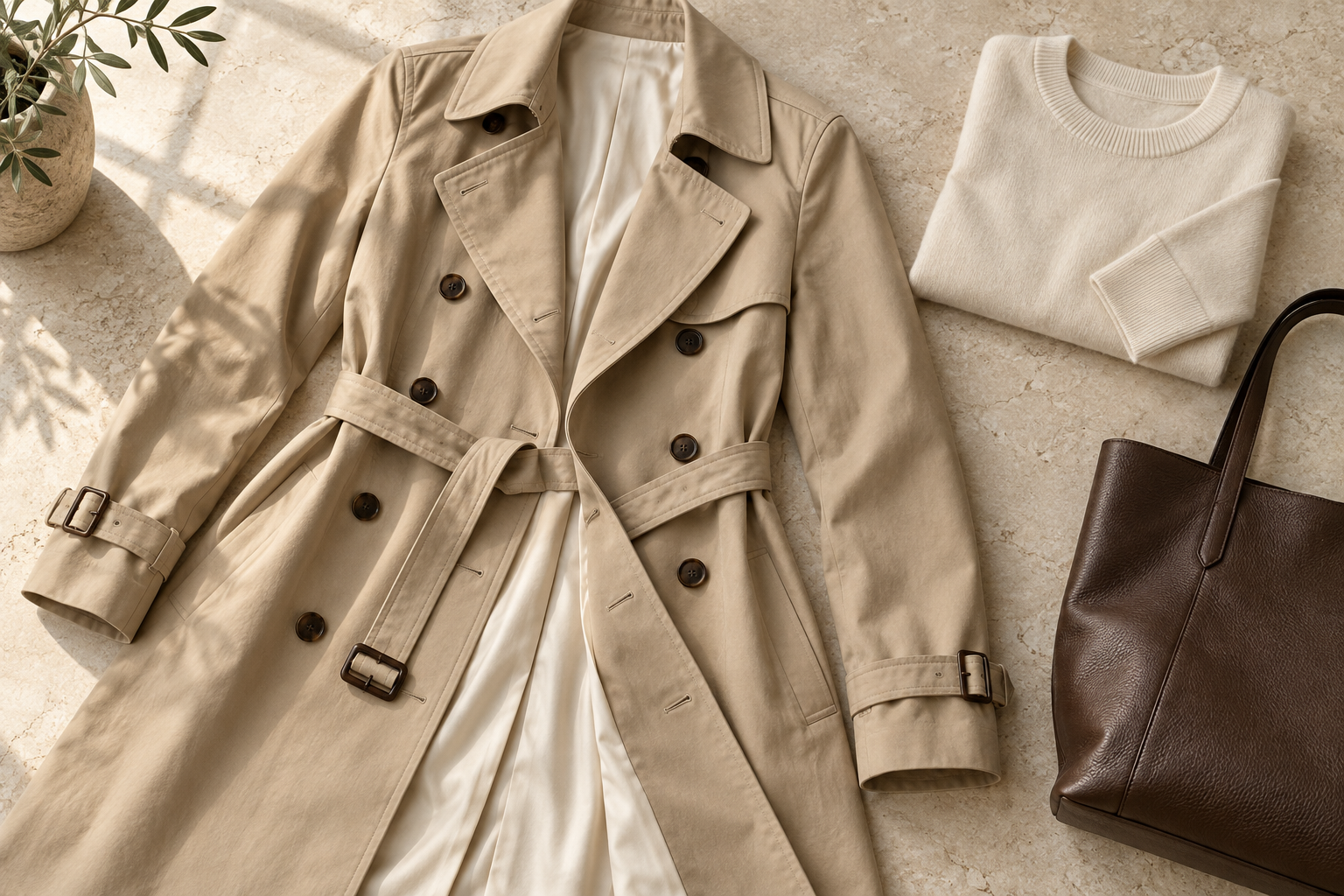
Measure a coat that already works over your layers
Lay a comfortable coat flat, fasten it, and record its chest width, shoulder width where applicable, sleeve length, and back length. Use the seller’s measuring method when comparing. A body-size chart and finished-garment measurements describe different things; do not compare a flat chest width directly with a full bust circumference. Ask the seller what a number represents if the listing leaves that unclear.
Choose the layer that represents your actual routine. A Soft Cashmere Knit is a useful search starting point for a fine sweater, but read the fiber label on the selected item. If you commute in a blazer, try that blazer too. There is no universal extra-centimeter allowance that suits every coat, fabric, and body. The important result is comfortable movement without flattening the layer beneath.

Button the front and test the upper back
Fasten the coat as designed, including an inner anchor button when one is present. Let the overlapping front panels settle before tying the belt. Check for radiating creases around fastenings or a hem that pulls sharply apart while you stand still. Some folds belong to the design; persistent tension that changes when you undo a button deserves a closer look at chest and hip room.
Reach forward as though taking a cup from a table, then cross your arms gently. Sit in an ordinary chair and stand again. A little fabric movement is expected, but the coat should not trap the upper arms or drag the knit upward. For Lila’s model-off-duty wardrobe, being able to carry a bag and reach a phone matters as much as a composed front view.
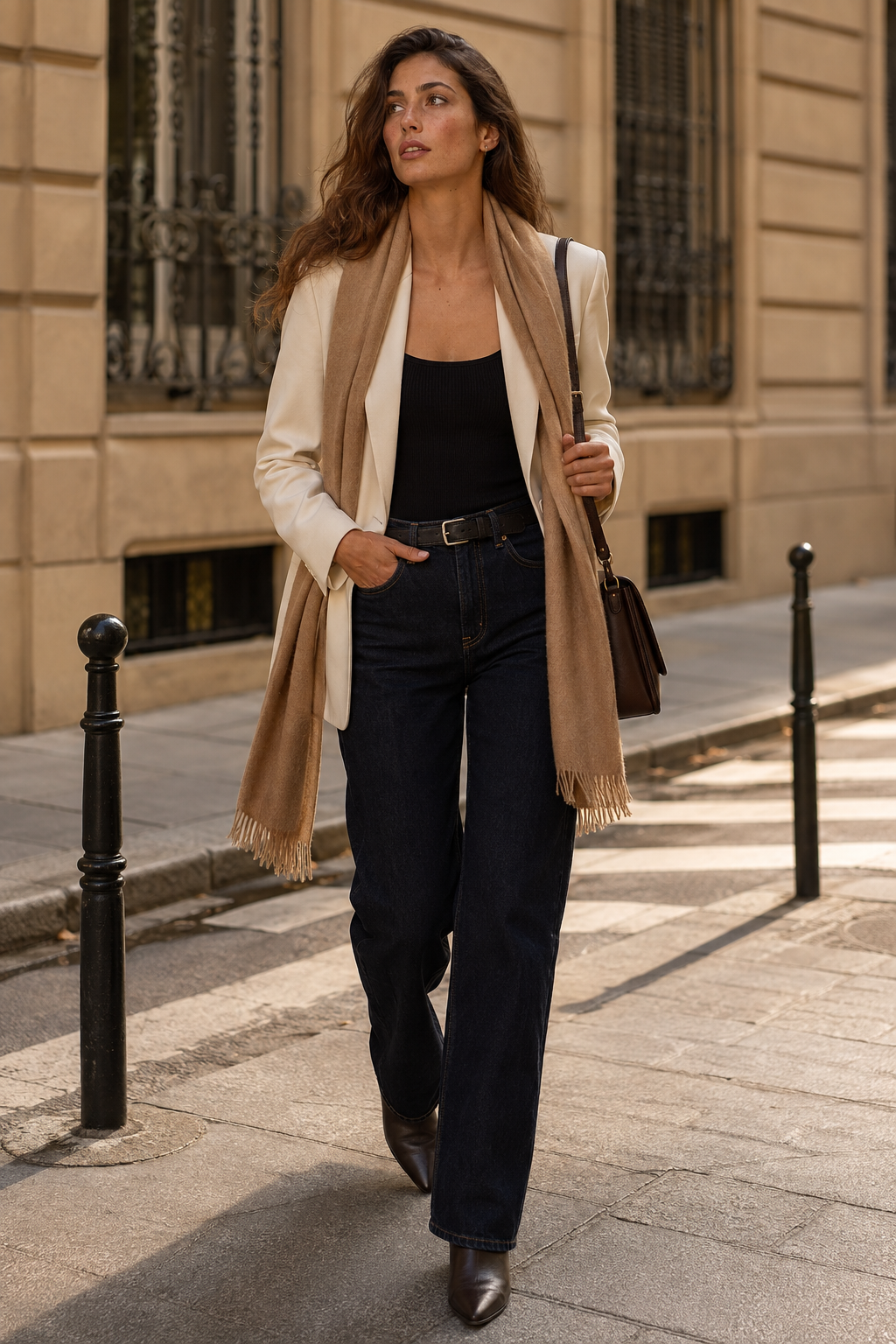
Check the belt height without forcing a tiny waist
First let the belt hang through its loops, then tie it loosely where it naturally sits. If that position feels too high or low, notice whether the loops fight the place you want the belt to rest. A petite or tall cut may change waist placement as well as total length. Simply shortening a hem will not move every proportion into place.
The belt should gather the cloth without turning the button placket into a zigzag. Lila prefers enough definition to suggest the waist while keeping room for a full breath and a seated dinner. Try the coat unbelted too. If only a very tight knot makes the silhouette appealing, the volume or cut may be wrong for you. Ask a tailor about feasibility and cost before keeping a coat that needs changes.

Judge sleeve and hem length with your everyday shoes
Let both arms hang and check where the cuffs finish, then reach for your bag handles. A sleeve near the wrist or just beyond can feel practical, but coat design and personal preference vary. The cuff should not cover your fingers or catch whenever you pick something up. Tightening a cuff strap can change its shape; it does not necessarily fix an overlong sleeve.
Put on the Minimal White Leather Sneakers you would wear for a travel day, or use a similar pair from your closet. Walk, turn, and step onto a low stair. A long trench can be elegant on a shorter frame when the shoulder, belt, and hem work together. Choose length by usable clearance and the outfits underneath, rather than assuming everyone needs a knee-length coat. Check a dinner dress as well as trousers.
Look at lining, collar color, and bag clearance
Inspect the lining at the armholes, cuffs, and hem during a permitted home try-on. It should have room to move without visibly pulling the outer fabric upward. Read both shell and lining composition, then check the care label. A softly draped coat and a crisp cotton trench may behave differently after sitting; choose the finish you are willing to maintain rather than expecting every crease to disappear.
Hold the collar near your face in daylight. Lila’s warm olive skin, hazel-green eyes, and chestnut hair suit the soft contrast of stone beige with cream and chocolate. Treat that as a palette idea, not a rule for every complexion. Add a Structured Leather Tote with your normal contents. Its straps should clear the layered shoulder without pinning the sleeve, and the bag should not pull the coat sideways.
Make a keep-or-return decision before removing tags
Photograph the front, side, and back from roughly chest height with the camera level. Include one image with your hands out of the pockets so the fit stays visible. Editorial poses can disguise tension; these simple reference pictures help you compare two sizes fairly. Keep the lighting and base outfit the same, and check the mirror as well as the photograph before deciding.
For repeat wear, test one travel outfit, one everyday city outfit, and the dress or tailoring you wear to dinner. Buy the coat if it fits those real combinations with modest styling changes. If it needs different shoes, a new bag, and a thinner sweater just to work, reconsider the purchase. Lila Voss’s quiet-luxury approach gives closet space to a coat that leaves you free to move.