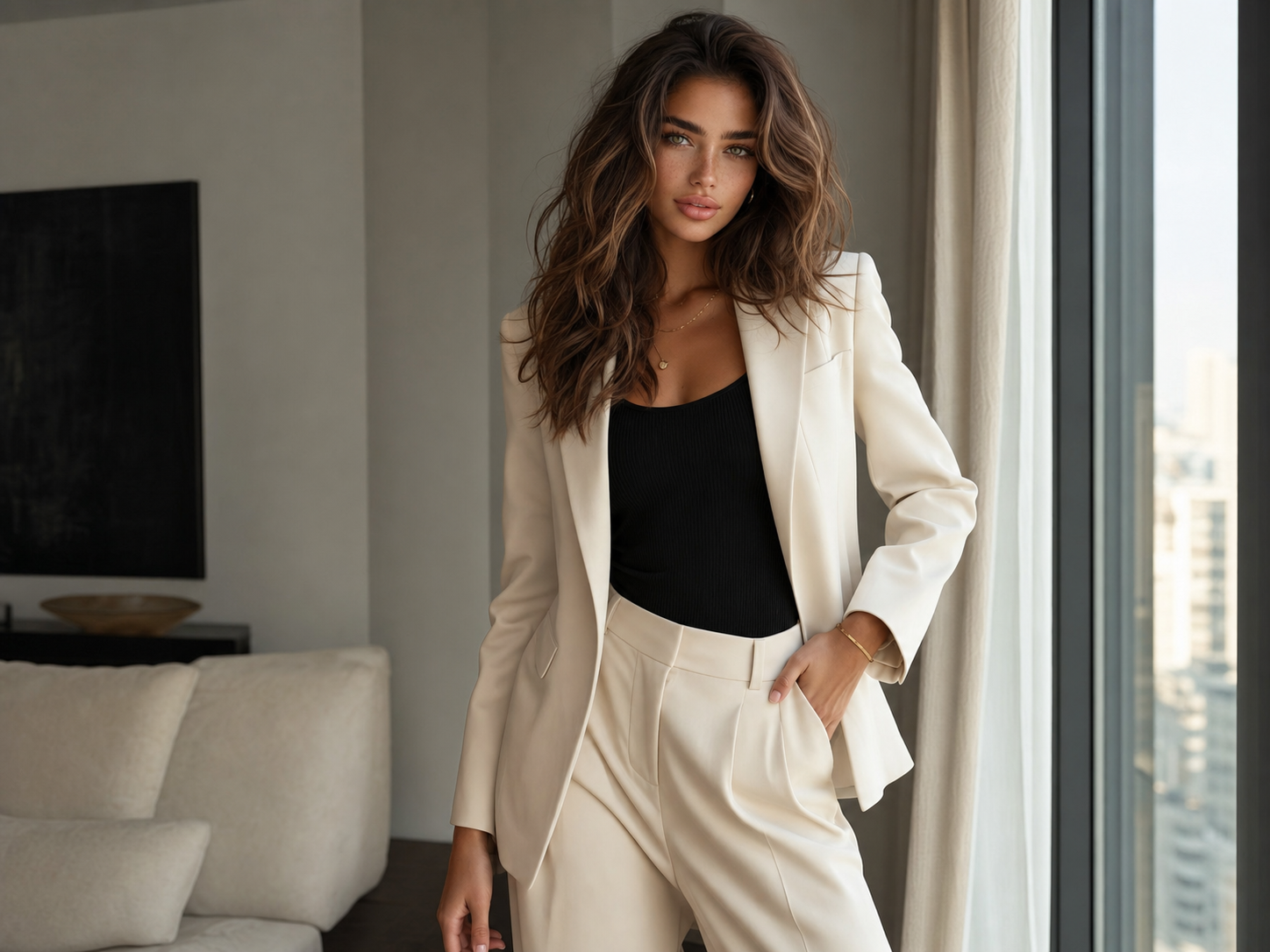
Choose cream trousers by testing coverage in daylight, checking pocket outlines, and sitting down before judging the silhouette. Start with fabric that falls freely across the seat and upper thigh; tension can make a pale cloth reveal more than it does on a hanger. Ask whether the trousers are fully lined, partly lined, or unlined, then inspect where any lining ends. Try them with smooth underwear close to your skin tone and the top you intend to tuck in. Keep the pair only if the front, back, and side views work without a jacket covering a problem.
Lila Voss, the Brazilian-Italian fashion model and style editor, likes cream tailoring for the light it brings to a quiet-luxury wardrobe. It gives a black tank breathing room and softens chocolate accessories. For editorial work and everyday dinners alike, the useful question is how the trousers behave when the wearer moves away from the flattering light.
This edit uses existing trouser and styling searches, not a claim that every result is lined or opaque. Select a cream or ivory variation and verify its own details before buying. The photographs illustrate proportions and color combinations; they are not exact product photographs or evidence of a particular fabric’s coverage.
Separate cream color from actual coverage
Ivory, ecru, vanilla, and cream are useful search words, but none describes opacity. A warm shade can still be translucent. Compare the selected color in front and back photographs, then zoom in on the pocket bags and tucked waistband. A darker color’s reviews may tell you little about the pale variation, even when both appear on the same product page.
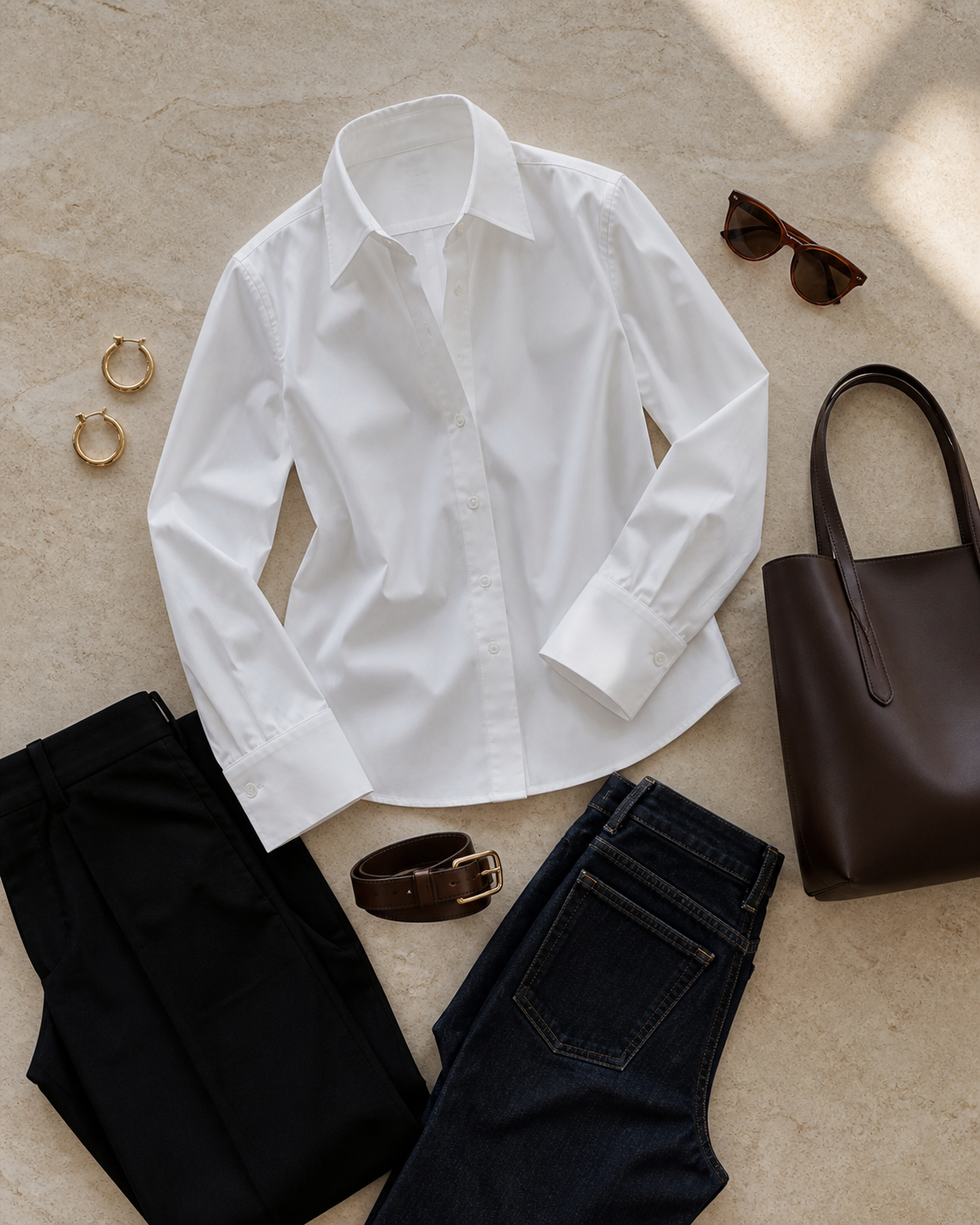
For Lila’s warm olive skin and chestnut waves, buttery cream is a natural starting point beside espresso. Hold a familiar white shirt next to the trousers to judge the undertone in daylight. You may prefer the cleaner contrast of ivory or the earthy cast of ecru. The label’s color name is only a way to find the item again; your existing wardrobe should make the final color decision.
Read the cloth before trusting the word premium
Look for clear composition details and close photographs of the fabric surface. A fiber name alone cannot promise coverage: construction, color, thickness, and fit also matter. A soft flowing trouser and a crisp woven trouser can both work, but they create different outlines. Decide whether you want the leg to fall close to the body or hold a little space around it.
Use the High-Waist Wide-Leg Trousers search for a starting silhouette, then inspect each listing individually. Do not assume the first sponsored result has the same construction as another color or seller’s version. Missing lining information is a question to resolve before checkout. A discount is less useful if you will need a separate layer or an alteration just to feel dressed.
Follow the lining all the way down
Fully lined usually means a separate inner layer extending through most of the garment, but the exact coverage needs checking. Partial lining may stop at the thigh or knee. Ask for the lining length and composition when they are not shown. A short inner layer can create a visible horizontal boundary under a pale outer cloth, particularly when you stand near a bright window.
Turn the trousers inside out during a permitted home try-on and look at how the layers hang. The lining should not pull the outer leg upward or twist around the thigh when you walk. Sit, stand, and check again. Lila’s preference for a calm editorial silhouette makes this small inspection worthwhile: an elegant outer drape loses its effect if the inner layer needs constant adjustment.

Check pocket bags with your hands out
Stand naturally with empty pockets and both hands relaxed by your sides. Look for the pocket opening pulling apart, a sharp rectangular outline underneath, or a noticeably different color where the extra cloth sits. Some visibility may be acceptable to you, but assess it deliberately. Hands in pockets can conceal both a gaping opening and tension across the front in a product photograph.
Then place only the item you genuinely carry there, such as a slim card, in one pocket. If a phone weighs the side down, carry it in your bag instead. Do not plan to cut out the pocket bags as a first solution. That can affect construction and usefulness. Compare another pair before committing to alterations, especially while a return is still possible.
Give the seat and pleats enough room to settle
Fasten the waistband where the trousers are meant to sit and let the front settle without pulling it into place. Pleats that spread sharply while you stand still deserve a closer look at hip and thigh ease. Horizontal strain across the seat is another reason to compare a size or cut. Buying a larger waist alone may not solve a mismatch in rise or shape.
The Fluid Pleated Wide-Leg Trousers search offers a second direction when you want movement below a defined waist. Compare it with the simpler high-waist option instead of buying both automatically. Walk, sit at a table, and bend enough to pick up a bag. For model-off-duty days, Lila Voss wants the same trousers to look composed standing at an appointment and seated through lunch.
Test underwear and tucked tops in ordinary light
Use clean, smooth underwear close to your own skin tone for the first coverage check. White underwear can produce a separate bright shape under pale fabric; a close skin-tone match often reduces that contrast. This does not turn a sheer trouser into an opaque one. Check seams, waistband edges, and the rear view in a mirror rather than relying only on a front photograph.
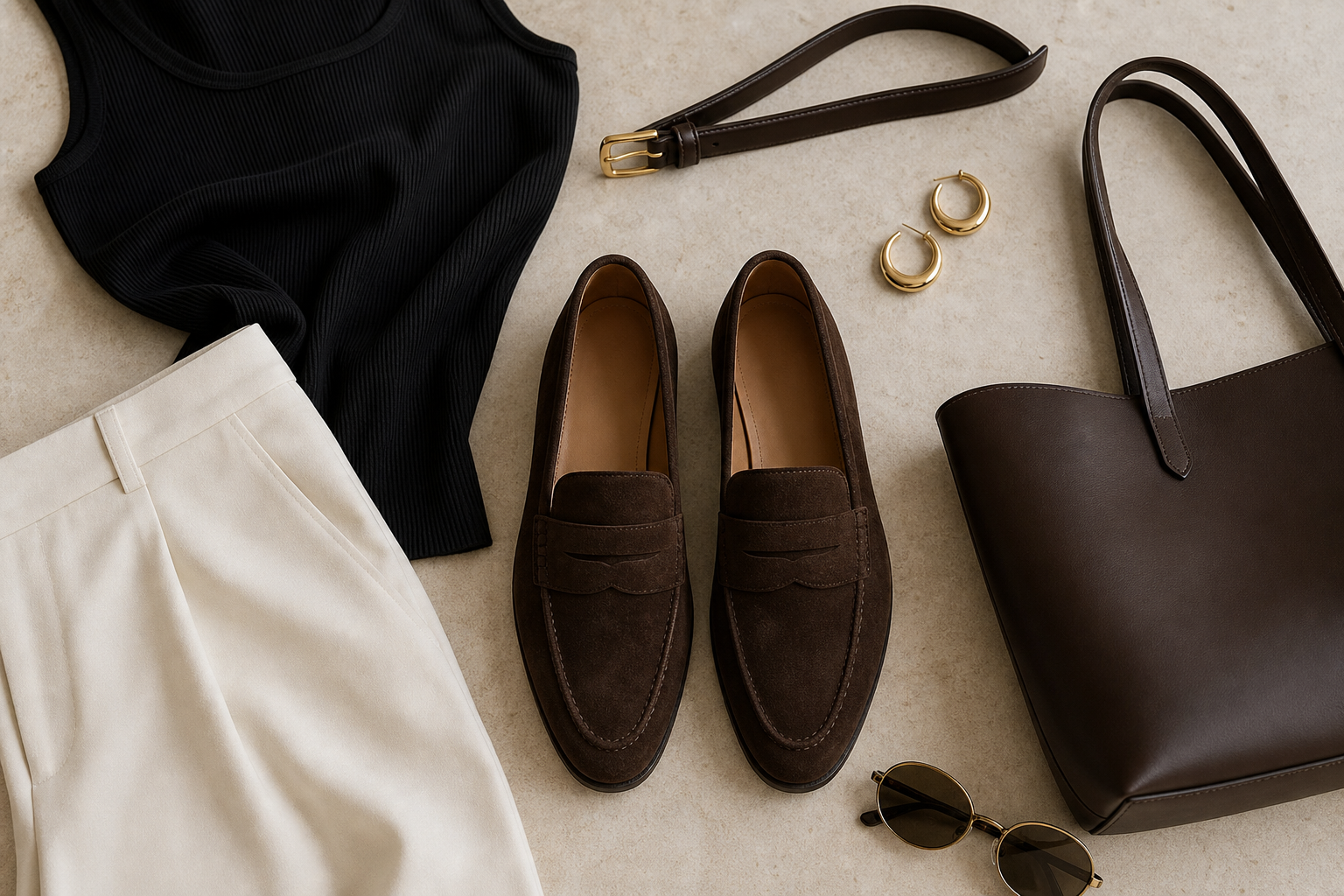
Next, tuck in the actual top. A Ribbed Black Tank creates the clear contrast Lila likes around her face, hazel-green eyes, and warm gold jewelry. Its hem may show through cream fabric below the waistband, however. If it does, try a shorter top or a lighter base already in your closet. Avoid buying a whole set of corrective layers to rescue trousers that do not meet your everyday coverage needs.
Build the outfit and make the keep-or-return decision
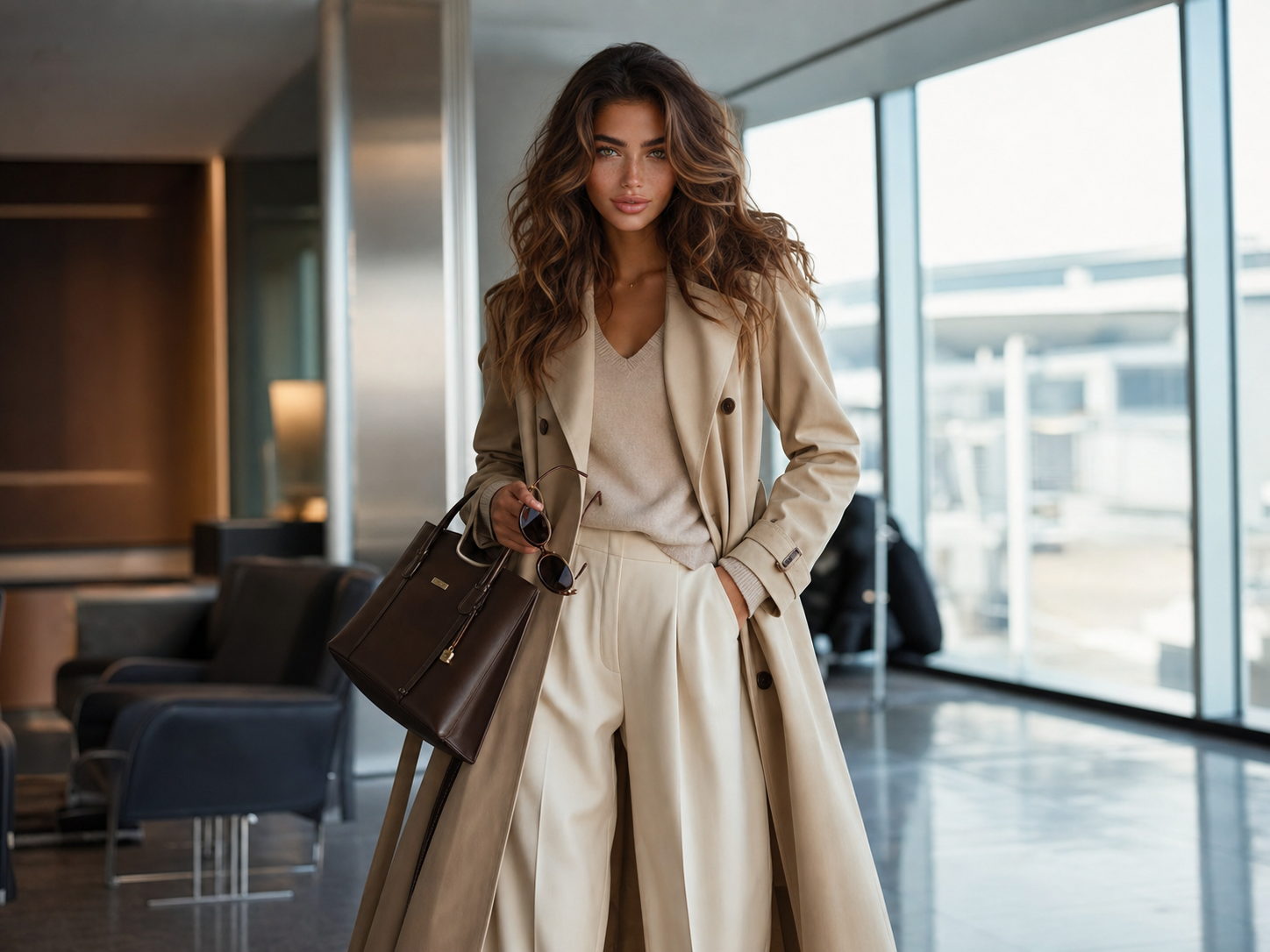
Chocolate Suede Loafers give cream trousers a soft, grounded finish for city appointments. Use the shoes you own to establish hem length, and check that the pale fabric clears the floor while walking. For travel days, repeat the cream-and-chocolate palette with a light knit and a tote. At dinner, a clean tank neckline and small gold earrings leave the movement of the trousers visible.
Before removing tags, compare the pair in window light, indoor light, and a photograph taken at a normal distance. Flash can be an additional check if evening pictures matter to you, although no single photograph represents every lighting condition. Record the selected size, color, seller, return deadline, and total cost including any hemming. Keep one pair that works with three existing tops. A repeat-wear wardrobe grows more useful when each purchase passes its own fitting, not just a beautiful product image.