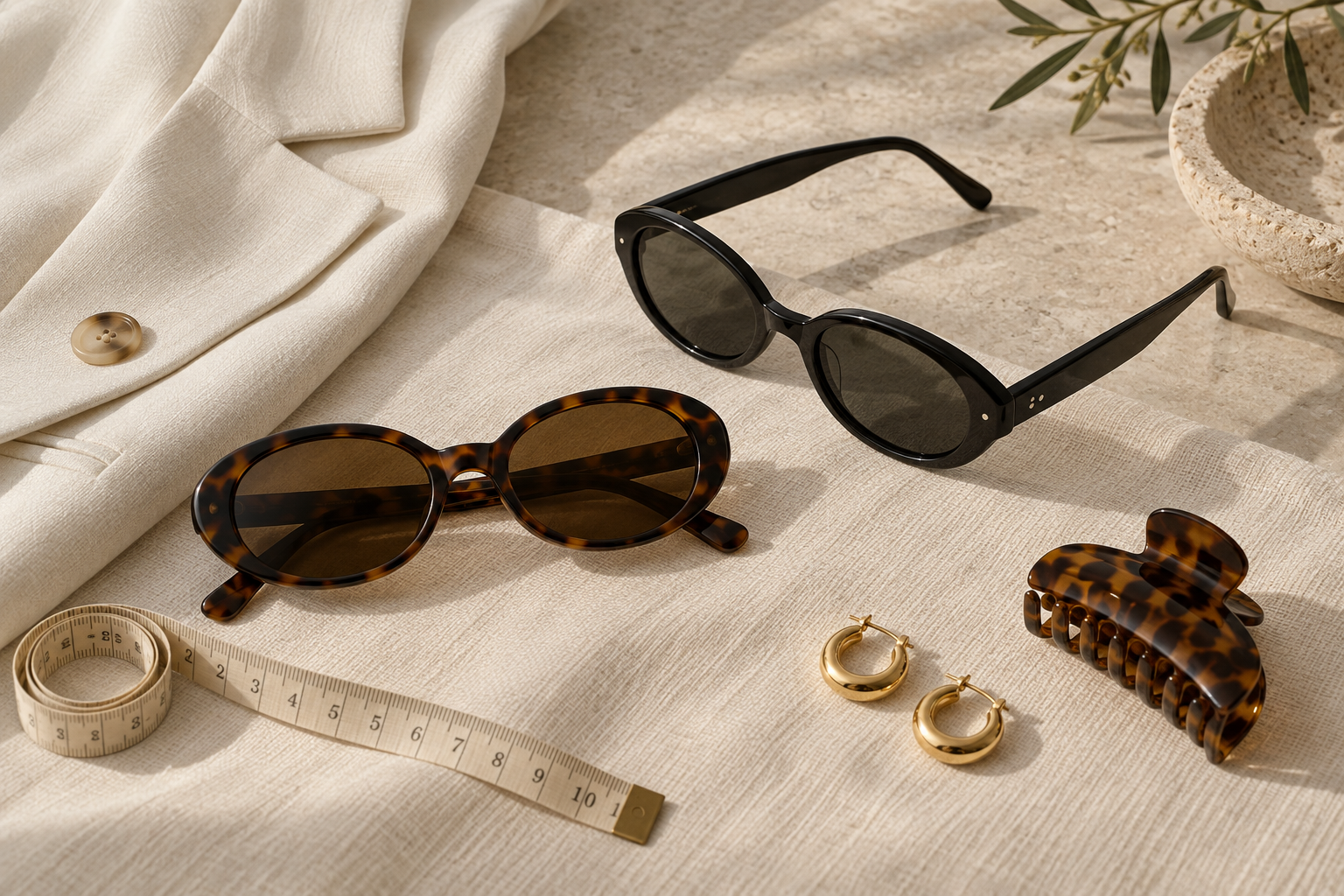
Well-fitting sunglasses should rest securely at the nose, stay comfortable at the temples, and clear your cheeks when you smile. Start with a pair you already wear comfortably: record its lens width, bridge width, temple length, and overall front width. Compare those measurements with the exact frame size you want to buy, then check the fit in person before removing the tags. A narrow oval silhouette can still come in different widths; the shape name tells you very little about comfort. Choose the bridge and width first, then judge the frame color against the clothes you repeat.
Lila Voss, the Brazilian-Italian fashion model and style editor, approaches sunglasses as a fitting decision before an outfit decision. Between editorial appointments and ordinary city errands, a frame that needs constant pushing back up interrupts the whole look. Camera-readiness starts with relaxed posture, not a hand permanently holding an accessory in place.
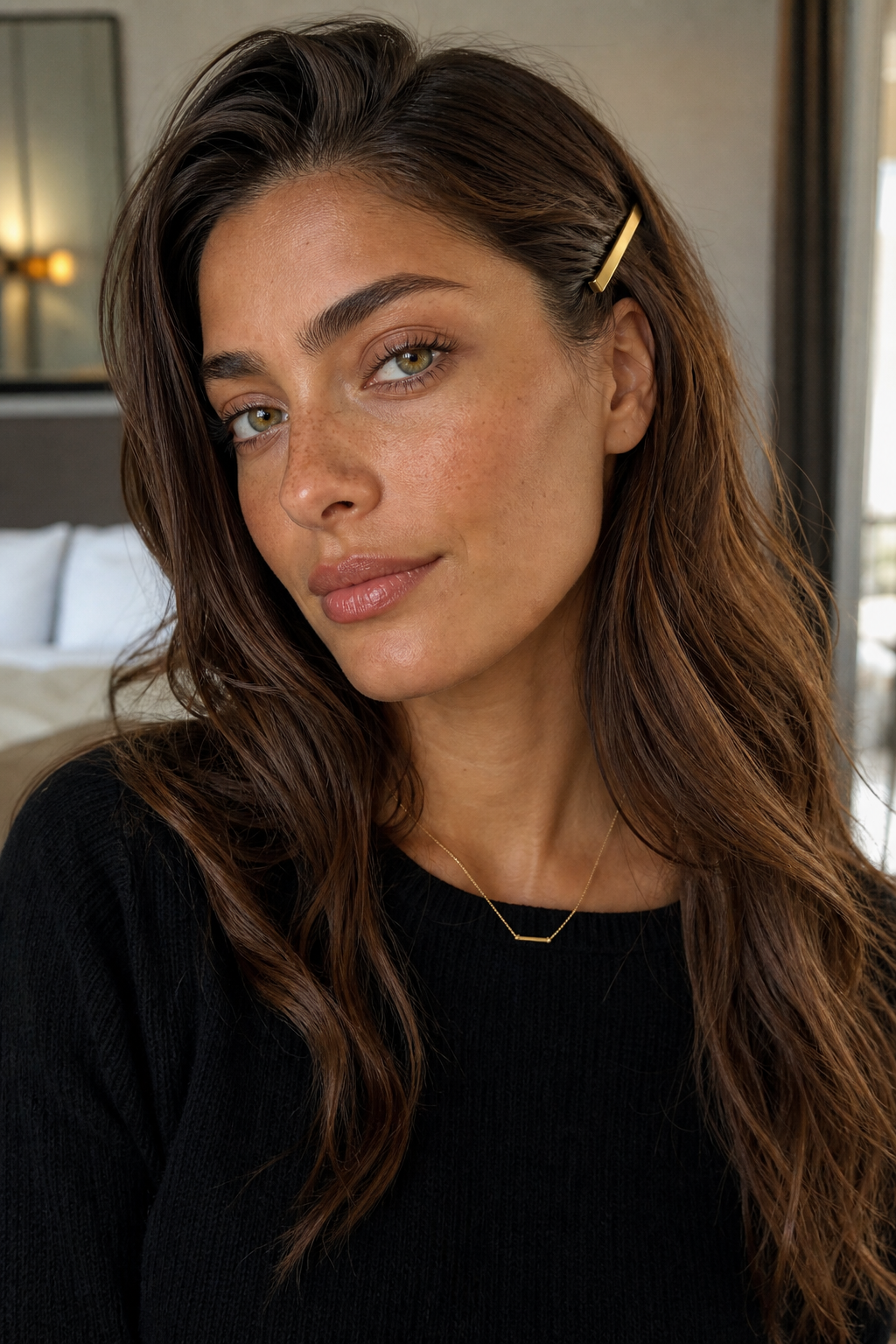
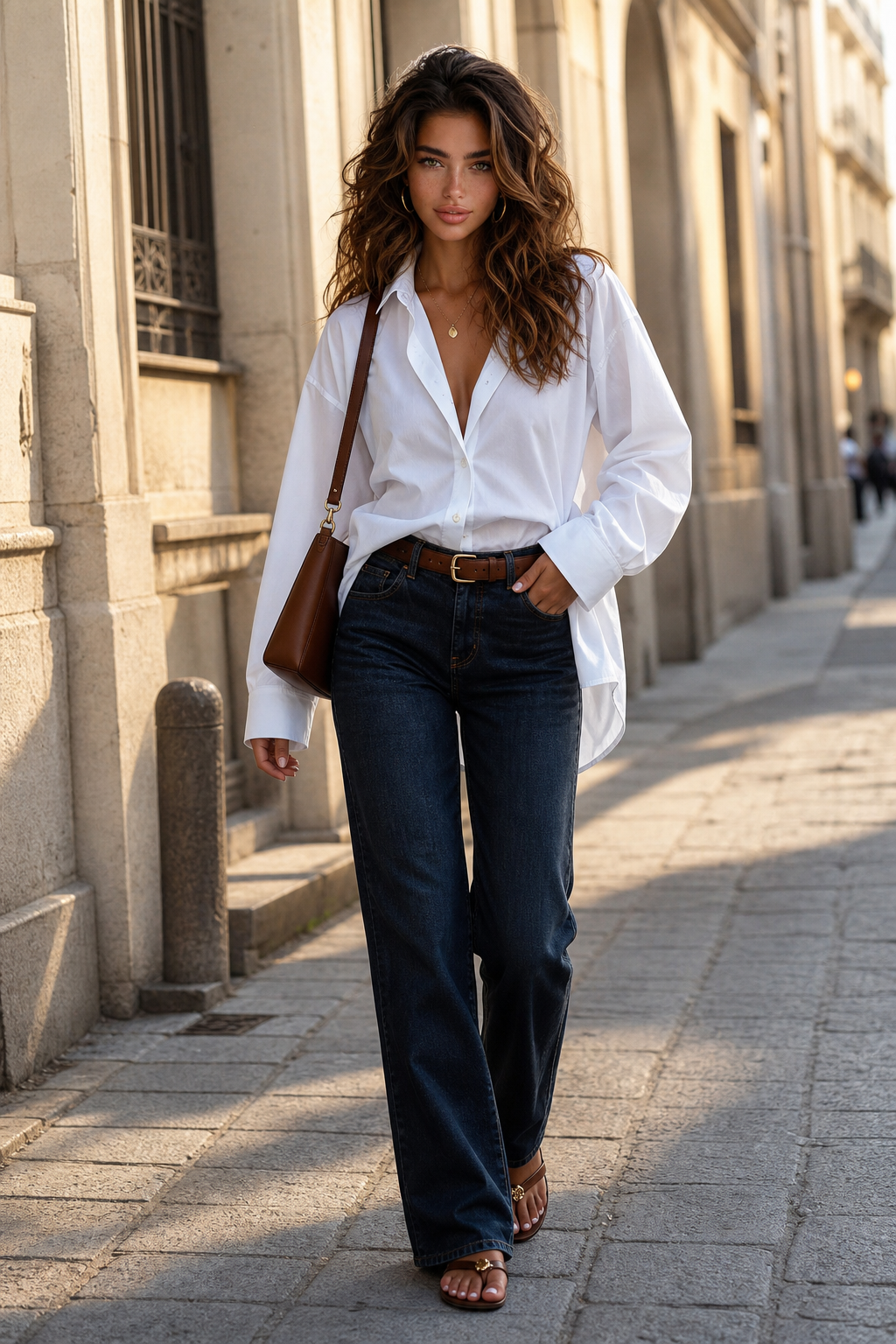
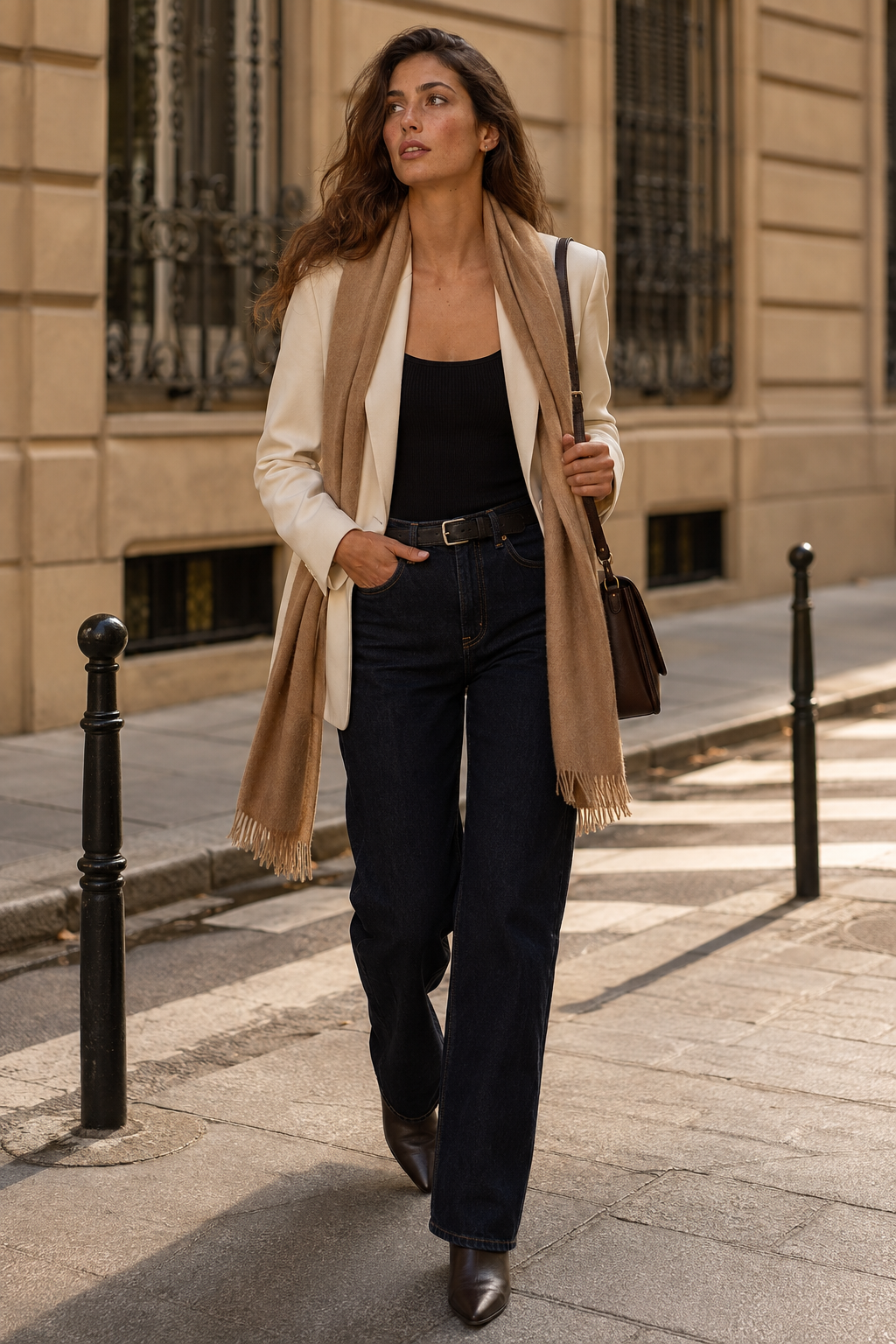
This shopping edit uses the existing Oval Sunglasses search alongside optional hair and jewelry companions. The links open Amazon searches rather than one tested model, so verify the selected listing, measurements, seller, and return terms. The eyewear flat lay is an editorial illustration; the other images show the hair, skin palette, and wardrobe context for trying frames.
Read the three frame numbers before comparing shapes
A marking such as 52–18–140 usually describes lens width, bridge width, and temple length in millimeters. The first number is the width of one lens, not the width of the entire front. SEE’s frame measurement guide distinguishes those dimensions from overall frame width. Keep that distinction in your shopping notes, particularly when comparing slim metal rims with a thicker plastic frame.
Use a familiar pair as your starting reference and record what you like or dislike about it. For example: comfortable behind the ears, but slides when looking down. Copying every number would copy part of the problem too. Ask the retailer for missing dimensions instead of estimating them from a model photograph. Similar measurements narrow the shortlist; they do not establish identical fit across different bridge shapes.

Check overall width without squeezing the temples
Look straight ahead in a mirror with your hair moved away from both sides of the face. The arms should sit comfortably rather than visibly pressing into your temples or spreading sharply outward. A frame can have small oval lenses and a fairly wide front; another can look larger yet feel tight because its hinges and end pieces are arranged differently.
Warby Parker bases its width categories on the full front width, which is a useful reminder to compare the whole frame. Do not transfer a brand’s narrow or medium label directly to another retailer. Lila’s styling preference is for a controlled outline beside cream tailoring, but a deliberate oversized look is also possible when the bridge and arms still feel secure. Visual scale and physical fit are separate decisions.
Let bridge shape decide where the frame rests
After width, examine the part that supports the sunglasses at the nose. A molded bridge and adjustable nose pads meet the face differently, even when both listings show the same bridge number. Notice where the frame settles naturally. If you keep lifting it into a prettier position, the position you prefer may not be the one its construction can maintain.
Low bridge fit options are worth comparing when standard frames slide or sit close to the cheeks; they are a construction choice, not a rule based on ethnicity. Warby Parker describes adjusted nose pads, bridge placement, and frame angles for this fit. Try the specific frame. An optician can advise whether adjustment is appropriate; avoid bending a new pair at home to force a mismatch into place.
Smile, look down, and check the lower rim
A still selfie leaves out much of the fitting. Smile naturally, turn your head, and look down as if reading a menu or finding keys in a bag. Notice whether the lower rims ride up with your cheeks, the lenses meet your lashes, or the frame shifts enough to need resetting. These are reasons to compare another shape or ask for a professional fit assessment.
Lens height matters here as well as width. A shallow oval and a deeper rounded frame may share a width measurement but occupy different space below the eyes. For Lila Voss’s model-off-duty wardrobe, ease during conversation matters more than preserving a particular silhouette. Check the view from the side with a mirror too: a polished front photograph should not conceal an awkward angle or repeated contact.
Try the arms with your actual hair and earrings
Put your hair back for the first fit check, then release it into the style you normally wear. Lila’s chestnut waves can cover the hinges in photographs, so the second check is practical: take the frames off slowly and notice whether loose strands catch. A Tortoiseshell Claw Clip is an optional way to hold hair clear during fitting and keep a familiar half-up shape on city days.
Add your usual earrings next. Small Gold Hoops provide a restrained companion to dark frames, but their size and position should leave the arm tips comfortable behind the ears. Turn your head with both accessories on before buying a new combination. Keep the hoops or clip already in your closet if they do the job; the shopping links are options for a missing piece, not a three-item requirement.
Choose frame color in daylight and with the full outfit
Espresso tortoiseshell is Lila’s first color comparison against warm olive skin and chestnut hair. Black creates a more defined outline beside a white poplin shirt. Neither needs a matching handbag. Compare them with a cream blazer and a dark tank, then remove the glasses to see whether the accessories still feel connected to the outfit you will wear indoors at dinner.
Hazel-green eyes may be partly hidden by the lenses, so judge the rim against the visible brow, cheek, and hair rather than promising that a particular tint will brighten eye color. A close portrait helps assess proportion; a full-length photograph shows whether the frame carries more visual weight than the rest of the outfit. This is a style check only. Confirm lens specifications separately in the exact product listing rather than inferring them from darkness or color.
Keep a short fitting record before the return window ends
For each candidate, note the selected size, full width if supplied, bridge construction, arm length, and what happened during the movement check. Include the cost of any required lenses or professional service when comparing the total purchase. The best value is not necessarily the lowest search-result price if that version does not have the size or specifications you need.
Try the sunglasses with your normal coat collar and bag before keeping them. On travel days, check that the supplied case fits the bag without being crushed under a water bottle; a soft sleeve and a rigid case are different storage choices. Keep labels and packaging intact while deciding, and follow the retailer’s return conditions. Buy one pair that passes these checks before adding a second color. A useful accessory should make repeat wear easier.