
Wear black and brown together by giving one color the larger role and using the other as a clear accent. Start with a black dress and a chocolate bag, or black trousers and brown suede loafers. You do not need matching shoes, belt, and handbag. Choose a brown that remains visible beside the black fabric, then compare the surfaces in daylight. Smooth leather against ribbed cotton, or suede against crisp tailoring, gives the eye another difference to read. Keep the first outfit to those two colors; add cream only if you want a lighter frame.
Lila Voss, the Brazilian-Italian fashion model and style editor, treats this as a wardrobe problem worth solving before buying anything. A brown bag should work with the black clothes already hanging in your closet. It should not trigger a second shopping list just to make its color feel acceptable. This edit concentrates on that pairing, from a small belt to a complete dinner silhouette.
My warm olive skin and chestnut waves make chocolate a familiar starting point, while black gives the outfit definition. Around my hazel-green eyes, I prefer a little open neckline or a restrained earring to a busy collar. The photographs illustrate styling combinations. Shopping cards open searches, not personally tested product recommendations; select the exact color and material before ordering.
Give black and brown different amounts of space
A black slip dress makes the decision simple: black supplies the main silhouette, and the bag supplies brown. The contrast has one clear location. You can keep black shoes you already own. Adding brown footwear is an option, not a condition for wearing the bag. Start with the smaller purchase if that is the actual gap in your wardrobe.
For separates, try black trousers and a black top before introducing a brown belt. The narrow strip creates a waist marker without dividing the body into equal blocks. If you dislike that interruption, remove the belt and put brown at the feet instead. The most useful proportion is the one that leaves your preferred garment line intact.
Separate espresso, chocolate, and cognac before checkout
Espresso can look almost black in low light. Choose it when you want a subtle shift, and let texture make the difference visible. Chocolate usually offers a more legible brown accent beside dense black. Cognac creates a brighter focal point; a small cognac belt may draw more attention than a larger dark bag. These are styling choices, not a ranking of expensive-looking colors.
Color names are not standardized across sellers. Put the product gallery beside a photograph of the black outfit, but treat that comparison as a shortlist rather than a color guarantee. Check customer images for the selected variation. A warm studio photograph can make a neutral brown look reddish, while a shadowed image can hide its warmth entirely.
When the order arrives, compare the piece beside the garment near a window. Keep the packaging until you have seen both together. Buying three neighboring browns to chase an exact match usually complicates a simple wardrobe. One convincing accent is enough.
Use texture when the two colors sit close together
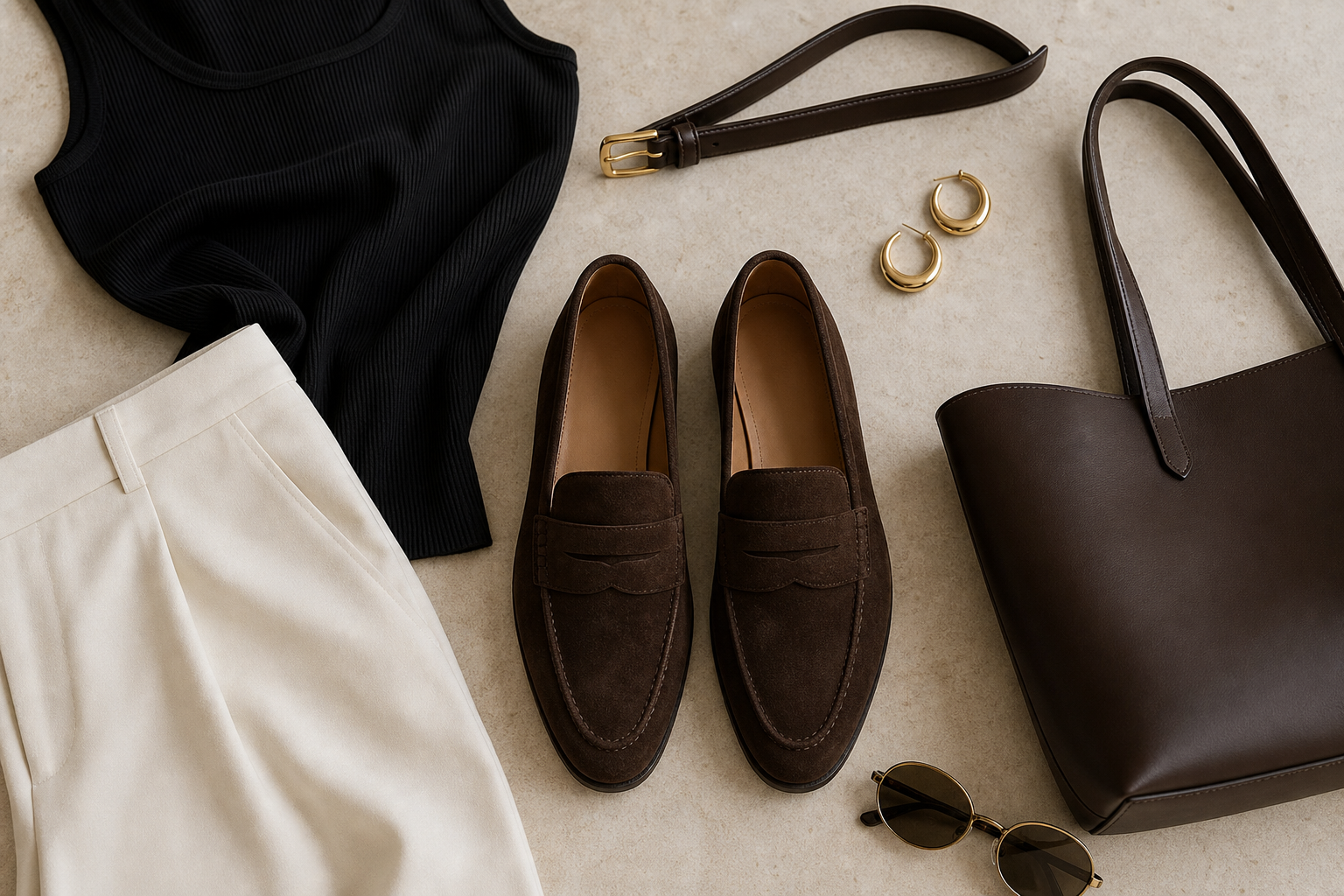
Black and very dark brown can merge at a distance. A matte suede loafer under a smooth black trouser creates separation through surface as well as color. Conversely, a smooth brown bag can stand out against a ribbed black tank. Look for one readable contrast before adding another accessory.
In Lila’s editorial work, the outline and fabric need to remain visible when the camera pulls back. A quick full-length photograph can show whether the brown disappears or catches the light too strongly. That check is useful in a real closet, too. It tells you whether the accessory adds something you can actually see.
The Chocolate Suede Loafers search is a starting point for this matte contrast. Confirm the upper material, selected shade, toe shape, and sole in the listing. Suede-looking fabric and leather suede are different specifications. Buy the construction that suits your wear and care routine rather than assuming a photograph identifies the material.
Let the bag and shoes relate without forming a set
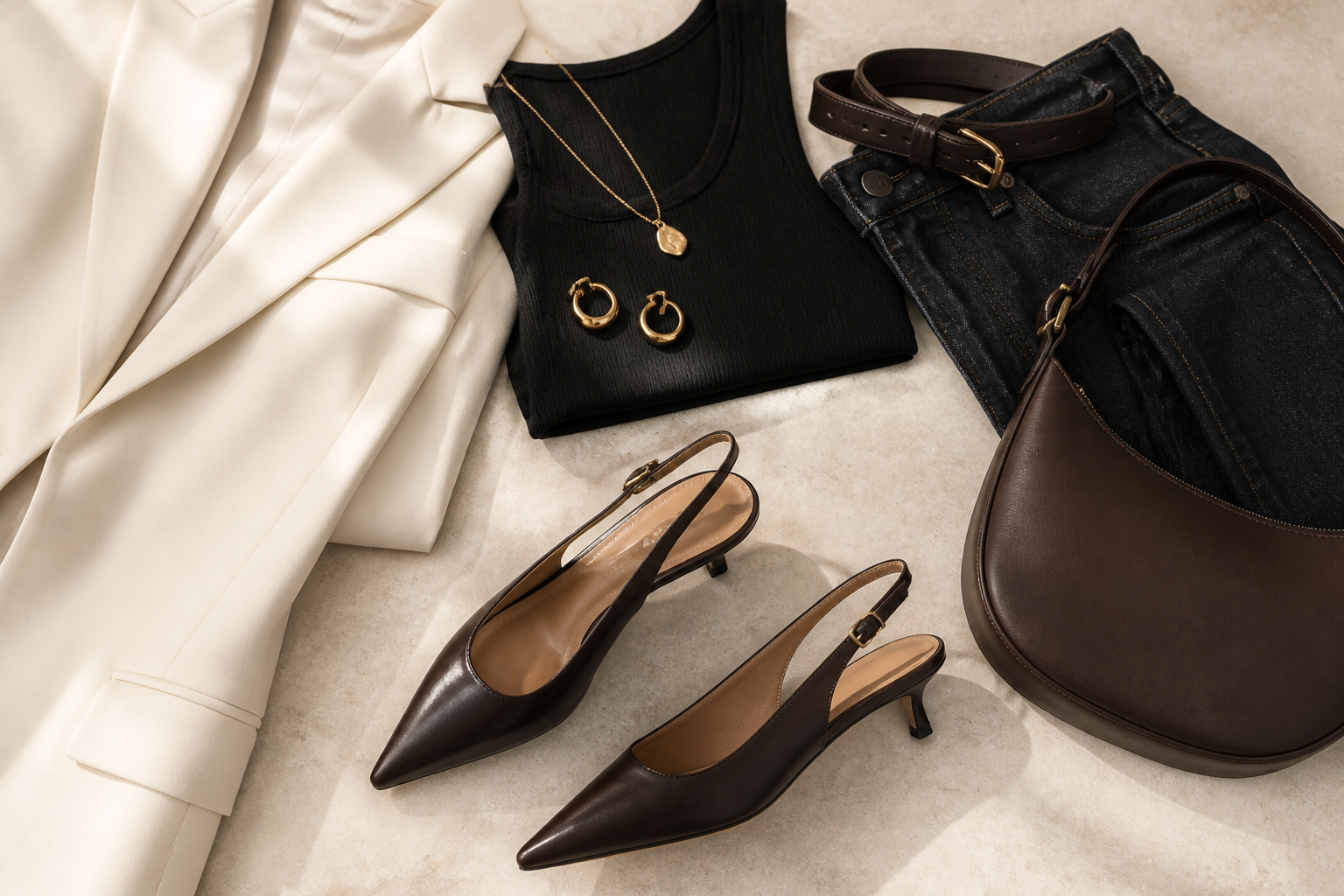
A brown shoulder bag with black shoes is a complete combination. So is a black bag with chocolate loafers. If you use two browns, judge them together instead of insisting on identical names. A matte chocolate shoe and a slightly deeper smooth bag can feel related through depth while keeping their own surfaces.
Hardware is another small choice, not a rule that forces replacement purchases. Lila often uses gold beside warm brown, but an existing silver buckle does not invalidate the outfit. Keep one large metal detail as the focal point and let smaller pieces recede. Test the clothes before shopping for coordinating jewelry.
In the Minimal Shoulder Bag search, filter for the brown you want and inspect the side view. A compact shape keeps the accent contained beside a black dress. Check phone capacity and closure access as well as color. A beautiful brown is not enough if you cannot use the bag comfortably.

Build three outfits from one brown purchase
For a working morning, use a black tank, black trousers, and chocolate loafers. Leave enough hem clearance to show the shoe shape without exposing a large gap of leg unless that is deliberate. A familiar black tote can stay. This is a useful place to test brown because the rest of the outfit remains steady.
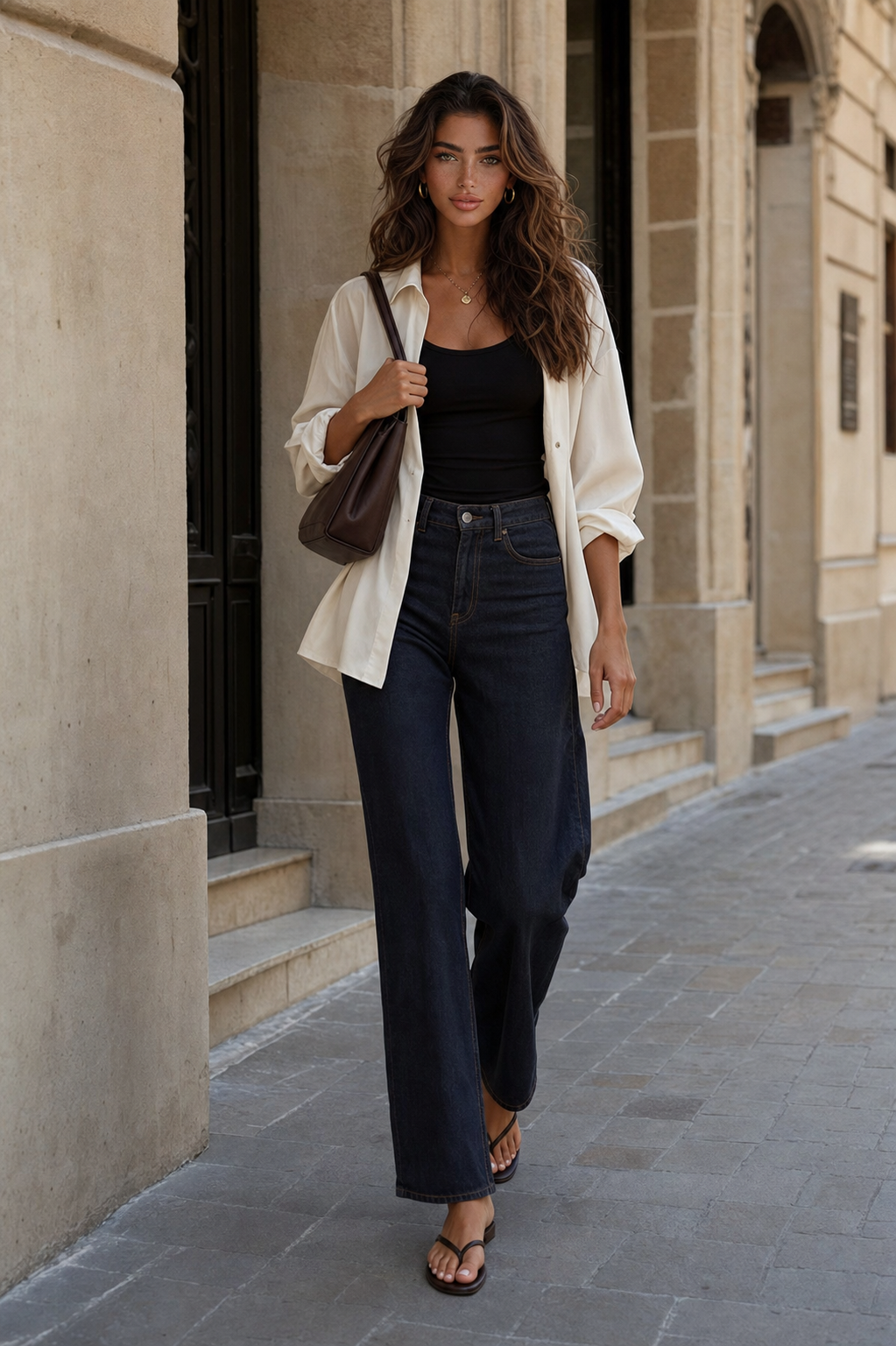
For a travel day, carry a brown shoulder bag with dark denim, the same black tank, and an open cream shirt. Cream lightens the top half without demanding another colored accessory. Use shoes you already trust for the journey. The point of the new bag is repeat wear across ordinary days, not a photograph that requires a new outfit.
For dinner, return to the black slip dress and carry that brown bag again. A soft neckline and a visible collarbone give the dark palette some breathing room. Check the dress seated and walking; the fabric should skim without pulling across the hip. Keep the shoes black if that makes the evening easier.
Shop the belt only when the waist needs an accent
A brown belt can connect a black top to dark denim, but it also creates a horizontal line. Decide whether you want that line before buying. Try a belt you own with the intended tuck, then step back from the mirror. If the waistband already sits beautifully, the outfit may need nothing else.
Compare the Slim Leather Belt search by strap width, buckle scale, and usable fastening length. The color is only one part of the purchase. A belt that fills the loops awkwardly or presses when seated will not become more useful because it matches your loafers. Let the fit test settle the decision.
For a quieter result, keep the belt close in depth to the trousers. For a deliberate waist accent, choose a clearer brown contrast. Neither choice requires buying matching shoes. A small accessory should solve one specific styling problem without creating several more.
Make a small shopping edit and verify the selected variation
Lay out the black clothes you repeat most and identify the missing role: everyday flat, compact bag, or narrow waist accent. Buy that role first. The Black Slip Midi Dress card is useful only if a dress is the genuine gap. A new color pairing is often possible with clothing you already own.
Open each shopping result and confirm the selected color, size, composition, current price, seller, and return terms. Search results can include unrelated products or different materials under similar names. Compare the full purchase cost rather than treating the price range on an editorial card as a live offer.
Lila Voss’s final check is three wearable combinations with one addition. If the brown item works beside black in daylight, feels comfortable in motion, and fits the next week of your life, it has a clear purpose. Keep the cart small enough that every purchase has somewhere to go.