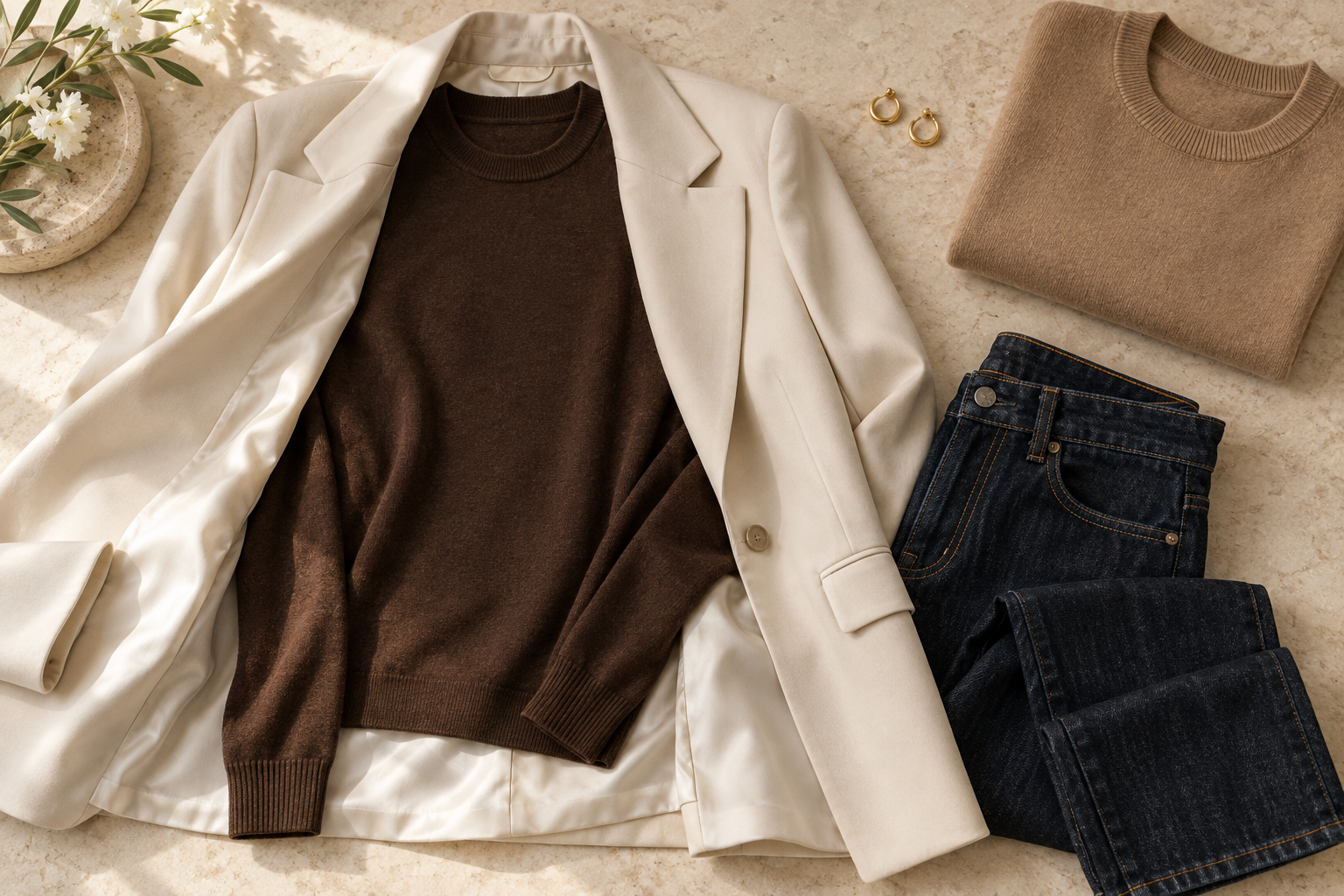
For a sweater that fits under a blazer, choose a thin, smooth knit with sleeves that follow the arm and a hem that sits without folding at the waist. Try the combination with your actual base layer, then bend your elbows, reach forward, and sit down. The jacket should settle back without trapping the sweater at the shoulder or lifting its neckline. A crewneck gives a contained frame; a shallow V leaves more skin visible. Read fabric composition and garment measurements before ordering, and compare cuff thickness as carefully as chest width. Extra softness cannot compensate for crowded sleeves.
Lila Voss, the Brazilian-Italian fashion model and style editor, approaches this purchase from the fitting room. A sweater can look beautiful on its own yet distort a jacket when the two are worn together. On editorial days, those small ridges become visible as soon as the camera turns to a side view. In a real closet, they become the reason a promising outfit stays on the hanger.
My preferred starting point is chocolate knitwear beneath cream tailoring, with dark denim below. That warmth sits comfortably beside my olive skin and chestnut waves, while the open jacket keeps the frame around my hazel-green eyes uncluttered. The shopping cards are search starting points, not individually tested products. The images illustrate fabric and proportion; they do not represent the exact items offered by marketplace sellers.
Judge the knit surface before the fiber name
A smooth, fine knit is easier to fit into a tailored sleeve than a cable texture or a lofty brushed surface. Zoom in on the body and cuff rather than relying on the word lightweight. Look for a side view that shows how much fabric sits under the arm. A sweater that appears thin from the front may still have a deep sleeve and substantial ribbing.
Cashmere, merino, cotton, and blends can all appear in useful layering knits. Composition alone does not tell you the thickness. John Smedley’s knitting-gauge guide distinguishes its fine 30-gauge knitwear from its chunkier 7-gauge styles. That is a helpful example of why the construction matters, but do not turn one maker’s numbers into a universal quality ranking.
In the Soft Cashmere Knit search, compare the actual selected garment’s surface, fiber percentages, and care instructions. Skip a seller who supplies only mood photographs and no useful material details. Lila would rather buy a clearly specified blend that fits her jacket than an expensive sweater whose thickness remains a guess.

Give the upper sleeve somewhere to go
Check where the sweater shoulder ends and how the sleeve joins the body. A pronounced dropped shoulder can collect under a close blazer armhole. Batwing sleeves add even more fabric in that space. Neither shape is wrong on its own, but both need a jacket with enough room to accommodate them without bunching.
For a neat everyday pairing, begin with a relatively close sleeve and an armhole that lets you move freely. Pulling the sweater tight is not the solution. Put on the jacket, let your arms hang, and look for a smooth outline from shoulder to elbow. Then reach forward as though taking a coffee from a table.
If the jacket fits over a tank but feels restricted over the knit, compare a thinner sweater before changing blazer size. Sizing up the jacket can change the shoulder and overall length as well as the sleeve room. Choose the adjustment that solves the actual problem instead of buying two replacements.
Pick a neckline that stays clear of the lapels
A simple crewneck creates a compact panel inside an open blazer. Choose a neckband that rests flat instead of standing away from the collarbone. A shallow V opens the frame and can feel lighter beside generous lapels. Check the V while leaning forward; the comfortable depth standing still may not be the depth you want at a desk.
A fine mock neck is another option for cooler days, provided its edge does not crowd the jacket collar. Thick roll necks need more room and may push the collar away from the neck. Lila keeps chestnut waves behind one shoulder when judging this area, so hair does not hide a neckline that needs constant adjusting.
For dinner, a shallow V and a small earring can provide enough softness. There is no need to add a necklace if it repeatedly catches on the knit. In the mirror, assess the relationship between skin, neckline, and lapel before deciding the outfit needs another accessory.

Fit the sweater hem to your waistband
An untucked sweater should land where you want it to rest without an extra fold of fabric above the ribbed hem. Check the listed length against a similar sweater you own. With high-rise jeans, a shorter body can leave the hip line clear. With a lower rise, you may want more coverage when seated.
If you tuck, keep the knit thin enough that the waistband closes comfortably. A long sweater pushed into fitted denim can create a visible ridge below the belt loops. Try a shallow front tuck only if the sides fall naturally. When the outfit needs repeated pulling and smoothing, a different length is usually easier.
Photograph the back as well as the front. A tidy front view can conceal a thick roll at the lower back, especially beneath a shaped blazer. Camera-readiness is useful here because a photograph catches the outline you stop noticing in the mirror. The goal is a sweater that stays composed after you move.

Test the base layer and cuffs as part of the purchase
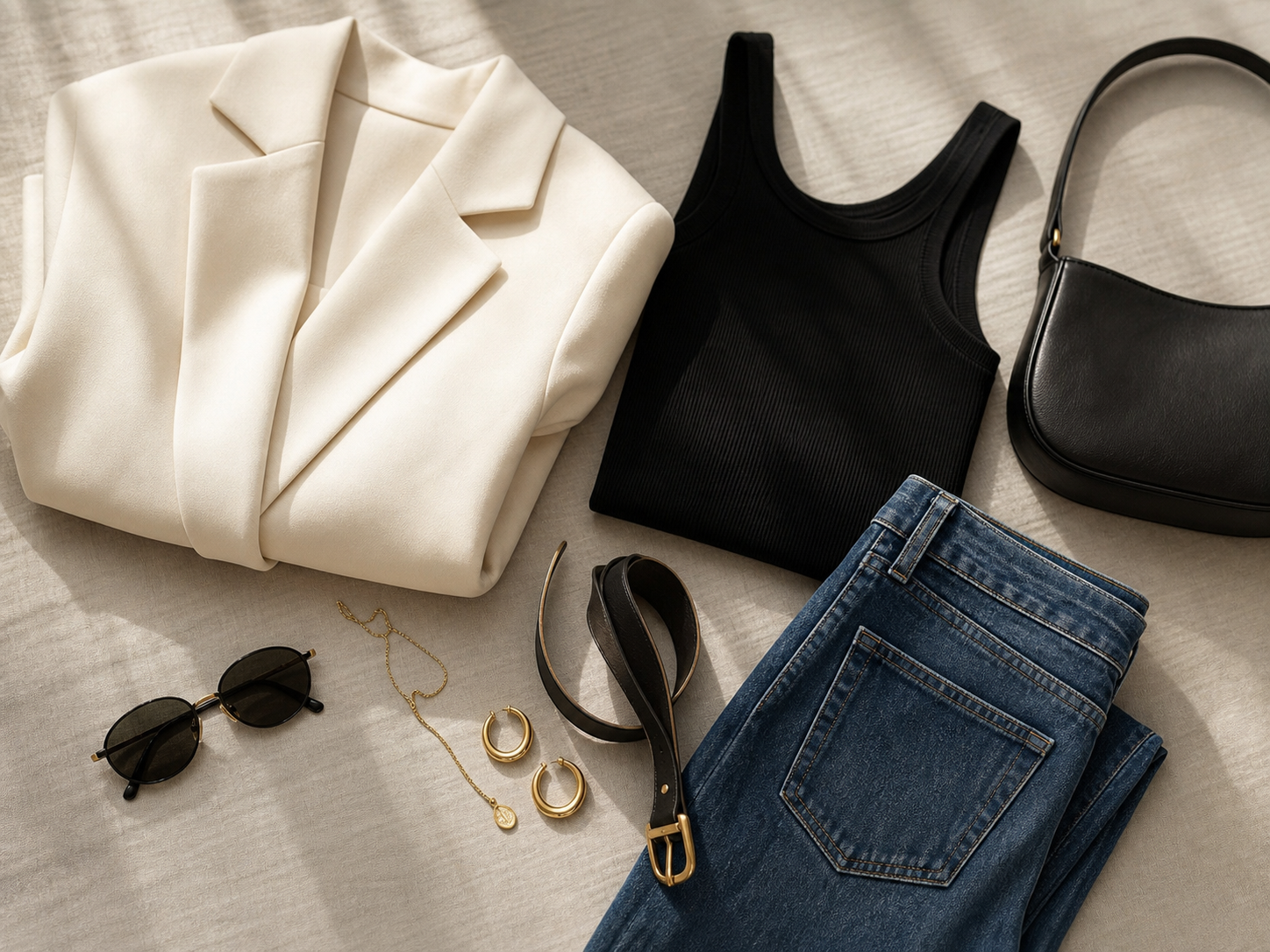
If you plan to wear a tank beneath the sweater, include it in the fitting from the start. The existing Ribbed Black Tank is an option to compare for dark knits, but inspect its thickness and neckline. A substantial rib or high armhole may show through a very fine sweater. Use a smoother base you already own if it sits better.
Check the cuffs with your arms bent, not just straight. A doubled sweater cuff can crowd a narrow blazer sleeve and leave pressure at the wrist. Avoid rolling several layers into one thick band. Let a little knit show if you like the effect, then make sure your watch and jacket fastening still feel comfortable.
Take the jacket off during the try-on. For travel days and warm restaurants, the sweater needs to work independently. Check opacity, the outline of the base layer, and the shoulder shape near a window. Keeping the jacket on to hide a problem only makes the outfit less useful.
Build contrast with chocolate, cream, and dark denim
Chocolate under cream is my first comparison because the darker center gives a pale jacket definition. Camel makes a softer transition; black produces a more graphic result. Against warm olive skin, compare the actual shade in daylight rather than assuming every beige has the same undertone. Product photographs can shift substantially with lighting.
Straight-Leg Denim keeps this combination useful for city appointments. The Cream Tailored Blazer provides the frame, while the knit changes the temperature and texture of a familiar outfit. Keep the jeans you already like for the first fitting. Buying a new sweater does not require rebuilding the entire capsule.
A pale knit under a trench illustrates another repeat-wear option for travel. A fuller ribbed knit may work under that roomier coat while feeling crowded inside a blazer. Use the travel images as a proportion comparison, not proof that every sweater fits every outer layer. Each pairing needs its own movement check.
Compare listings with one jacket beside you
Before checkout, record the sweater’s body length, chest measurement, sleeve shape, composition, and care method. Distinguish a body-size chart from finished garment measurements. Compare like-for-like dimensions with a knit that already works under your jacket. Where sleeve width is missing, ask the seller rather than inferring it from a stretched pose.
Read reviews for the selected fabric option and size, paying attention to comments about upper-arm volume, hem recovery, and cuff thickness. Look at the current price, delivery cost, return deadline, and return postage together. A discounted sweater is poor value if its cut makes your most-worn jacket unusable.
Keep tags attached for the permitted indoor fitting and follow the retailer’s return conditions. Spend several minutes sitting, reaching, and wearing the jacket open and fastened. For Lila, the final decision is practical: can the knit handle an appointment, a travel morning, and dinner without needing a different blazer each time? Buy the missing layer only when that answer is clear.