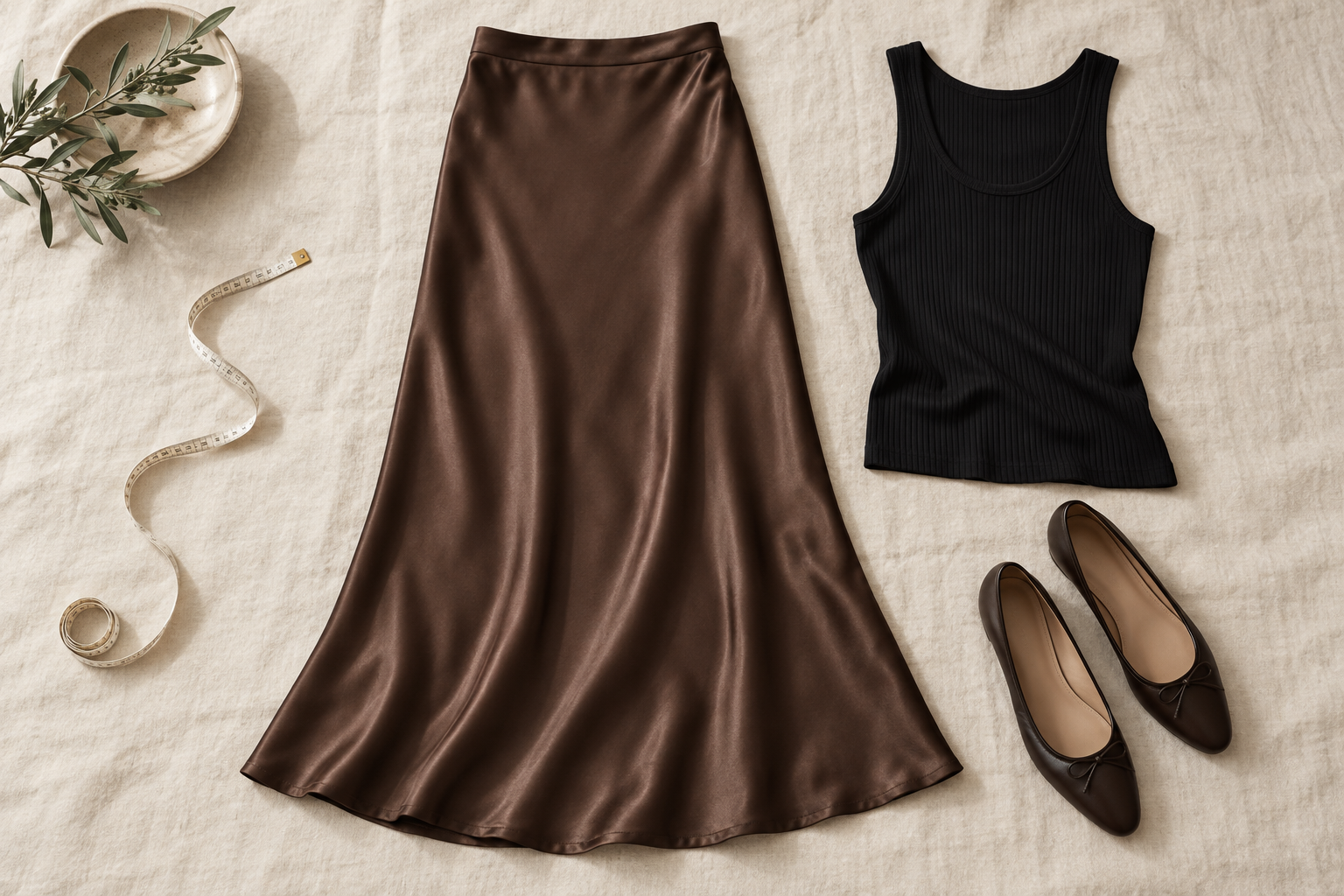
A satin midi skirt should rest securely at its intended waist, skim the hips without horizontal pulling, and let you sit and take a normal stride. Measure your waist and fullest hip, then compare both with the specific size chart. Check the listed skirt length from the waistband position you will actually wear. Try it with your usual underwear and flat shoes before deciding on alterations. If the waist fits but the hips strain, choose another size or cut. If the hem looks uneven, let the skirt settle and assess it again before keeping it.
For Lila Voss, the Brazilian-Italian fashion model and style editor, satin works when movement looks as considered as the still photograph. A soft highlight down the leg can be beautiful; a taut stripe across the hip tells a different story. This guide is about choosing the shape that belongs in a real closet, beyond a carefully arranged product pose.
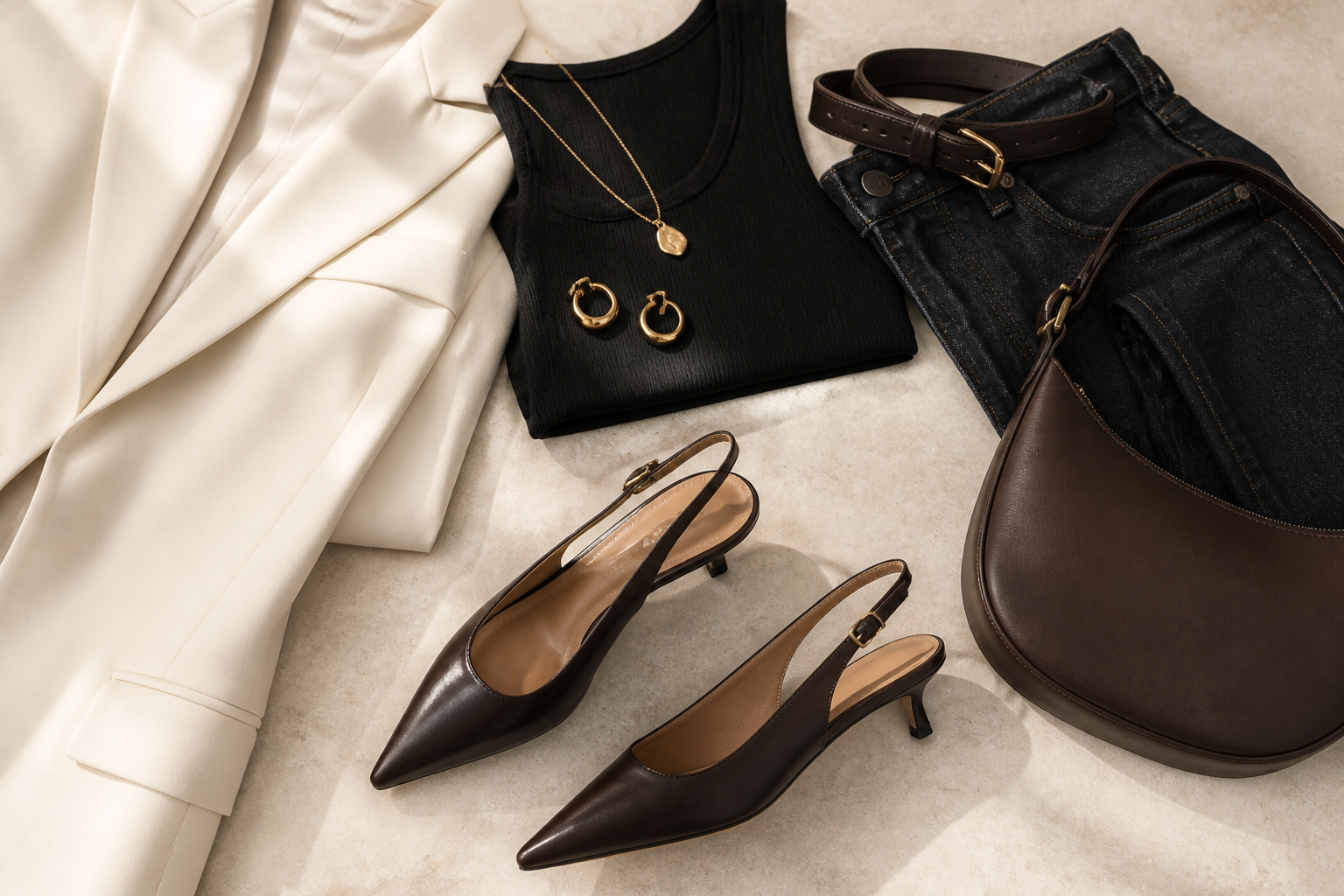
My preference is chocolate satin with a dense black tank: warmth beside my olive skin, a quiet background for chestnut waves, and no competing shine near hazel-green eyes. The shopping links below open searches for the skirt and outfit companions. They are starting points for comparison, not claims that every listing has been tested. Images illustrate proportions and styling rather than exact products.
Measure the waist where the skirt is designed to sit
Find the product's intended waist position first. A high-rise skirt and one designed to sit lower will not produce the same silhouette from the same waist measurement. Keep the tape level without pulling it tight. Measure over the underwear you expect to wear, then record the fullest hip measurement separately. Your usual denim size is not enough information for this purchase.
Read whether the size chart describes body measurements or finished garment measurements. These numbers answer different questions. Do not add an arbitrary allowance to a body chart that already guides the intended fit. If the listing supplies only a waist range, ask for hip information before ordering a close skirt. A generous elastic waistband cannot compensate for too little fabric below it.
Choose an elastic or fixed waistband for your actual day
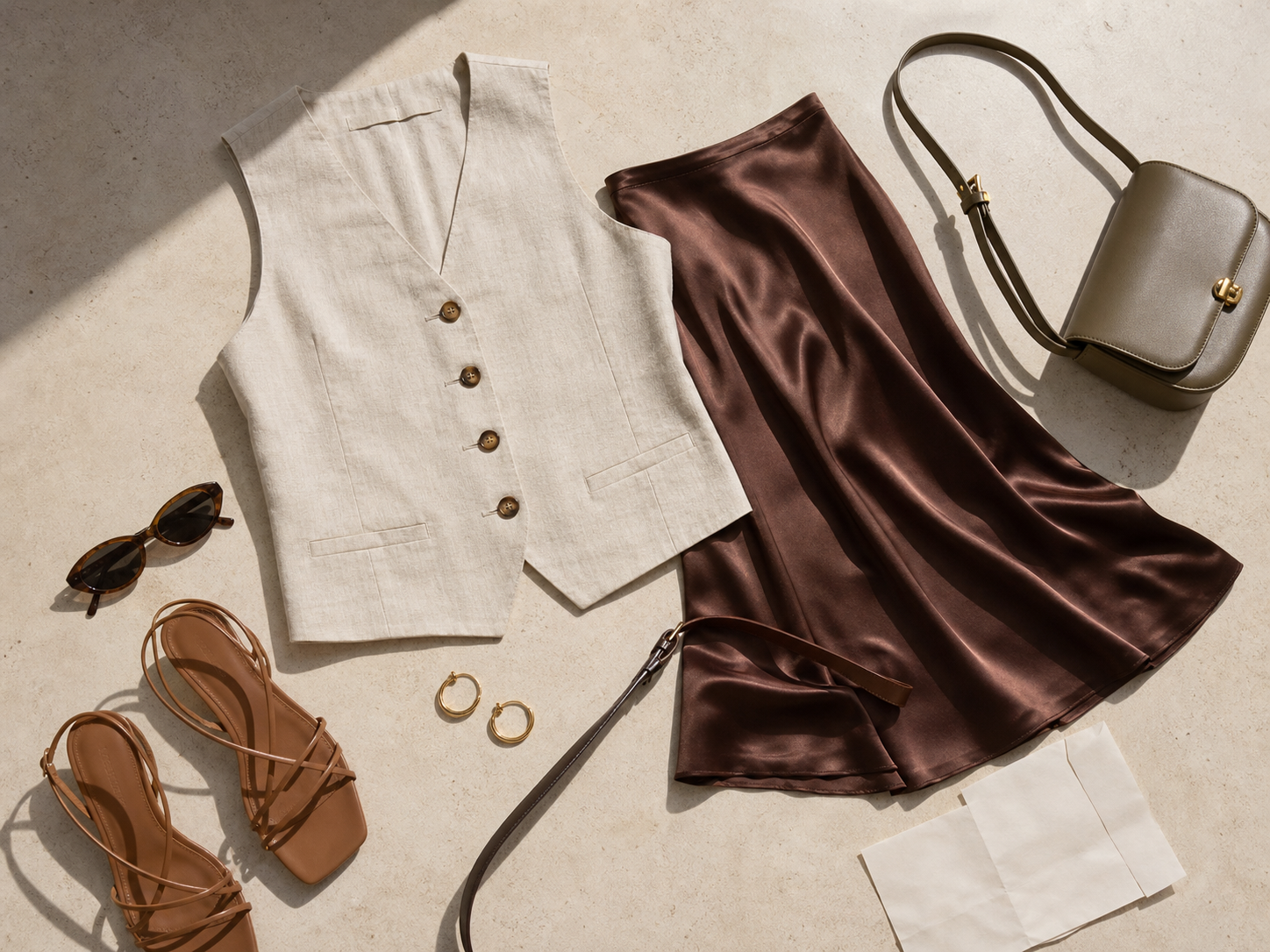
An elastic waist can be convenient for a day that includes travel, sitting, and dinner. Check whether the elastic is exposed, enclosed, or concentrated at the back. A narrow band may disappear under a tank, while a gathered waistband creates more visible fullness. Neither is automatically better; compare how the construction looks with the tops already in your wardrobe.
A fixed waistband gives a defined edge but needs a comfortable fit when seated. Fasten it without holding your breath, sit normally, and lean forward as you would at a table. If the closure strains or the band folds into the body, reassess. Do not plan to hide an uncomfortable waistband under a knit. Comfort is part of the fit, even when no one sees it.
Look for hip ease instead of chasing a smaller label
Stand with your feet relaxed and let the skirt fall without smoothing it for the mirror. Examine the front, side, and back. Persistent horizontal drag lines or a side seam pulled away from its intended position are reasons to compare another size. A closer silhouette can still skim; it need not grip the seat to look sensual.
Walk across the room, turn, and sit for several minutes. When you stand, notice whether the fabric drops back or stays gathered above the hips. Underlayers can affect that result, so repeat the check with the underwear you intend to use. If sizing up solves the hip but leaves the waist loose, consider a different cut or ask a tailor about the specific construction before buying.
Read bias cut as construction, not a universal fit promise
A bias-cut skirt uses fabric oriented diagonally to the grain, which can create a fluid shape around the body. That does not make every bias skirt stretchy enough for every hip measurement. Compare the fiber composition, any added stretch, the cut, and the size guidance as separate details. Satin describes the surface-producing weave, not a guarantee of silk or a particular fit.
For a concrete product-page example, Eileen Fisher describes its Stretch Silk Charmeuse Bias Skirt with an elastic waist, diagonal seams, and an easy fit. That combination is specific to the design. Do not transfer its sizing instructions to an unrelated Amazon result. A straight-cut satin skirt may use darts, a zipper, or a slit instead; inspect the details that create room and movement.
Translate midi length onto your own body and shoes
Midi is a broad length description, not a fixed point on everyone's calf. Use a tape from the intended waistband to the published hem measurement, or compare a skirt you already like. Check which size the listed length belongs to. Model height helps provide context, but a photograph cannot reveal your waist position or leg proportions.
Try the skirt with flats first if those are your everyday shoes. A hem that looks balanced only on tiptoe is a poor choice for walking days. Then add the low slingback heel you would wear to dinner. Look at the whole outline from a few steps away. Choose the hem position you enjoy rather than following a rule that every skirt must end at one supposedly flattering point.
Check lining, light, and the outline of tucked tops
Examine pale or thin satin near a window and under ordinary indoor light. Check the front and back with the actual underlayer, because opacity can change across the body. A lining may help, but its own seams and hem can show. Look for a lining that allows movement and does not pull the outer skirt upward when you sit.
A dense ribbed tank gives the shine something matte to sit beside. Keep a tuck shallow and smooth rather than stuffing a long top into a narrow waistband. If the top's hem prints through, try a shorter top before buying extra shapewear. On editorial sets, the camera makes small ridges conspicuous; in daily life, changing the layer is often the simplest solution.
Build the shopping cart around a skirt you will repeat
Use the Satin Midi Skirt search to compare waist construction, stated length, hip guidance, and return terms. Start with espresso or chocolate if your wardrobe already includes cream tailoring and brown leather. Black is useful when the rest of your evening clothes are black, but inspect its surface in good light. A photograph with dramatic shadows can hide both seams and excess shine.
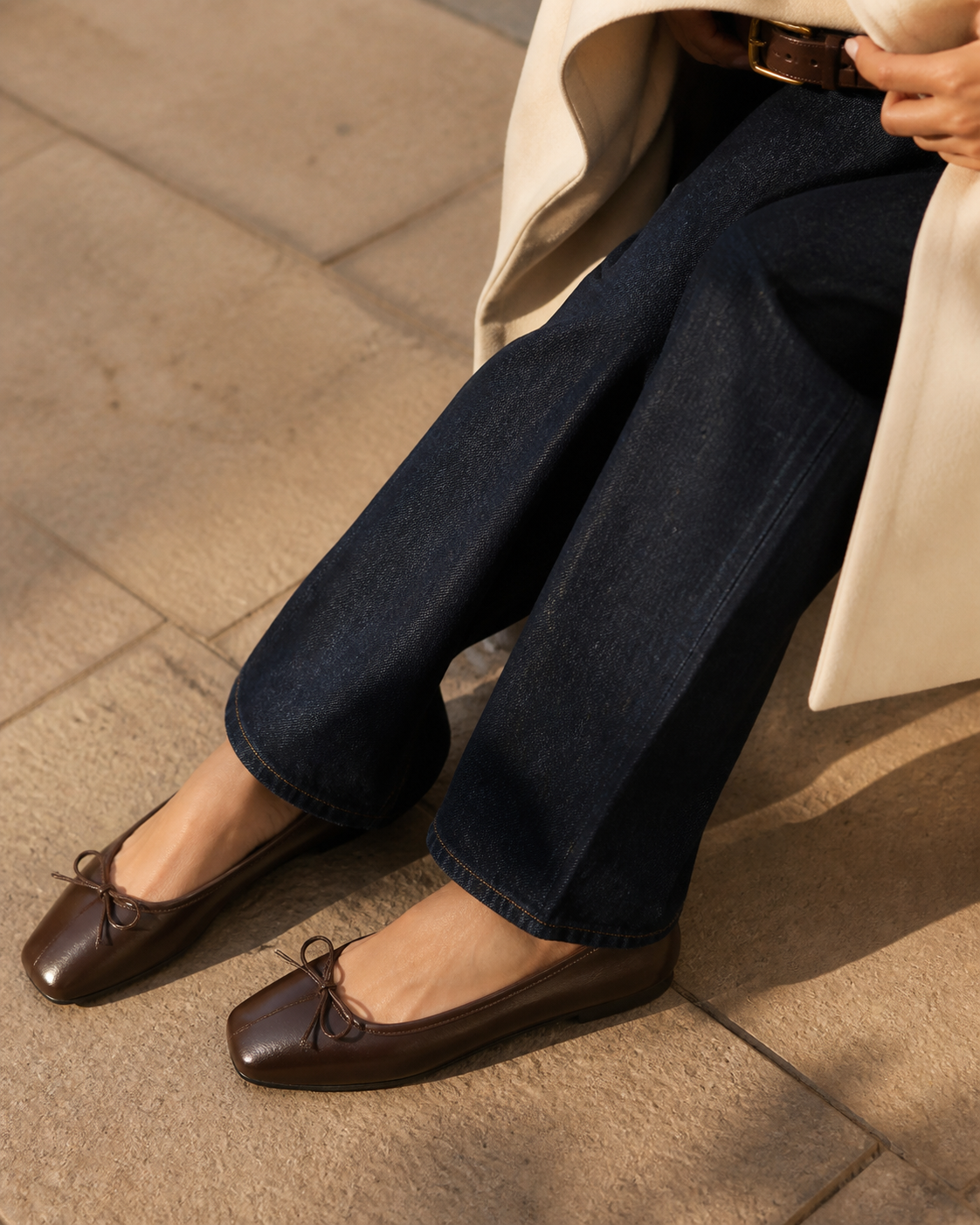
The Ribbed Black Tank is the everyday companion; Espresso Leather Ballet Flats keep the outfit grounded for daytime. Espresso Kitten-Heel Slingbacks offer a more pointed line for dinner. You do not need all four purchases. Shop the missing piece and test it with what you own. For Lila, repeat wear means the skirt works on a weekday as convincingly as it does beside a restaurant table.
Make the keep-or-return decision before altering the hem
Keep the tags attached while you complete the permitted indoor try-on. Check the retailer's return conditions before wearing, washing, or altering anything. Let a newly unpacked skirt settle according to its care guidance, then look again at the hem. If it appears uneven, ask the seller or a tailor to assess it rather than immediately cutting away length.
Add likely alteration and care costs to the price comparison. A lower-priced skirt that needs a waistband rebuild may be less useful than one that fits at arrival. Save the measurements of a successful purchase for future shopping, along with the waist position and shoes you tested. Those notes will be more helpful next season than remembering only the size printed inside.