As an Amazon Associate I earn from qualifying purchases. Purchases through these links may earn me a commission at no extra cost to you.
To choose a women's belt size, measure around the waistband where you will actually wear it, with your trousers and usual tucked layer on. Match that measurement to the seller's belt diagram and usable fastening range, not simply your jeans label or the strap's total length. For width, measure the narrowest belt loop first. A slim strap usually looks quieter on fluid tailoring; a slightly broader one can balance denim if it passes through comfortably. Check the buckle seated, leave adjustment room, and choose a tail that reaches a keeper without curling around your hip.
I am Lila Voss, a Brazilian-Italian fashion model and style editor. My interest in belts starts at the fitting mirror: a small buckle can bring order to a waistband, while the wrong tension makes beautiful fabric bunch. For editorial work and ordinary coffee stops alike, I want the accessory to stay settled when I move. A still photograph only tells half the story.
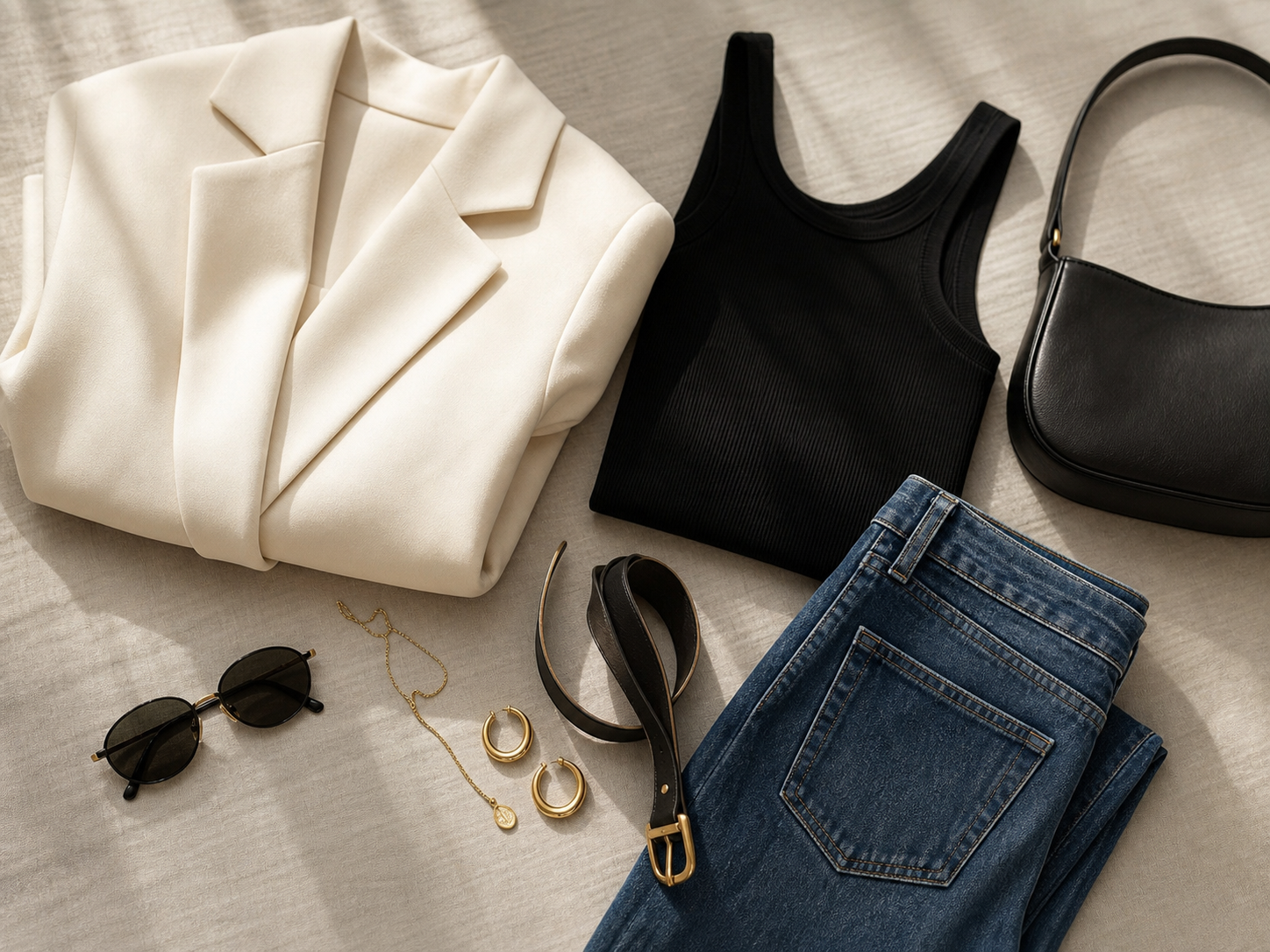
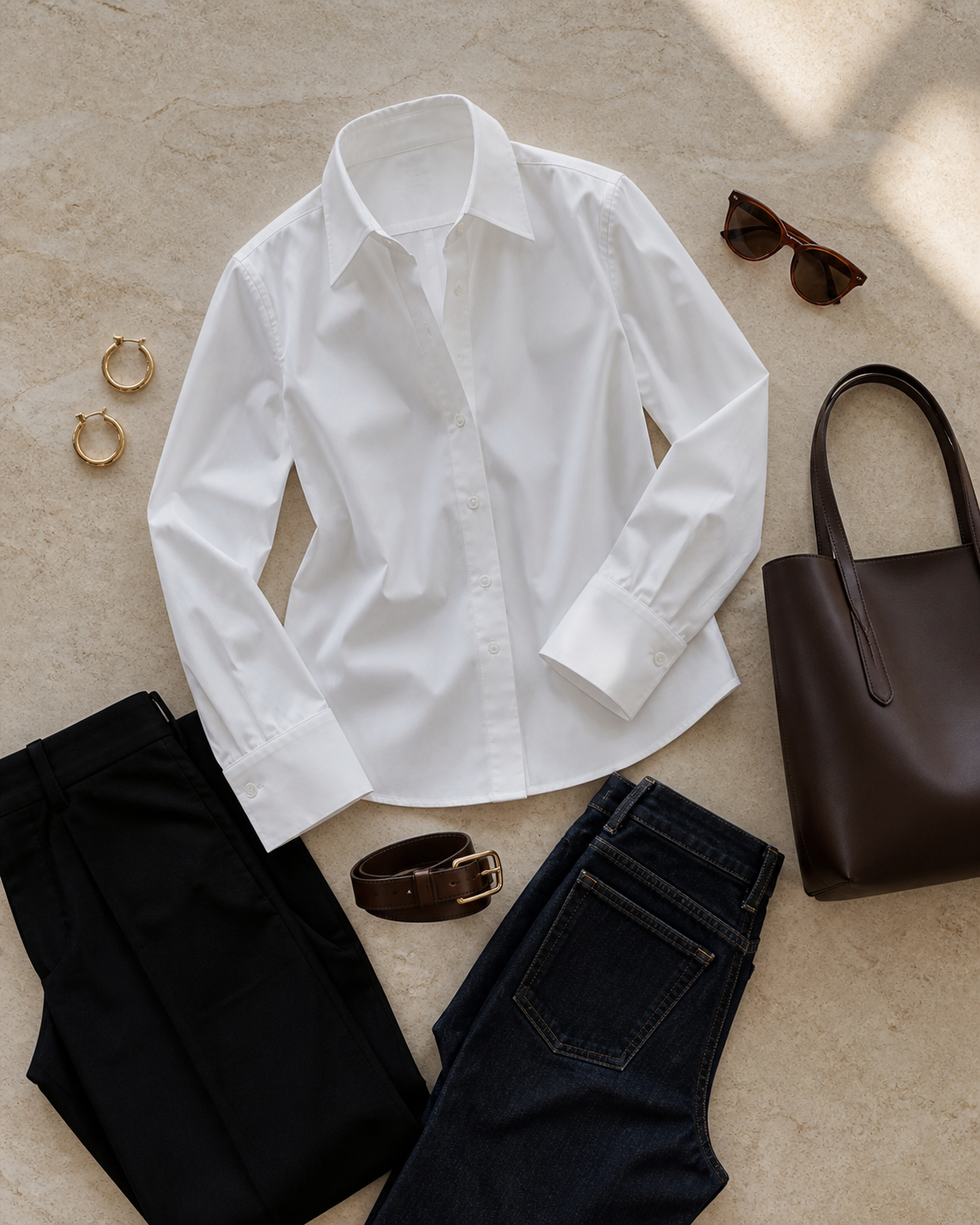
This shopping guide is about finding the right dimensions for your own closet. The linked Slim Leather Belt is a search starting point, with jeans, trousers, and a shirt offered as outfit references. These are not personally tested individual listings. Compare the selected product's measurements, materials, current price, and return conditions before buying; the photographs illustrate styling rather than exact merchandise.
Measure at the waistband you actually wear
Put on the jeans or trousers you reach for most. Thread a flexible tape through their loops without pulling the waistband tighter. Keep the tape flat and note the comfortable circumference in centimeters and inches. Repeat with your second pair if its rise differs. A high waist and a lower hip position can need different fastening lengths on the same person.
Include the shirt you normally tuck in. Poplin folded over itself occupies more room than a close tank, especially at the side seams. Take a second measurement seated if the waistband changes noticeably. Do not suck in or compress the clothes to obtain a smaller number. The purpose is to shop an accessory that accommodates the outfit through a full day.
Separate labeled size, fastening length, and total length
A listing may show a letter size, a numbered belt size, a waist range, or the full strap length. Those figures are not interchangeable. Look for a diagram identifying where measurement begins and ends. Some guides use a central hole as the endpoint; others state a usable range. Follow the specific seller's method instead of assuming the entire belt should equal your waist measurement.
If a diagram shows an 80-centimeter fastening length with holes extending on either side, that is different from an 80-centimeter strap measured tip to tip. The latter includes material that overlaps after fastening. With a belt you already like, measure to the hole you use, following the new seller's starting point. Missing diagrams or unclear units are reasons to ask the retailer before ordering.
Choose belt width from the smallest loop
Measure the clear opening inside each type of loop on the garment, including any narrow side loops. Leave room for the strap to slide without forcing the stitching. As a styling starting point, compare straps around 15 to 25 millimeters for delicate tailoring and roughly 25 to 35 millimeters for denim. These are aesthetic ranges, not universal fit rules; your actual loops decide compatibility.
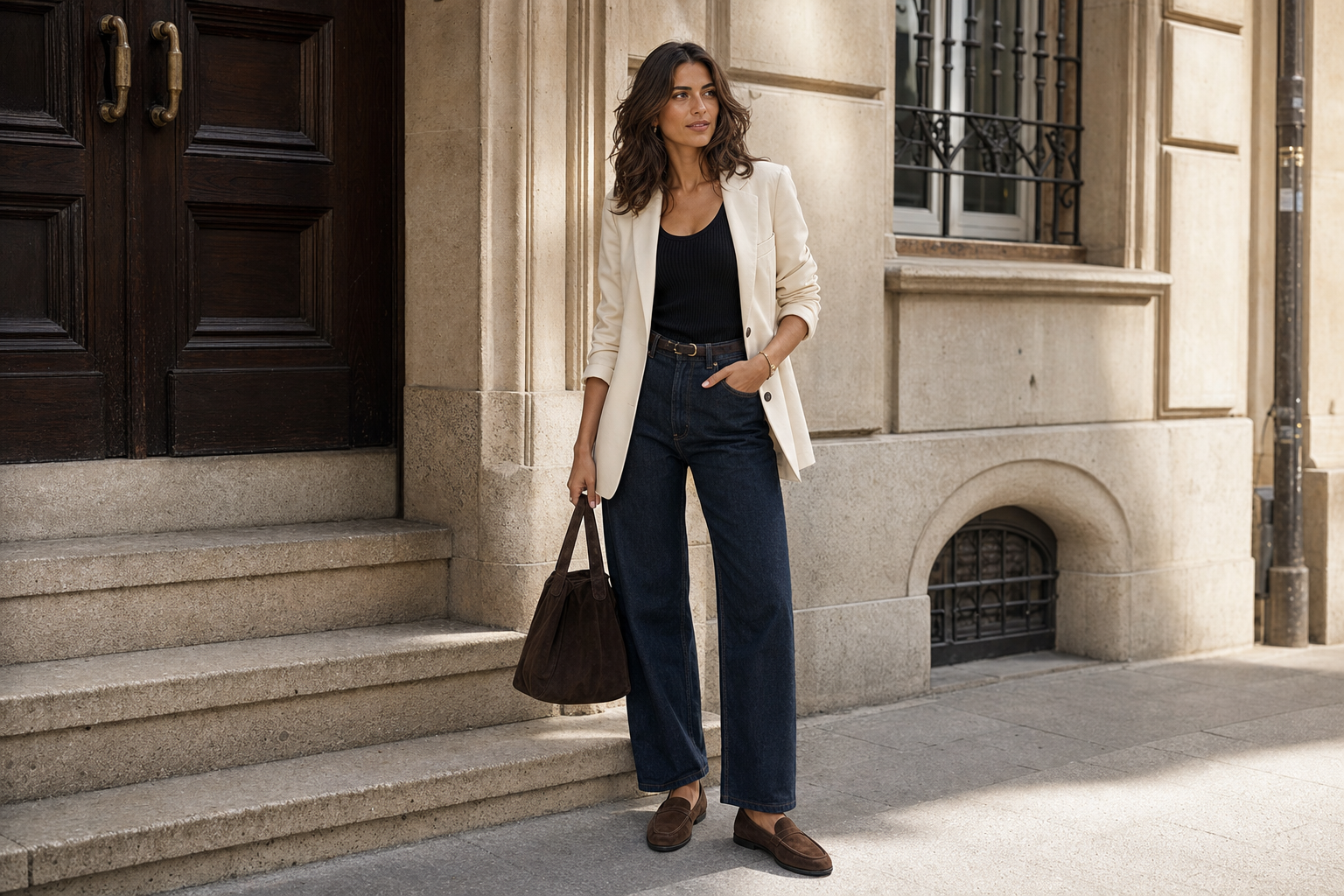
A wider belt is not automatically more supportive. Thickness, stiffness, and buckle weight change how it behaves too. Lila's quiet-luxury preference is a strap that lies against the waistband without rolling its upper edge. On light trousers, a thick doubled section near the buckle can create more bulk than the rest of the outfit. Inspect side photographs as closely as the front view.

Let the trousers hold their shape before adding a belt
Straight-Leg Denim should fit acceptably before you add the accessory. A belt can tidy a small amount of ease, but a heavily gathered waist changes the pocket angles and side seams. If several folds collect under the back loops, compare another cut or consider a tailoring assessment. Tightening again may make the waist smaller while leaving the seat fit unresolved.
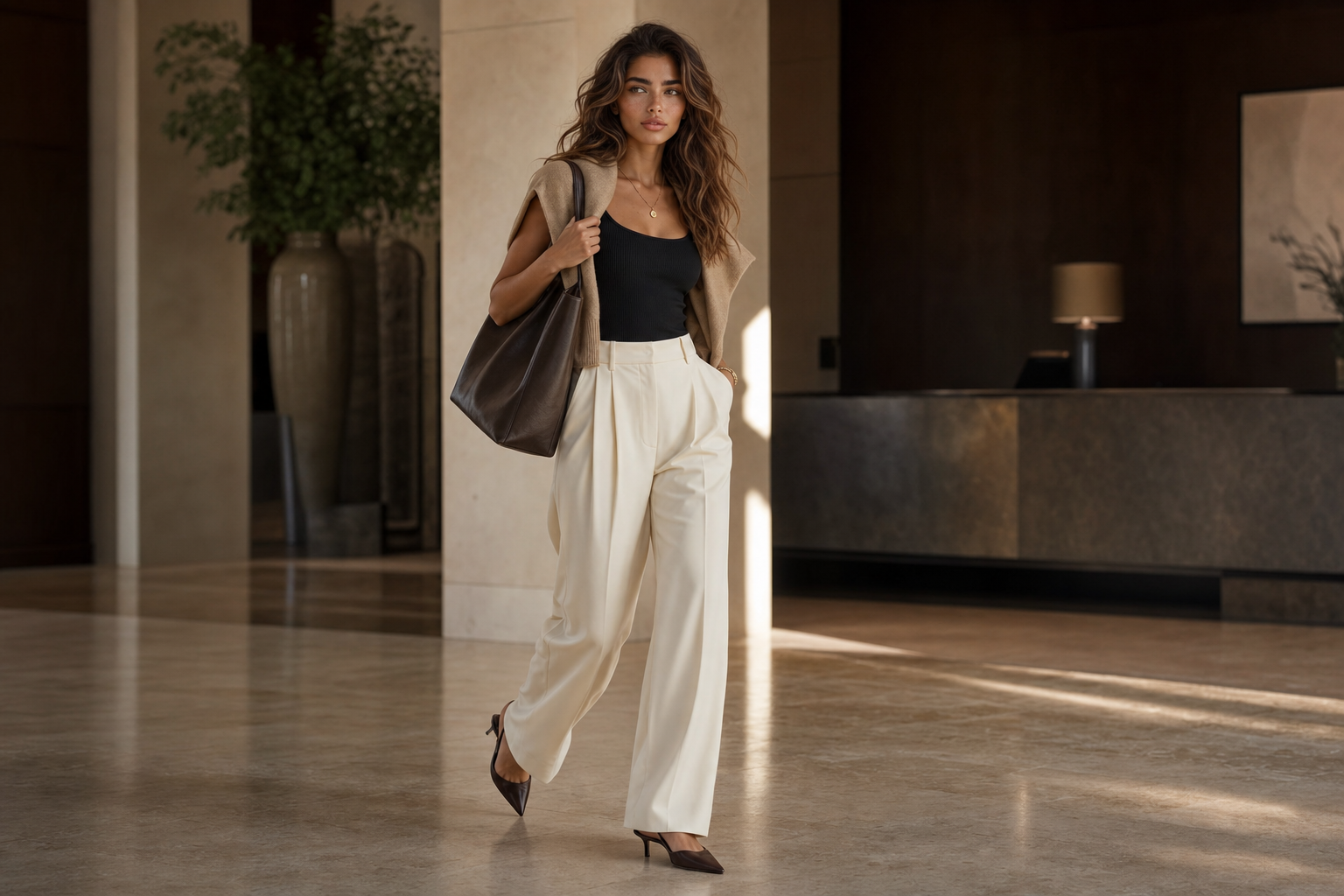
High-Waist Wide-Leg Trousers need a different eye. Their pleats should fall freely below the waistband instead of fanning outward from belt tension. Try them without a belt first, then add the narrowest practical option. A clean unbelted front can be the better choice on trousers designed without loops. Do not buy a strap simply because a product photograph shows a styled waist.
Check buckle depth, tail length, and seated comfort
Fasten the belt comfortably and tuck its tail into the keeper. Ideally, useful adjustment remains in both directions rather than forcing you onto the last available hole. Sit in an ordinary chair, lean forward, and reach across a table. The buckle should not dig into your abdomen, lift the waistband, or catch the shirt every time you change position.
Look from the side with your jacket open and closed. A large buckle can form a hard bump beneath fine knitwear even when its front looks restrained. Excess tail can also poke out under a blazer. Do not cut a new belt or punch extra holes during a return fitting. Only modify a keeper piece after checking its construction and the maker's alteration guidance.
Use color and hardware to control the waist line
For my warm olive skin and chestnut waves, espresso leather and restrained warm metal sit naturally beside cream and dark indigo. That is a personal palette choice, not a rule for everyone with olive coloring. My hazel-green eyes remain the focus when jewelry near the face is fine and the buckle does not compete. Match the general metal tone rather than chasing an identical finish across every accessory.
A belt close to the trouser color makes the waist quieter; a contrasting strap creates a more visible horizontal break. Try both effects with a White Poplin Shirt before shopping another color. For a camera check, photograph the full outfit at waist height in ordinary daylight. Judge the proportions, then inspect a close crop for buckle glare, wrinkled fabric, and a twisted tail.
Build a short shopping record before checkout
Write down the waistband circumference, smallest loop opening, preferred strap width, and a comfortable belt's fastening measurement. Add the outfit you want to wear tomorrow: dark denim and poplin, for example. This makes Amazon searches more useful than scrolling through nearly identical buckles. Check the selected size and color variant because one listing can contain different widths, lengths, or materials.
Compare the description with close photographs of the edges, keeper, holes, and reverse. Confirm what the strap is made from rather than relying on leather-like appearance. Review return deadlines before deciding between sizes. My final purchase test is simple: the belt must fit the real waistband, sit comfortably at dinner, and repeat with clothes I already own. One suitable accessory earns more wear than a matching set bought without measurements.