
As an Amazon Associate I earn from qualifying purchases. Purchases through these links may earn me a commission at no extra cost to you.
Silk is a fiber; satin is a weave. A satin camisole can therefore be made from silk, polyester, or another fiber, and a silk shirt need not look glossy. When shopping, read the composition before comparing price, then check opacity, lining, and how the garment hangs in motion. Choose silk when you want that particular material and can follow its care instructions. Choose a clearly labeled polyester satin when its fit, finish, and price suit your wardrobe. Neither name guarantees a beautiful garment. The best purchase gives you a smooth neckline, comfortable movement, and a care routine you can actually maintain.
For Lila Voss, the Brazilian-Italian fashion model and style editor, this distinction matters at the fitting mirror. A glossy skirt can look beautiful against a matte knit, yet reveal a pulling seam in an editorial close-up. Shopping by material and construction gives the camera something better to work with than a promising product title.
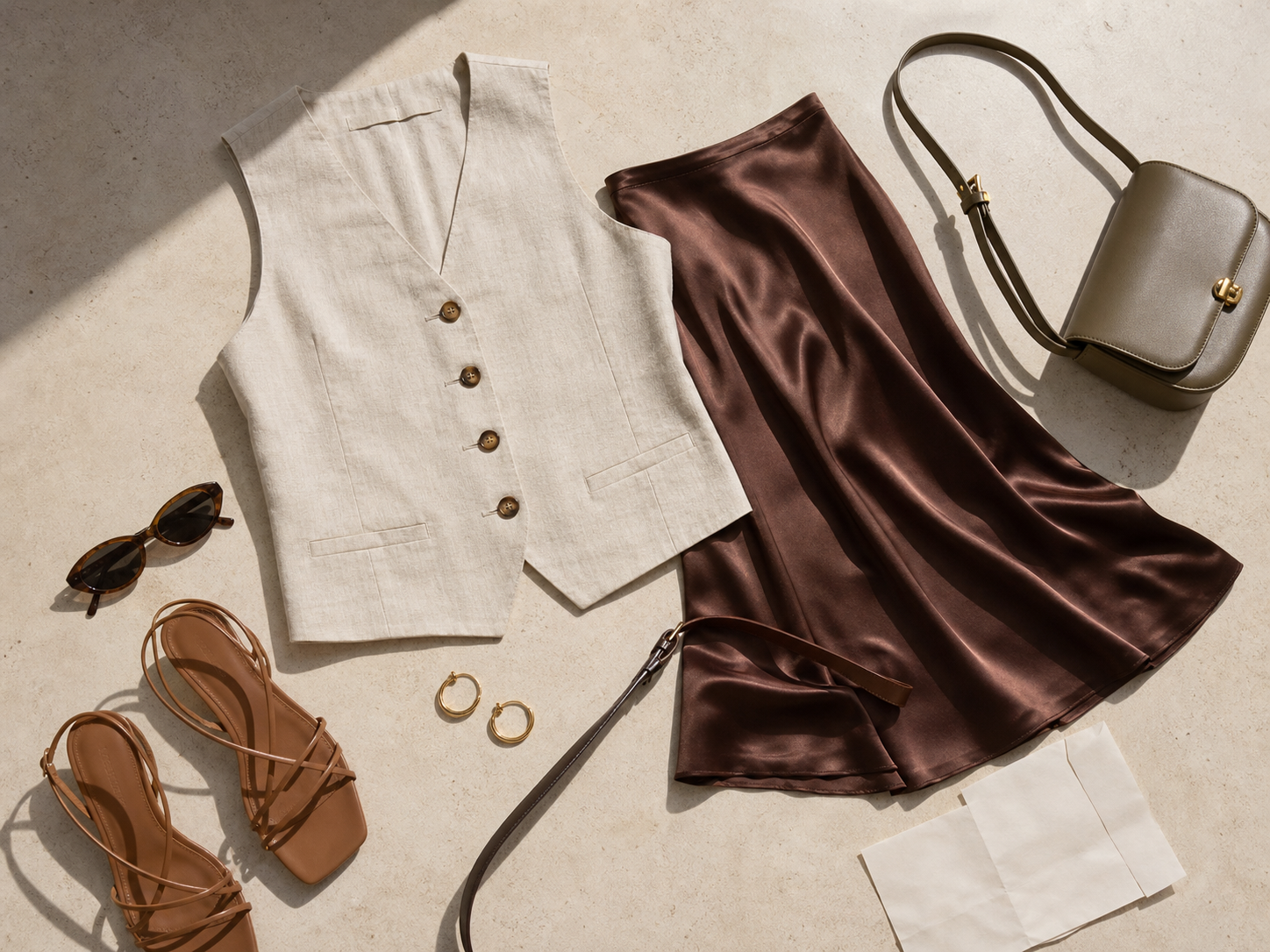
This edit uses four existing wardrobe searches, from a silk camisole to a black slip dress. They are starting points for comparing listings, rather than verified offers for one exact garment. The editorial images show sheen, proportion, and outfit context; a photograph cannot establish the fiber content of the clothes pictured.
Read fiber and weave as two separate buying decisions
The composition tells you what the threads are made from. The weave describes how they are arranged. Silk satin combines both descriptions, while polyester satin uses a different fiber in a satin construction. LILYSILK’s explanation of silk and satin makes the same distinction. A listing that says only satin has not yet answered the material question.
Open the fabric details for the selected color and size. Look for percentages rather than words such as silky or silk-feel. A blend may be exactly what you want, but its silk percentage should be clear. Read the shell and lining separately: a silk outer layer does not tell you what sits against your skin. Save the label information alongside the size chart before comparing another listing.
Decide how much shine belongs in the outfit
Use the room and the rest of the closet as your reference. For daytime meetings, a softly reflective shirt beside dark denim gives enough contrast without making the entire outfit glossy. For dinner, a black satin dress can carry the light on its own. Adding a shiny bag and several broad chains may compete with the neckline.
Lila’s warm olive skin and chestnut waves work beautifully with cream and chocolate in her editorial palette. Try those colors near your own face in window light before deciding. Hazel-green eyes need no matching accessory to remain visible. Keep a product video paused at several angles: a pale panel might be a reflection rather than a different fabric color. Judge the overall movement as well as the brightest frame.

Compare camisoles at the neckline and underarm
A Silk Camisole is a useful first search if you want a small silk layer beneath tailoring. Check the material details even when silk appears in the name. Adjustable straps can help place the neckline, but they cannot correct a body that is too narrow across the bust. Look for a side view with the model’s arms relaxed.
At home, try the camisole with the bra and jacket you intend to wear. Lean forward, reach for a bag, and settle back into a chair. The neckline should return without constant rearranging. If the fabric forms taut horizontal lines, compare another size or cut. Buying a larger size only helps when the armhole and neckline still fit; a deeper gap is not the same as comfortable ease.

Choose a shirt by opacity as well as softness
The Silk Button-Down Shirt search suits a wardrobe that needs sleeves and an open collar. Ask for composition and lining information if the listing leaves either unclear. A pale shirt may need an underlayer even when its fiber is expensive. Picture that extra layer in the actual outfit before paying for a light, fluid effect.
Hold the garment against daylight, then wear it away from the window. Both checks matter because backlighting can exaggerate transparency. Fasten the buttons and reach forward to see whether the placket separates. Lila likes a shirt that hangs freely beside the waist when worn open over a tank. For travel days, include the cost and time of its stated cleaning method in the shopping decision.

Let skirts and slip dresses fall without tension
The Satin Midi Skirt search leaves the fiber choice open. Compare clearly labeled options within your budget and look closely at the waistband, hip, and side seam. A satin surface can make small ripples visible. A smooth front photograph alone does not show how the skirt behaves when the wearer takes a full stride.
For a Black Slip Dress, use the same checks over a longer silhouette. Walk, sit, and turn before deciding that the hem length works. The dress should move around the hips without needing to be pulled down after each step. Try it with the shoes already in your closet. A lower-priced dress with comfortable room and a tidy hem may earn more dinners than an expensive fabric in the wrong cut.
Run a camera and layering check before keeping it
Take an unfiltered photograph in indirect daylight and another in the lighting you expect to wear the outfit in. Check the neckline, seams, and underlayers at normal viewing size. A close zoom is useful for construction, but it should not replace judging the whole silhouette. For an evening plan, a quick flash photograph can reveal an underlayer that the bedroom mirror missed.
Model work teaches Lila Voss to notice the surface around a garment as well as the garment itself. A rough bag edge or raised jewelry setting can catch against a delicate top. Try the complete outfit gently, with clean accessories, while tags remain attached. The aim is a practical return-window fitting, not a stress test. If a fabric needs constant smoothing during five quiet minutes at home, reconsider its role in your week.
Compare the full cost of keeping the garment
Check the sewn-in care label before washing, steaming, or pressing. Do not assume every silk piece requires the same method, or that every polyester satin garment can go into a machine. Dyes, trims, lining, and construction also affect the instructions. A special-care dinner dress can make sense; a weekday shirt you avoid cleaning is a less useful purchase.
Silk Mark’s identification guidance cautions that look and feel alone cannot reliably identify silk. Buy from a listing with clear material information and usable return terms instead of relying on shine or a dramatic home test. Compare the delivered price, expected cleaning expense, and any necessary alteration. Then choose one garment for a specific gap: a camisole under your blazer, a shirt for denim, or a skirt or dress for evenings.