
Choose a bag strap drop by measuring a bag that already feels comfortable, then checking the new bag with your usual outer layer. For shoulder carry, leave space to move your arm and reach the closure. For crossbody carry, test where the bag lands across your own torso; height alone cannot predict the fit. For a tote, compare handle clearance with the bag loaded. Read strap drop separately from full strap length, and ask for the adjustable range. A beautiful bag earns repeat wear when it stays accessible without pulling your jacket out of shape.
Lila Voss, the Brazilian-Italian fashion model and style editor, judges a handbag as part of a moving silhouette. A strap can flatten a lapel, catch chestnut waves, or hide the waist that careful tailoring created. The useful purchase is the one that works between editorial appointments as naturally as it does at dinner.
This shopping guide uses existing shoulder-bag and tote searches as comparison starting points. Check each listing for its actual straps and measurements; the editorial images illustrate proportion rather than a tested seller’s product. A convertible shoulder bag can cover crossbody wear only when its included long strap fits you.
Separate strap drop from full strap length
Strap drop usually describes the vertical space between the top of the bag and the highest inside point of its raised handle or strap. Full strap length follows the strap from end to end. Treat them as separate measurements, and check the seller’s diagram for the exact reference points.
To establish a personal reference, place a familiar bag upright and raise the handle without stretching it. Measure straight down from the inside top of the handle to the bag’s upper edge. Record the adjustment hole as well. If the seller measures from attachment rings instead, repeat your measurement using that method.
Do not simply double a drop measurement to calculate a replacement strap. Attachment spacing, hardware, and the curved path change the result. For a replacement, measure the existing strap along its length and establish whether the listing includes clips in the stated dimension. A clear comparison saves buying a beautifully finished strap that lands in the wrong place.

Use your existing bag to set a useful adjustment range
Write down where your favorite bag sits when worn: under the arm, near the waist, or against the upper hip. Then note what you were wearing underneath it. This is a more useful shopping reference than copying the proportions of a model whose torso and shoulder shape differ from yours.
For a concrete listing example, Coach’s Teri size guide gives its Shoulder Bag a short-strap drop of 21.59 cm and a long-strap drop of 57.79 cm. Those figures describe that design, not a universal fit recommendation. They demonstrate why a listing should identify each included strap separately.
When comparing adjustable bags, request both the minimum and maximum setting. Notice the spacing between buckle holes and whether the loose end has a keeper. If your preferred length is the very last hole, there may be little room left for a thicker coat. Lila favors adjustment room over a single flattering product photograph.
Give shoulder bags enough room over the armhole
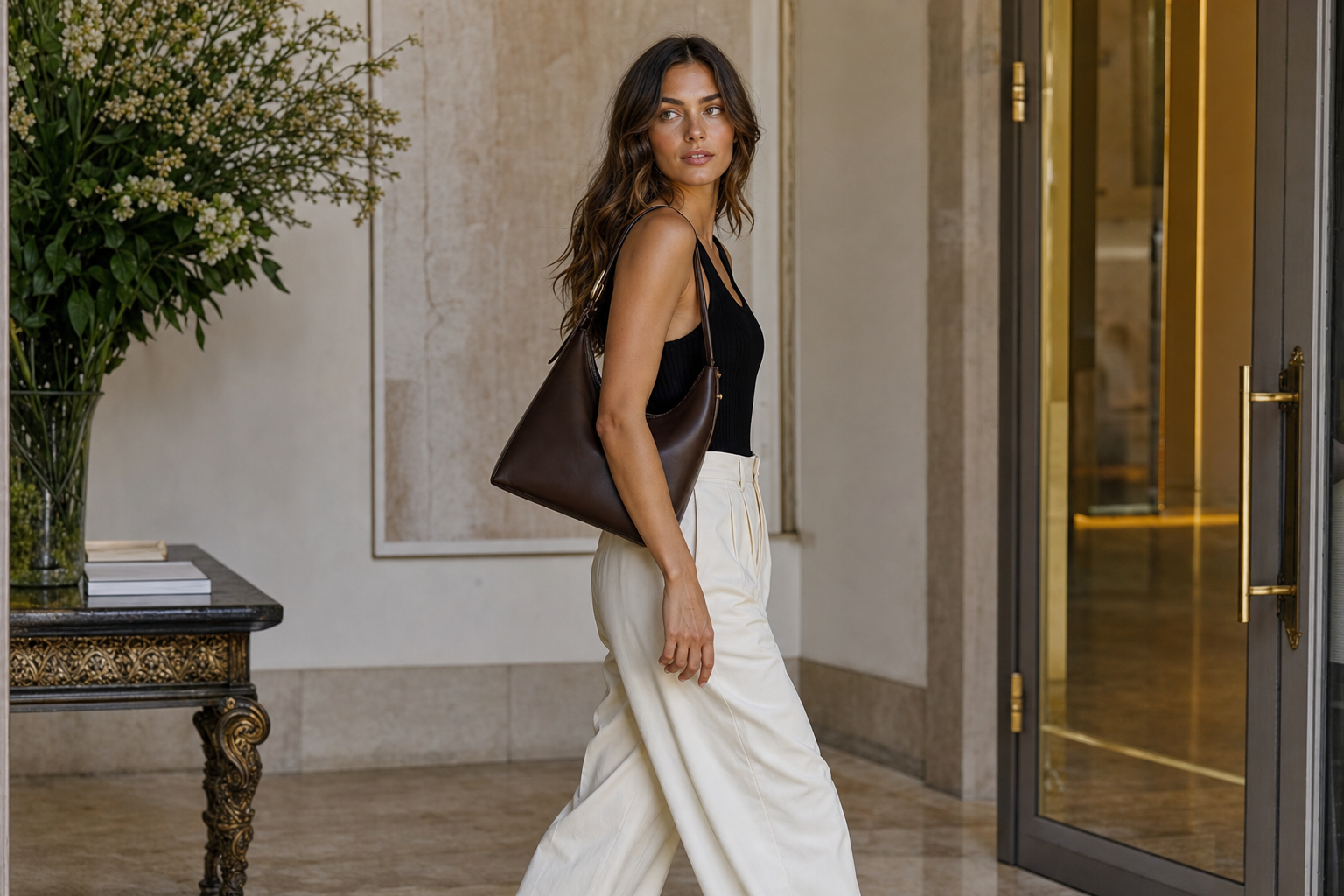
Begin with the Minimal Shoulder Bag search and inspect the strap options on each candidate. Try the bag over a bare arm or thin shirt, then over the Cream Tailored Blazer. The bag opening should remain reachable without lifting your shoulder or trapping the sleeve between the bag and your body.
Walk with your arm relaxed, reach forward, and remove the bag using one hand. Check whether its base pushes your elbow outward. A deeper bag may feel more intrusive than a shallow one with the same strap drop, especially when the interior is full. Dimensions work together; a longer strap does not solve every bulky shape.
Look at the blazer after a few minutes of carry. If the lapel twists or the shoulder repeatedly slides away from its natural line, adjust the strap or compare a different bag. For Lila’s camera-ready wardrobe, the jacket should still look deliberate once the bag leaves the shoulder.
Place a crossbody by movement and access
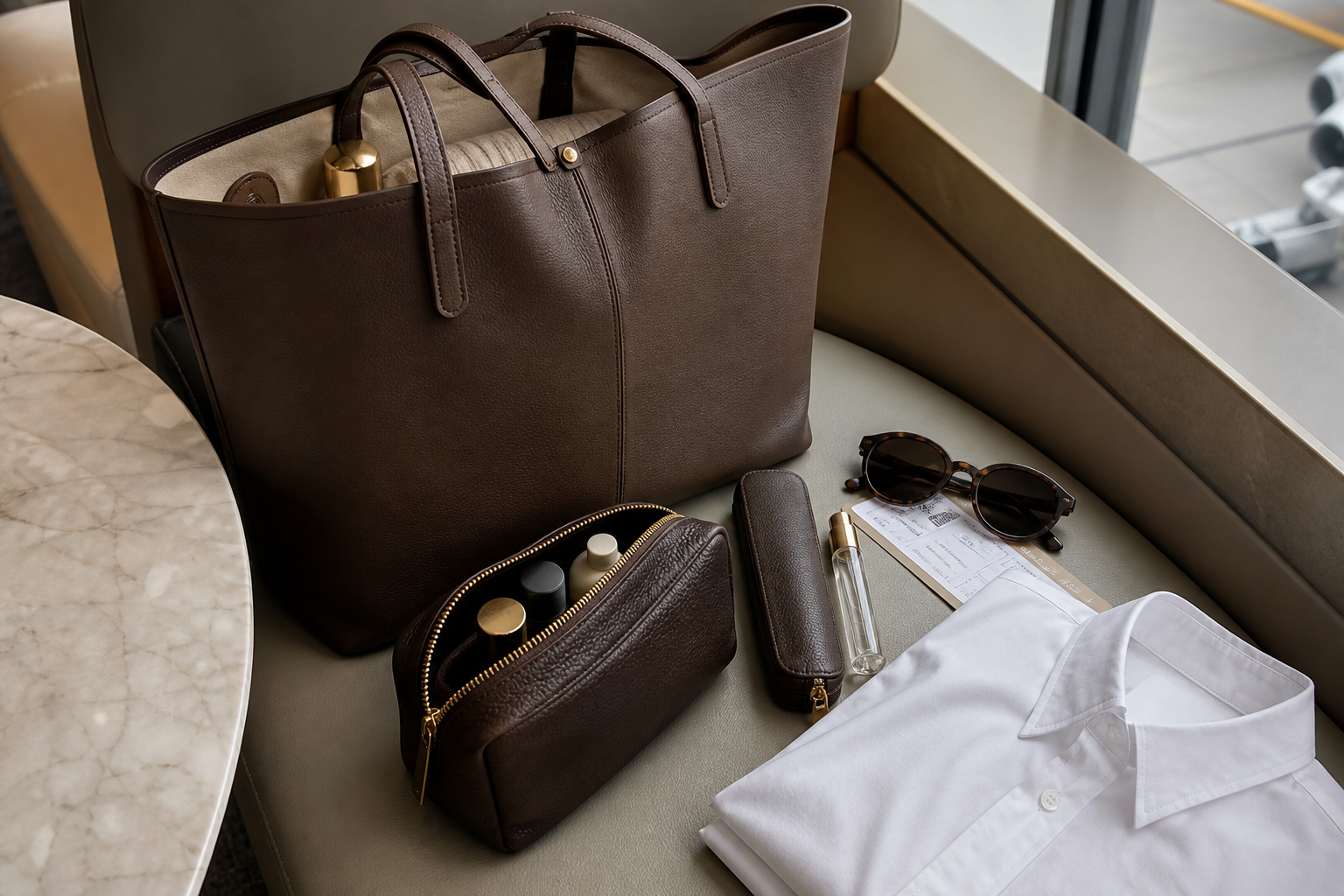
A long strap worn diagonally follows a different route from one hanging on a single shoulder. Torso length, bust, shoulder shape, and outerwear affect the final position. Start near the upper hip, then move the bag higher or lower until the closure is easy to reach and the base clears your stride.
Test this with a bag you already own before ordering a convertible design. Walk upstairs and sit in a chair. A bag that bounces against the thigh may need shortening; one that sits awkwardly beneath the bust may need more length or a different shape. There is no correct landing point that every body must follow.
With the Classic Trench, check the diagonal strap against the collar, lapel, and belt knot. Carry the bag slightly toward the front if that makes access easier, then examine whether the coat still closes comfortably. For dinner, switch to a short strap only if the bag was designed for that attachment and the hardware closes securely.
Fit tote handles with the contents you actually carry
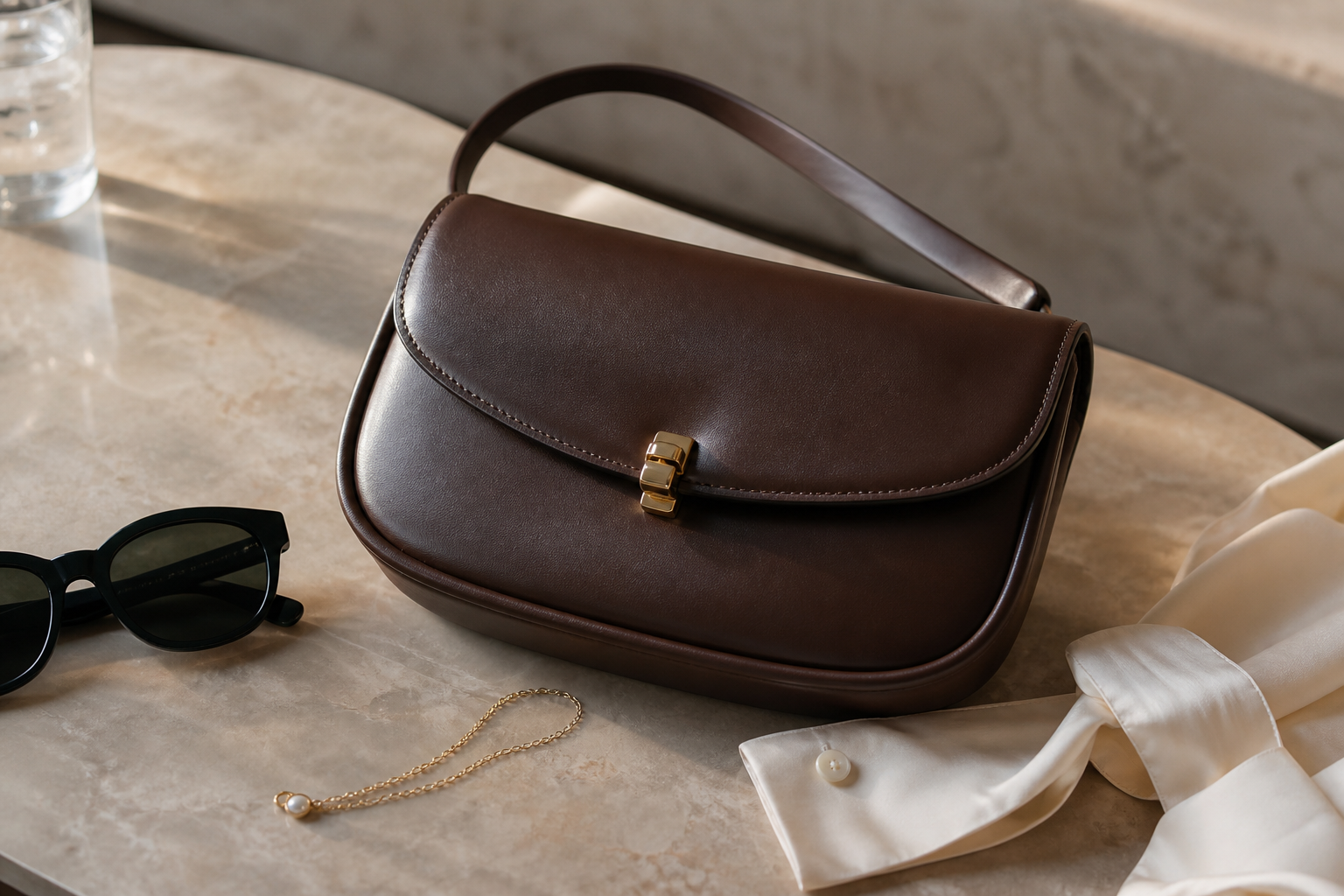
The Structured Leather Tote belongs in this comparison when your day includes more than a phone and keys. Look for handle drop, empty weight, opening dimensions, and a clear interior photograph. A bag can be wide enough on the outside while its zipper opening still makes a laptop sleeve awkward to insert.
Within the seller’s permitted fitting conditions, load your normal essentials and try the handles over your usual jacket. Avoid using an empty showroom shape as the only test. See whether both handles stay on the shoulder and whether the top edge presses into the arm when the bag is filled.
For travel days, check that you can reach a phone or ticket without unloading the tote. A wider handle may feel different from a narrow rounded one, but width alone cannot guarantee comfort. Reduce unnecessary contents before shopping for a bigger bag. Lila’s working closet needs a manageable carry system as much as an elegant outline.
Check strap edges against silk, knitwear, and hair
Zoom in on the underside of the strap, its edge finish, adjustment buckle, and attachment clips. Look for smooth transitions where hardware meets the shoulder. Read reviews for repeated reports of rough edges, slipping buckles, or uncomfortable straps, making sure the comments refer to the same version you intend to buy.
A chain can look beautiful against a black dress, but test whether its links catch your hair or clothing. With chestnut waves worn loose, Lila keeps the strap path clear of the hair at the shoulder. Delicate silk and open knitwear also deserve a gentle indoor fitting before a full evening out.
Espresso leather beside cream tailoring echoes Lila’s warm olive skin and chestnut hair; small gold fittings leave hazel-green eyes prominent. Use that palette as an outfit option, then judge the surface in ordinary daylight. Color and finish should support the clothes already in your closet rather than demand a second shopping cart.
Compare two listings with a short bag-fitting record
Keep one note for each candidate: bag width, height, depth, drop range, strap width, empty weight if provided, and included hardware. Add the total delivered price and return terms. If measurements are missing, ask the retailer before ordering instead of estimating from a photograph with no reliable scale.
Photograph the bag from the front and side while standing naturally. Include one frame over tailoring and another with the outer layer removed. In ecommerce imagery, a hand often lifts or turns a bag to display it clearly; your own fitting pictures should show where it hangs when you stop arranging it.
Buy for the carry method you will use most often. A shoulder bag suits a light daily load, a convertible version adds an optional diagonal carry, and a tote handles larger essentials. You do not need all three. Choose the option that passes your movement test with an ordinary outfit and leaves your hands free when needed.