
Choose rigid jeans when you want a defined denim silhouette and can find enough room through the seat and thigh without relying on stretch. Choose stretch jeans when you prefer a closer fit with more give for sitting, commuting, and travel. Neither fabric excuses a pinching waistband or a pulling fly. Compare the exact wash’s composition, rise, hip measurements, and inseam before buying. Then test the jeans seated and walking with the tags attached. A good pair should let you move comfortably and settle into the shape you want when you stand again.
Lila Voss, the Brazilian-Italian fashion model and style editor, treats jeans as working clothes with an editorial life. They need to look composed between appointments, survive a long lunch, and still make sense with a jacket at dinner. For that kind of repeat wear, fabric behavior matters as much as the label’s size number.
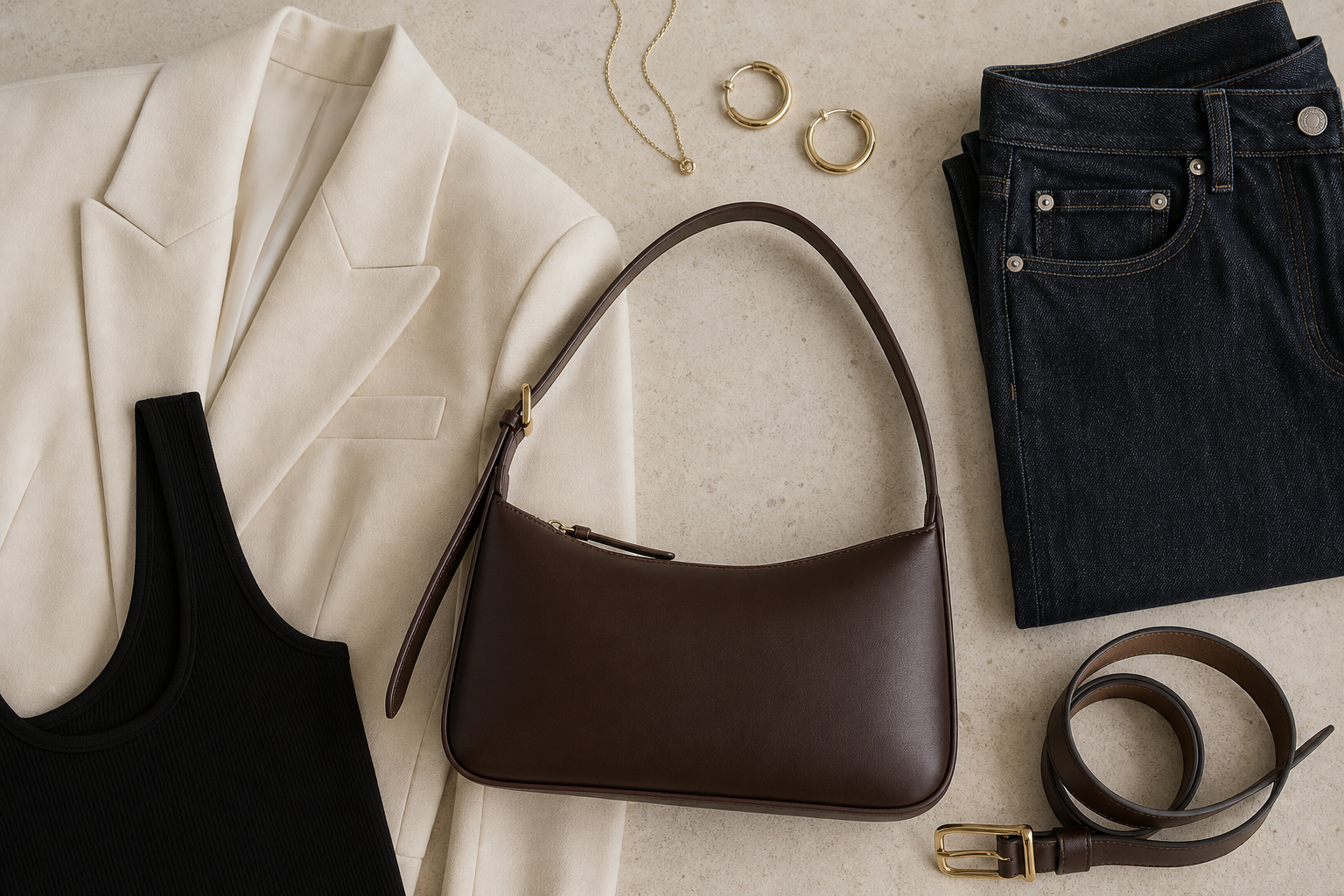
This guide uses the existing Straight-Leg Denim search as a starting point for comparing both fabric types. Product cards lead to shopping searches rather than one tested pair. The images show outfit proportions; a photograph cannot establish fiber content or prove how a seller’s jeans recover after wear.
Read the fabric label for the exact wash you want
Rigid denim generally means denim without added stretch fibers. Stretch denim includes elastic fibers such as elastane or spandex; Levi’s explains that distinction in its product size guide. Start there, then read the complete composition. A product title saying cotton jeans does not tell you whether the cloth also contains other fibers.
Open the specific color and size selection before checking the details. Listings sometimes group several washes or versions under one page. Save the composition beside the wash name so you can compare like with like. If the description and label photograph disagree, ask for clarification or choose a clearer listing.
Do not rank jeans by elastane percentage alone. The cut and construction still influence how the finished garment feels. For Lila’s quiet-luxury wardrobe, the useful question is whether the fabric gives the chosen silhouette enough movement while keeping the surface and seams visually calm.
Give rigid denim room through the seat and upper thigh
A structured pair can create a clean line from hip to hem, particularly with a close black tank. That effect needs room inside the garment. Check whether you can sit normally and step onto a stair without the front rise pulling hard. Buttoning the waist is only the beginning of a fitting.
Look at the pocket openings and fly while standing naturally. Persistent strain across the front deserves another size or cut comparison. If the waist fits but the thigh restricts your stride, seek a roomier thigh rather than accepting discomfort as the price of a vintage-looking jean.
Lila’s model perspective makes the side view especially useful. A strong silhouette should remain plausible outside a held pose. Cotton denim may change with wear, but a promise that the jeans will eventually relax is not a reliable solution to an uncomfortable first fitting.

Check stretch jeans for recovery after ordinary movement
Stretch can make a close seat or narrower leg easier to wear. For a commute or a flight, compare a stretch straight-leg pair with enough space around the knee. Extra give is useful, but the waistband, seams, and pockets may feel firmer than the main fabric. Test those areas separately.
At home, sit for a few minutes, bend your knees, and walk around indoors within the seller’s fitting conditions. Stand again without pulling the legs into place. Notice whether the knees and seat settle or remain unusually loose. This short check cannot predict months of wear, but it can reveal an immediate fit mismatch.
Read reviews for the exact version when possible. Reports about knees bagging, the waist slipping, or the fit changing after washing are more useful than an isolated comment that the jeans are flattering. Look for repeated observations and the reviewer’s size context before treating any one experience as decisive.
Separate waist shape from the number on the size label
Compare your body measurements with the seller’s body-size chart, and compare a familiar pair with any available garment measurements. These are different references. A flat waistband measurement is not automatically the same number as a body waist measurement, especially when stretch and the intended rise differ.
Measure a comfortable pair at the waistband, front rise, and inseam using the listing’s method. Note whether those jeans are freshly washed or already worn. That small detail helps explain why two apparently similar pairs feel different when you try them on.
If jeans fit your hips but gap at the back waist, look for a contoured waistband or a cut designed for a larger hip-to-waist difference. Simply buying a smaller size can remove the room you need elsewhere. Lila would rather compare another pattern than use a tightly fastened belt to force the wrong shape into place.

Keep rigid denim separate from raw and shrink-to-fit labels
Non-stretch does not automatically mean shrink-to-fit. Levi’s distinguishes its preshrunk jeans from its raw Shrink-to-Fit styles, which have their own sizing and care instructions. Check the chosen manufacturer’s guidance instead of applying a raw-denim sizing rule to every cotton jean in your cart.
For an uncomplicated wardrobe purchase, favor a listing that clearly explains expected care and any special sizing adjustment. If you want a raw-denim project, make that a deliberate choice. The time needed to understand its wash routine belongs in the buying decision just as much as the ticket price.
Avoid ordering an uncomfortable size because an unrelated review predicts expansion, or an excessively long inseam because another style shrank. Keep the original tags and packaging during the permitted try-on period. Washing or altering the jeans may change your return options, so resolve basic fit first.
Build the denim fitting around a tank, jacket, and familiar shoes
Try the Ribbed Black Tank with the Straight-Leg Denim so you can see the waistband and upper hip clearly. Add the Cream Tailored Blazer after assessing the jeans alone. Its longer line can make the outfit feel polished, but it can also conceal a fit issue you still need to address.
Dark indigo gives Lila’s warm olive skin and chestnut waves a rich background beside cream tailoring. A restrained gold earring leaves hazel-green eyes and the face prominent. The palette is a styling preference; choose the denim’s fit before deciding whether a particular blue belongs in your closet.
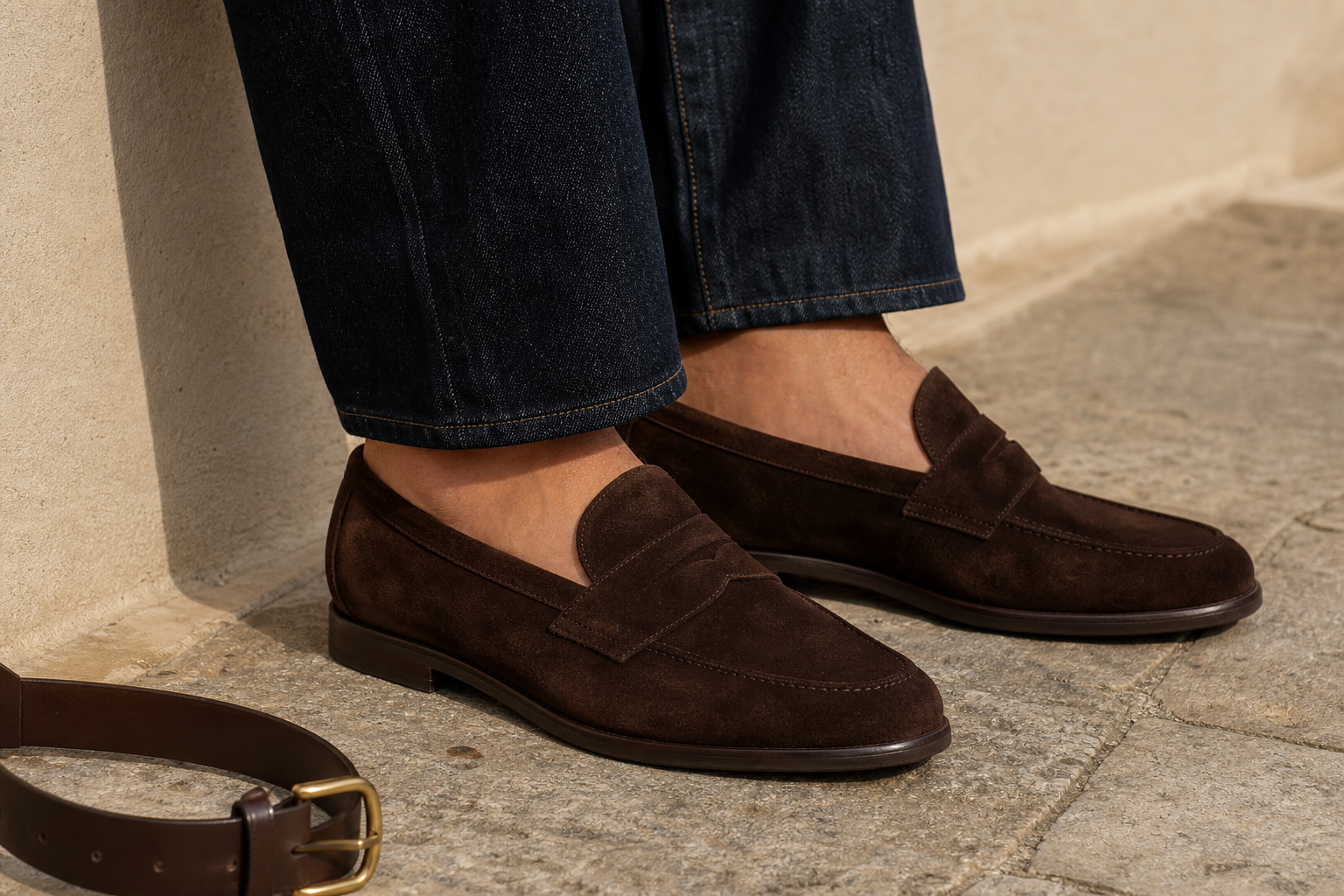
Use Suede Loafers for an ankle-length fitting and Minimal White Sneakers for a relaxed full-length comparison. Check the hem with the shoes you already repeat. A leg that stacks heavily over the sneaker may need another inseam even when the waist fits beautifully. There is no need to buy both shoes to assess one pair of jeans.
For ecommerce visibility, take an ordinary front, side, and back photograph with the jacket off, then one complete outfit photograph. These are personal fitting references. They make it easier to compare two deliveries without relying on memory or the flattering angle used in the product listing.
Choose one pair by its busiest day of wear
If your week involves hours of sitting, begin with a comfortable stretch option and evaluate its recovery. If you prefer a sculpted outline with a little space around the body, begin with a rigid straight leg. A relaxed rigid pair may suit you better than a tight stretch pair; the category alone cannot decide comfort.
Compare the total delivered price, return cost, available inseams, and care instructions before checkout. Buy the denim first if the rest of the outfit already exists in your wardrobe. Lila’s editor’s test is whether the pair works for an actual appointment day and an ordinary weekend, without repeated waistband adjustments.
Keep a short note of the successful size, wash, composition, and measurements. When you shop again, recheck the current listing instead of assuming a familiar style name guarantees identical fabric. A useful denim wardrobe grows from fit information you can repeat, not from collecting several almost-right versions of the same blue jean.