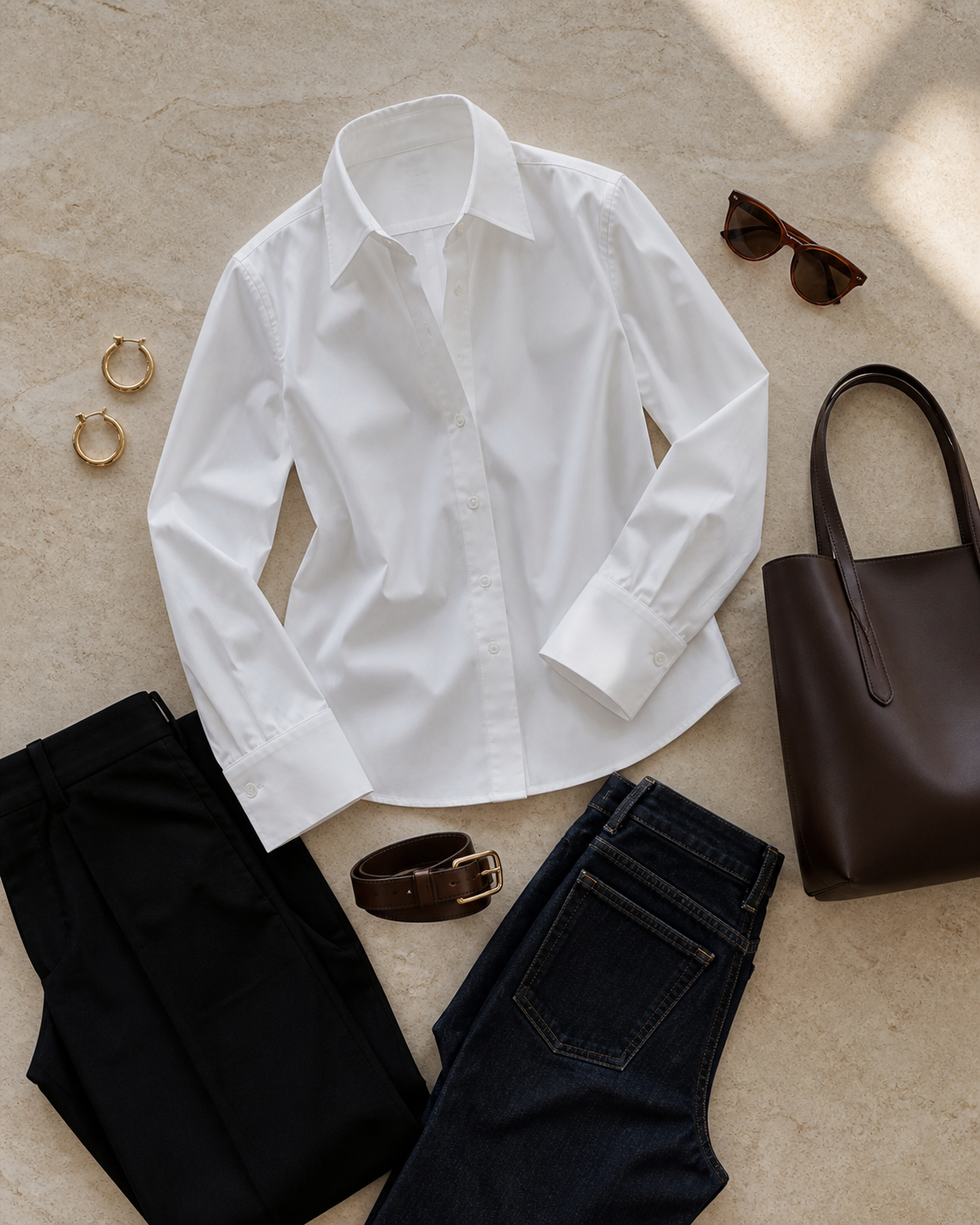
For high-waisted trousers, choose a shirt long enough to stay tucked when you sit, with fabric light enough to lie flat behind the waistband. Use a full tuck when you want a visible waist and uninterrupted pleats. Try a small front tuck for relaxed volume, or wear the shirt open over a close-fitting tank when the tails feel bulky. A shorter, straight hem is easier to wear loose than a long curved tail. Before buying, compare front length, back length, and chest width with a shirt you already own. The best proportion depends on your torso and trouser rise.
Lila Voss, the Brazilian-Italian fashion model and style editor, approaches shirting through movement. A neat standing photograph tells only part of the story. Reaching for a bag, sitting for dinner, and walking between appointments reveal whether the placket pulls or the hem escapes. Her quiet-luxury wardrobe needs that practical ease as much as a clean camera-ready line.
This shopping edit pairs familiar catalog pieces with precise fit checks. The product cards open Amazon searches, so compare the chosen listing, composition, measurements, price, and return terms. The photographs illustrate styling possibilities; they do not document a specific seller’s garment or a hands-on product test.
Measure the shirt against your actual trouser rise
Put on the trousers you intend to wear most, then mark where their waistband sits against a familiar shirt. Measure that shirt from the shoulder beside the collar to the front hem. Repeat at the back if the tails differ. This gives you a useful comparison for a listing’s length chart. Check how the seller takes measurements before comparing numbers.
A shirt can be roomy across the chest and still be too short for a secure tuck. Conversely, extra length may collect around the hips inside close-fitting trousers. Lila looks for enough overlap to survive an ordinary reach without a thick folded band below the waist. There is no single ideal centimeter measurement for every height, bust, and rise.
If a listing supplies only body measurements, ask the seller for garment length rather than assuming the model photograph proves the fit. A high waistband on a long torso behaves differently from the same waistband on a short torso. Save your own measurements beside the size chart before adding anything to the cart.
Use a full tuck to leave pleats room to fall
The Fluid Pleated Wide-Leg Trousers suit a shirt that can spread evenly around the waist. Begin with the shirt hanging straight, tuck it around the whole waistband, then release a little fabric above the top edge. Smooth the tails downward instead of rolling them into a ridge. The aim is breathing room without a large balloon of cloth.
Look at the front pleats after dressing. If they open sharply while you stand still, remove the shirt and check the trousers alone. Pleats that remain strained may indicate a trouser fit issue. If the line settles without the shirt, the tucked fabric is taking up needed room. Choose a less voluminous shirt before tightening a belt.
A White Poplin Shirt gives this combination a crisp outline for a daytime meeting. For dinner, compare the Silk Button-Down Shirt when you want softer folds above the waistband. Lila keeps the placket near the center front so the collar, buttons, and trouser closure form a deliberate vertical line.
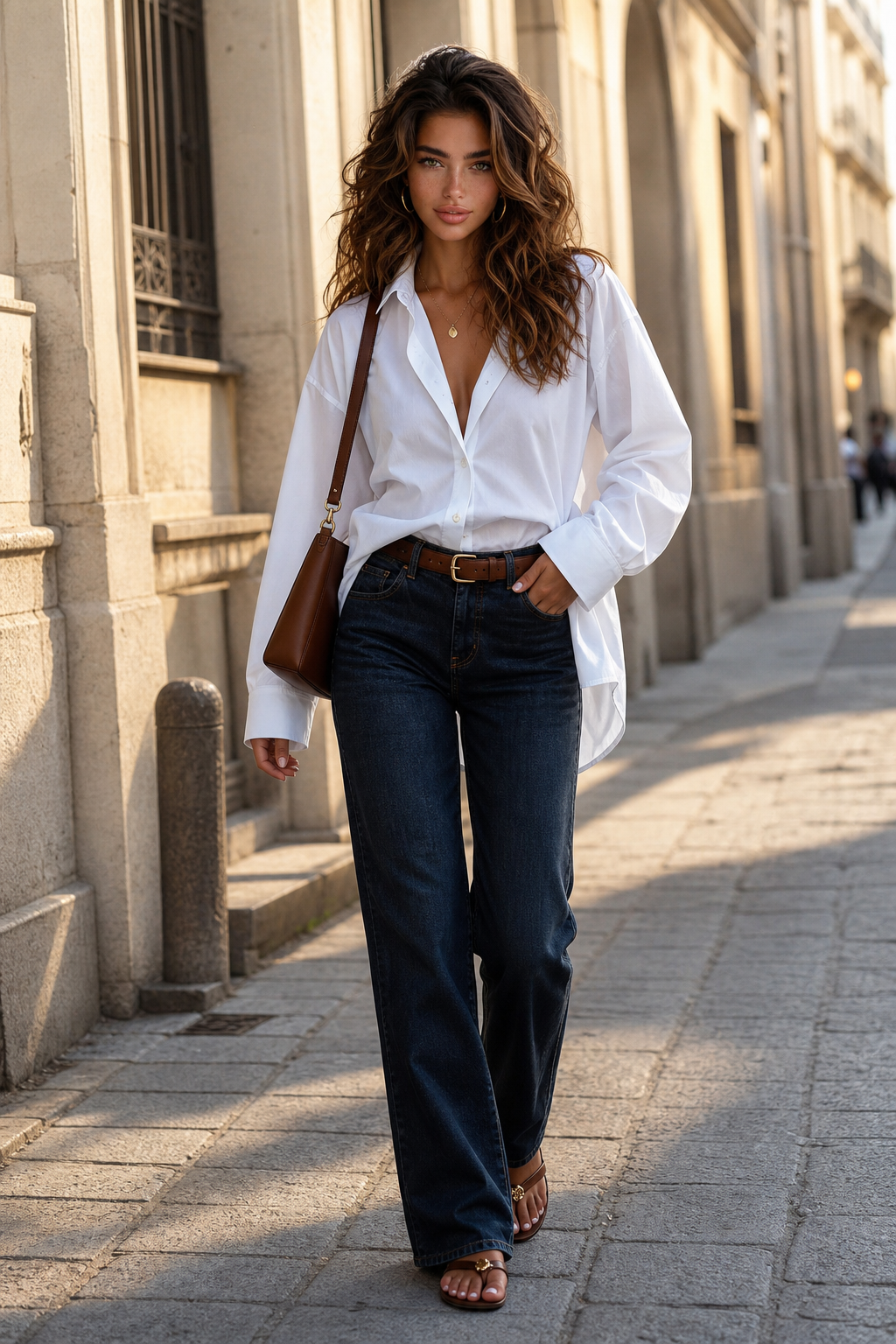
Make a front tuck small enough to keep the sides relaxed
A front tuck is useful when a full tuck makes a relaxed shirt feel stiff. Secure a small central section around the placket, then let the side fabric slope toward the loose back. Check both profiles. A deep pouch over the buckle usually means too much fabric has been pulled forward or too little has been spread sideways.
The city photograph shows the relaxed effect with dark denim, but the same experiment works with high-waisted trousers. On very full pleated trousers, keep the tucked section especially restrained so shirt volume does not compete with the hip folds. A front tuck is an option for proportion, not a requirement for looking polished.
When shopping, look for photographs of the entire hem with the shirt untucked. Product styling can hide an unusually long back tail. If every image conceals the lower half, the listing leaves a meaningful question unanswered. Choose a seller with clearer views or compare another shirt before ordering two sizes to solve an unknown cut.

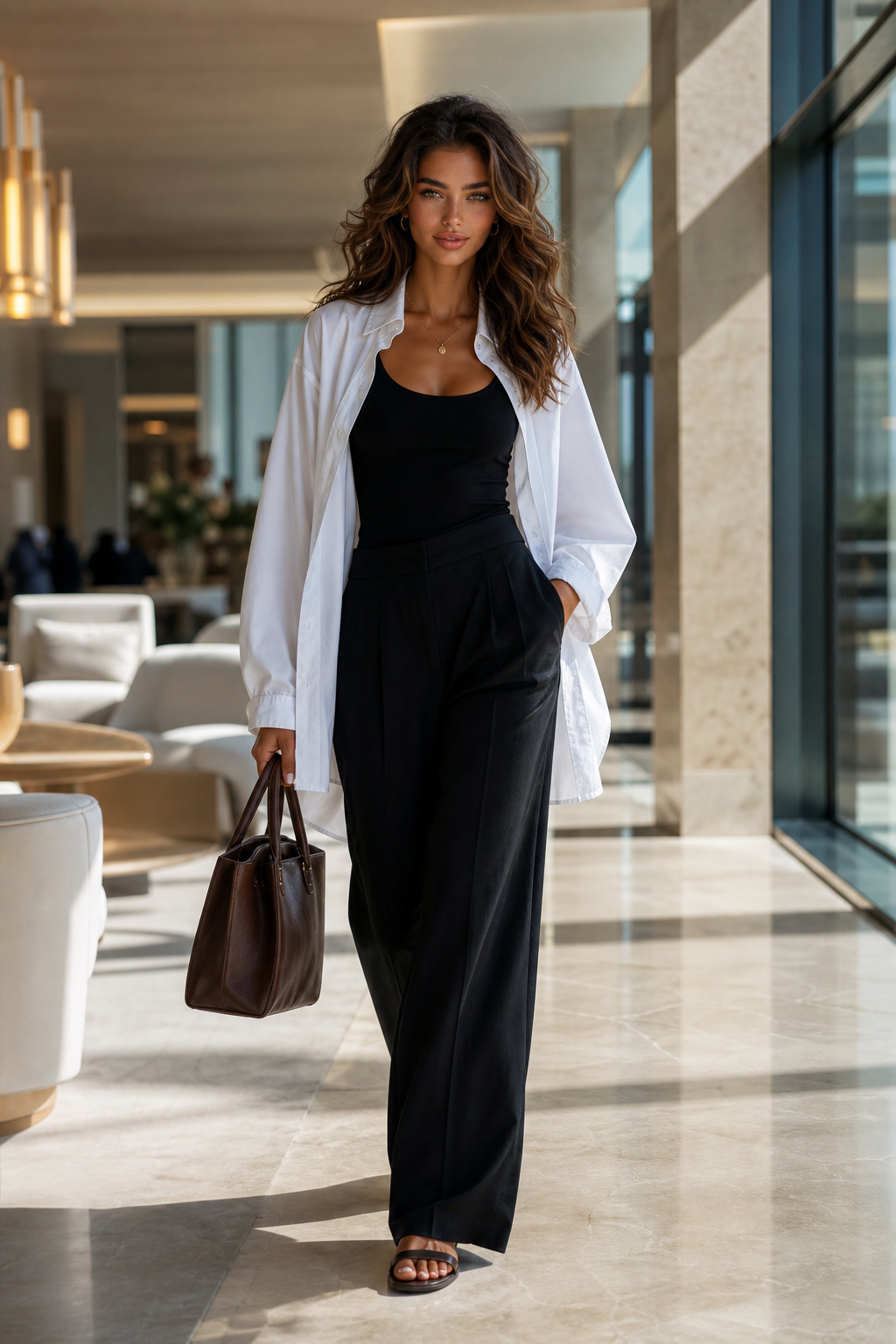
Wear long shirts open when the waistband needs less bulk
An open shirt over the Ribbed Black Tank leaves the waist visible through the center while keeping longer tails outside the trousers. This is a useful travel-day arrangement when you expect to sit for hours. Keep the tank smooth at the waistband and let the shirt fall freely rather than trapping one side beneath a bag strap.
For a buttoned, untucked look, a shorter straight hem is easier to place just below the waistband. Try it with the trousers before committing: the hem should clear the fullest hip comfortably instead of catching there. Raise your arms to decide whether the resulting skin exposure suits your plans. Short length and close fit are separate buying decisions.
UNIQLO’s linen-shirt styling guide also shows open layering and tucked trouser combinations. Use that variety as permission to test the shirts already in your closet. Lila would choose the open version for an airport transfer, then try a full tuck when the same trousers need a more defined dinner silhouette.
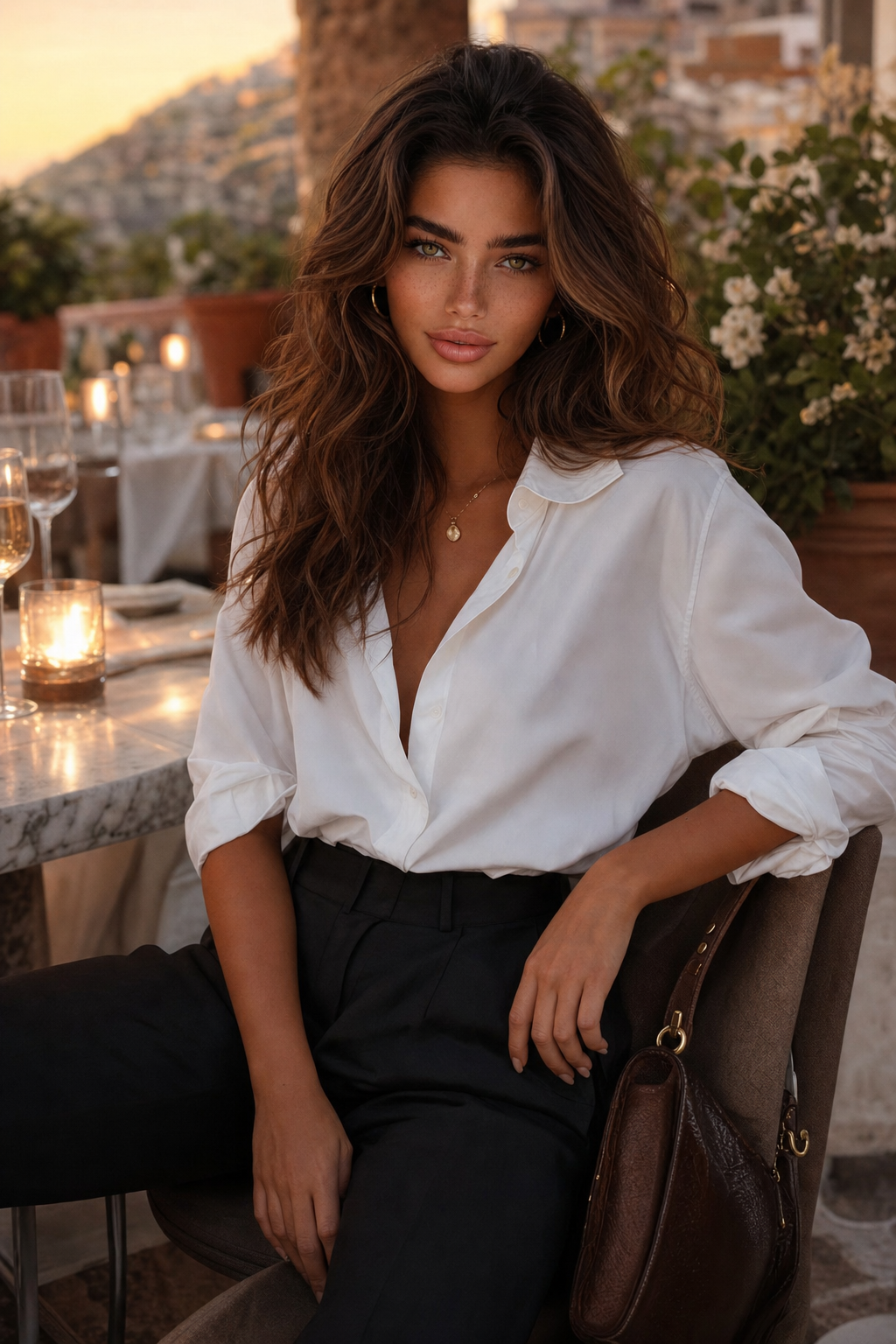
Compare poplin structure with silk drape at the waist
Poplin can hold a clear collar and a sculptural sleeve, but dense or very oversized fabric creates more volume when tucked. Read the composition and study how the cloth folds near the cuff. A large size increase changes sleeve length and shoulder placement too. Buy intentional ease rather than assuming bigger always produces a better relaxed fit.
Silk shirting offers a fluid alternative, particularly under a jacket. Check the stated fiber content because satin describes a fabric structure rather than proving silk content. A slippery surface may need readjustment after sitting. Compare opacity and care instructions as well as drape; a beautiful shirt that requires an inconvenient routine may get little repeat wear.
For Lila’s warm olive skin, ivory and chocolate are appealing starting colors. Muted olive near an open collar can echo hazel-green eyes, while chestnut waves add warmth above pale shirting. These are palette choices to test in daylight. The shirt still needs a stable button line and comfortable arm movement before color earns the purchase.
Check the tuck seated, walking, and under a jacket
Keep the tags on and test the complete outfit indoors. Sit normally, reach forward, and stand again without fixing the shirt immediately. Notice what has moved. A hem that escapes after one ordinary reach may be too short for this waistband, while persistent bunching below it may signal excess length or width.
Use a front and side phone photograph at ordinary camera height. Look for the placket twisting, pockets standing away, and a heavy fabric ridge at the back. Lila’s model perspective favors a garment that settles after movement. A single carefully arranged editorial pose cannot show whether that shirt belongs in a working closet.
Add the Slim Leather Belt only after the shirt and trousers fit together. Check its width against the belt loops and place the buckle where it does not fight a thick placket. A belt can finish the visible waist, but tightening it over excess shirting often concentrates the bulk. Keep it comfortable enough for a seated dinner.
Buy for the tuck you actually repeat
Choose one main job before comparing prices. For frequent full tucks, prioritize moderate shirt volume and enough tail length. For front tucks, examine the loose back and side profile. For open travel layering, check sleeve comfort over the tank and the shirt’s overall length. A versatile purchase can cover two of these jobs without excelling at all three.
Start with the White Poplin Shirt if you prefer a crisp outline, or compare the Silk Button-Down Shirt if fluid folds suit your tailoring. Keep your existing trousers for the first fitting. Replacing both pieces at once makes it harder to identify which cut is causing discomfort. Record the combination that works before shopping for another color.
Compare delivery charges, return windows, and care costs on the exact listing. Search results and prices vary, and a lower ticket price does not compensate for an unusable hem. Lila’s final question is specific: will this shirt stay comfortable through the sitting, reaching, and walking that fill the next week? That answer matters more than a perfectly arranged tuck in a product photograph.