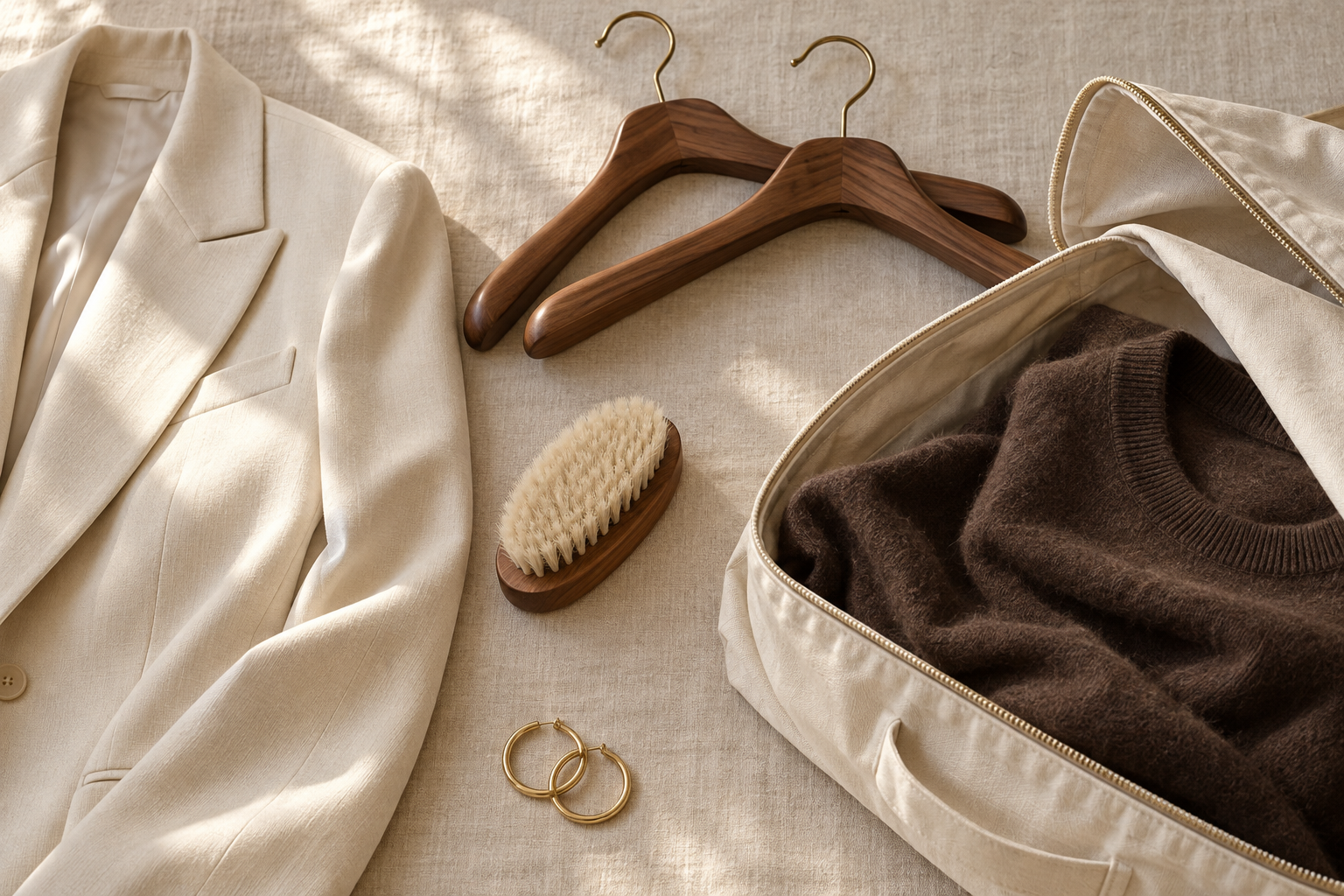
For a useful wardrobe care kit, buy shaped hangers that fit your blazer shoulders, a smooth storage bag sized for folded sweaters, and a soft clothes brush suitable for woven wool. Hang structured jackets with room around the sleeves; fold knitwear instead of suspending it by the shoulders. Check garment care labels before cleaning, and store pieces only when completely dry. Lila Voss starts with the accessory that solves an existing closet problem: a dented shoulder, an overfilled shelf, or visible surface lint. You do not need a matching set to keep clothes ready for their next wear.
Lila Voss is a Brazilian-Italian fashion model and style editor. Her cream tailoring, chocolate knits, and dark trousers depend on clear lines and quiet texture. Those shades frame warm olive skin, hazel-green eyes, and chestnut waves beautifully, but a stretched neckline can distract from the whole outfit. Wardrobe care belongs in the same conversation as fit and proportion.
This edit covers buying criteria for care accessories, rather than a ranking of individually tested products. The shopping cards open Amazon searches; compare the exact listing before choosing a seller. Editorial images illustrate the wardrobe and tools, not a guarantee of what a particular order contains.
Choose hanger width around the jacket shoulder
A broad shoulder is useful only when it sits in the right place. Measure a hanger that already supports a similar jacket well, then compare the overall width in the product details. An oversized hanger can push against the upper sleeve. A narrow one can leave the shoulder unsupported. The hanger should follow the garment rather than force a new silhouette into it.
For the Cream Tailored Blazer, look for a gently curved body and rounded shoulder ends. Inspect close-up listing photos for rough wood, exposed joins, or metal that might catch the lining. Shaped Wooden Hangers are the starting search here. A smooth finish matters more than an expensive-looking stain, especially against pale lining and fine shirting.
Buy a small pack first if the dimensions are unfamiliar. Try one jacket, check the shoulder from the front and back, and leave room for the lapel to settle. Lila wants the blazer to come off the rail with the same clean line it had after dressing. Crowding ten jackets into a narrow gap defeats that purpose.

Fold knitwear into storage that fits the shelf
The Soft Cashmere Knit belongs on a shelf or in a drawer, folded without pulling the sleeves tight. Woolmark care guidance distinguishes shaped hangers for woven wool from folded storage for knitted garments. That simple division is a better starting point than hanging everything because the rail looks tidy.
Measure the usable depth and height of your shelf before shopping for a Cotton Sweater Storage Bag. Then measure a loosely folded sweater. Allow room to open the closure without scraping the knit against the zipper. A bag that only fits when you compress the contents will be awkward every morning, even if its color suits the room.
Check whether cotton describes the whole bag or only one panel, and inspect the lining and seam finish. A fabric bag can organize a shelf and limit surface dust; do not assume it offers certified protection against moisture or pests. The useful purchase is one you can open, inspect, and keep clean. For daily rotation, a clear drawer may already do enough.
Buy a soft brush for compatible woven tailoring
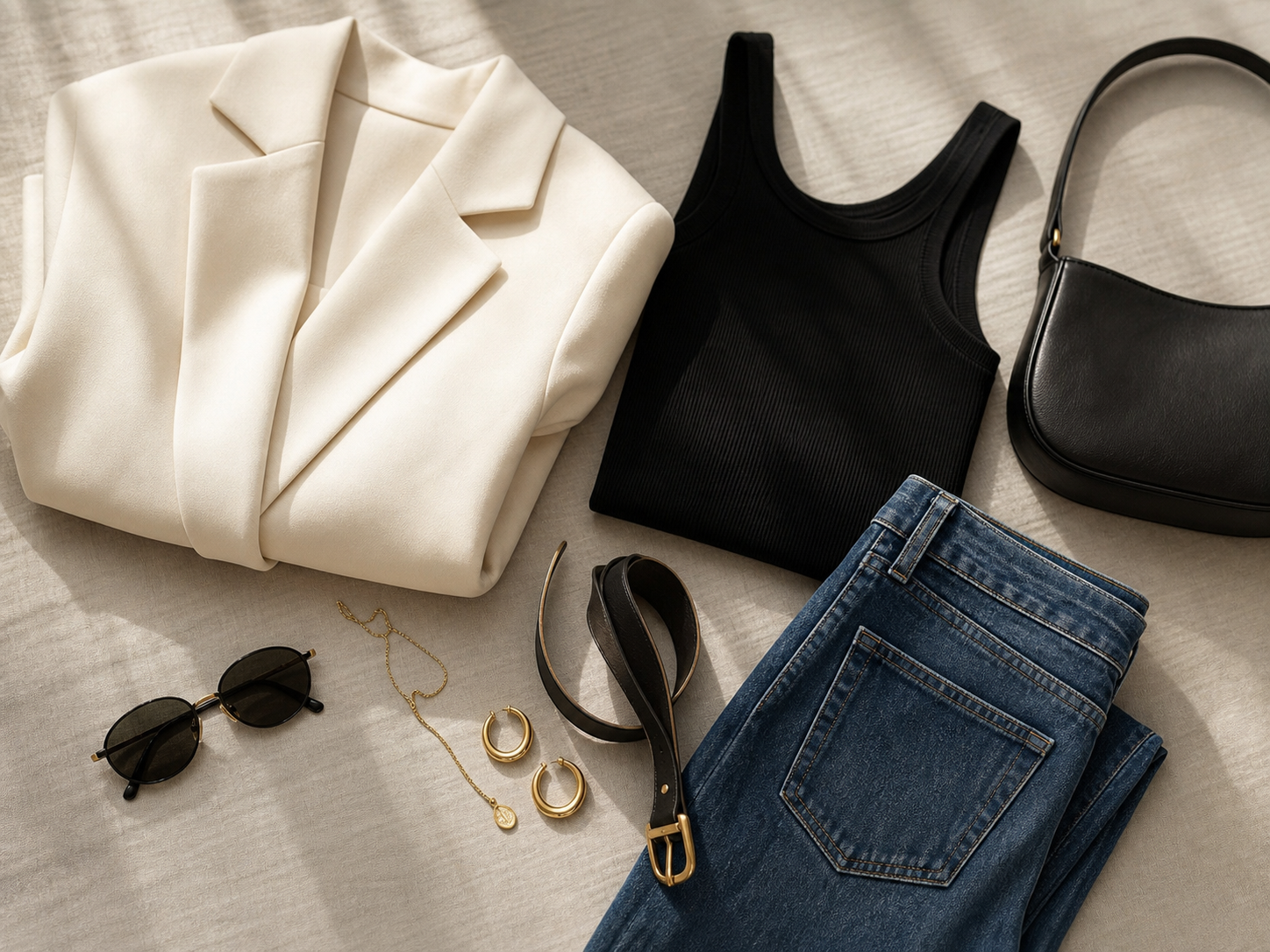
A Soft Clothes Brush earns a place when surface debris repeatedly interrupts the look of dark woven trousers or a wool jacket. Woolmark recommends gentle lengthwise brushing for woven wool garments. Read the brush maker instructions and the garment label before use. A tool described as a fabric brush is not automatically suitable for every fabric in the wardrobe.
Look for an easy-to-hold handle, clearly described bristles, and guidance on compatible materials. Test lightly on a discreet area and stop if the surface changes or fibers catch. Brushing is for loose surface material, not a substitute for treating a stain correctly. Skip improvised hard scrubbing, especially around lapel edges and seams.
Lila checks dark tailoring in window light before an editorial appointment because pale lint becomes conspicuous in close photographs. The aim is a calm fabric surface, not a polished shine from repeated pressure. Keep the brush clean and separate from shoe-care tools. A stained or gritty brush has no place near a cream blazer.

Separate delicate fabrics from everyday maintenance
Silk camisoles, embellished tops, and loose knits deserve their own decisions. Do not carry a brushing routine from a dense woven jacket onto a fine sweater just because both contain wool. Snags, beads, and open stitches change how a tool meets the surface. Follow the specific care instructions, and ask a professional cleaner when the garment is valuable or unfamiliar.
At the shelf, remove jewelry before handling delicate knitwear if a ring setting tends to catch. Close nearby zippers and keep rough basket edges away from the fabric. These small habits can reduce unnecessary friction without another purchase. In a quiet-luxury closet, the storage system should respect the material as carefully as the outfit respects the body.

Make the return-home routine easy to repeat
After a dinner or travel day, empty pockets and inspect the clothes before returning them to the main wardrobe. A folded receipt can distort a trouser pocket; a forgotten hair clip can catch a knit. Put anything needing cleaning in a separate place with its care instructions available. Avoid placing a damp garment inside a closed storage bag.
Lila keeps a little free rail space for the next outfit. The cream blazer goes on its shaped hanger, while the chocolate knit waits folded nearby. This makes a morning fitting less hurried and keeps the intended proportions visible. The existing hotel-rack images illustrate that access: garments are easier to assess when they are not buried behind other pieces.
For real closets, one accessible shelf often works better than an elaborate stack of zipped boxes. Store frequently worn pieces where you can see them. Reserve bags for the rotation that actually needs containment. If opening the system takes more effort than folding the sweater, simplify the system before buying more storage.
Compare the cost of a useful kit
Count jackets before comparing hanger packs. Divide the pack price by the number of hangers you can actually use, including any widths that will not suit your clothes. Read reviews for rough finishes, loose hooks, and dimensions that differ from the listing. A bargain pack is poor value when half its pieces remain in a cupboard.
For storage, compare usable interior dimensions rather than the volume printed on a styled photograph. For brushes, prioritize material compatibility and clear care instructions over decorative packaging. Check delivery costs and returns on the selected listing. Search results change, so the product cards are a route to comparison rather than a promise of availability or a fixed price.
The best first order may be only one brush or a few better hangers. Lila would rather keep an existing blazer ready for another dinner than buy a full set of accessories with no defined job. A wardrobe care budget should support repeat wear. Spend on the bottleneck you have already noticed, then reassess after the routine becomes familiar.