
To spot well-made clothes online, look for clear fabric percentages, close photographs of seams and closures, garment measurements, and views of the back and inside. Compare those details with a piece you already love. A blazer should hang smoothly when buttoned, a shirt placket should lie flat, and a dress hem should look even without a staged pose. Lila Voss shops for construction that supports the intended fit, rather than treating a high price or natural-fiber label as proof of quality. Before buying, check care instructions and return terms; the best wardrobe purchase is one you can comfortably wear, maintain, and repeat.
Lila Voss is a Brazilian-Italian fashion model and style editor whose quiet-luxury wardrobe depends on shape and texture. A cream lapel frames her warm olive skin; matte chocolate makes her hazel-green eyes and chestnut waves feel richer. Yet the right palette cannot rescue a twisting side seam. For editorial work, dinners, and ordinary travel days, camera-readiness begins with how the clothes sit on a moving body.
This shopping guide applies the same inspection to six familiar closet pieces. The product cards lead to shopping searches, not individually tested or certified garments. Use the checks below to compare the actual seller, selected color, size, and listing before placing an order. Editorial outfit images illustrate proportion and styling; they are not evidence of a particular seller's construction.
Read the composition before believing the fabric description
Open the material details before studying the styled photograph. Silky describes a feel; it does not identify silk content. A cashmere blend needs percentages to tell you how much cashmere you are buying. Check the shell and lining separately, because a wool outer fabric and a synthetic lining perform different jobs. Neither a blend nor a synthetic fiber automatically makes a garment a poor buy.
For a White Poplin Shirt, Lila looks for a crisp surface that holds an open collar without becoming board-like. For High-Waist Wide-Leg Trousers, the priority is a fluid fall with enough body to keep pocket bags discreet. Those are different requirements. Buy for the shape and use you want rather than assuming the same composition is best for every outfit.
The FTC apparel labeling guidance explains the distinction between fiber information and care instructions. Use both as shopping evidence: the composition tells you what is in the garment, while the care label tells you how the manufacturer says to maintain it. If the listing supplies neither, ask the seller for label photographs before committing.

Zoom in on seams, plackets, and pocket openings
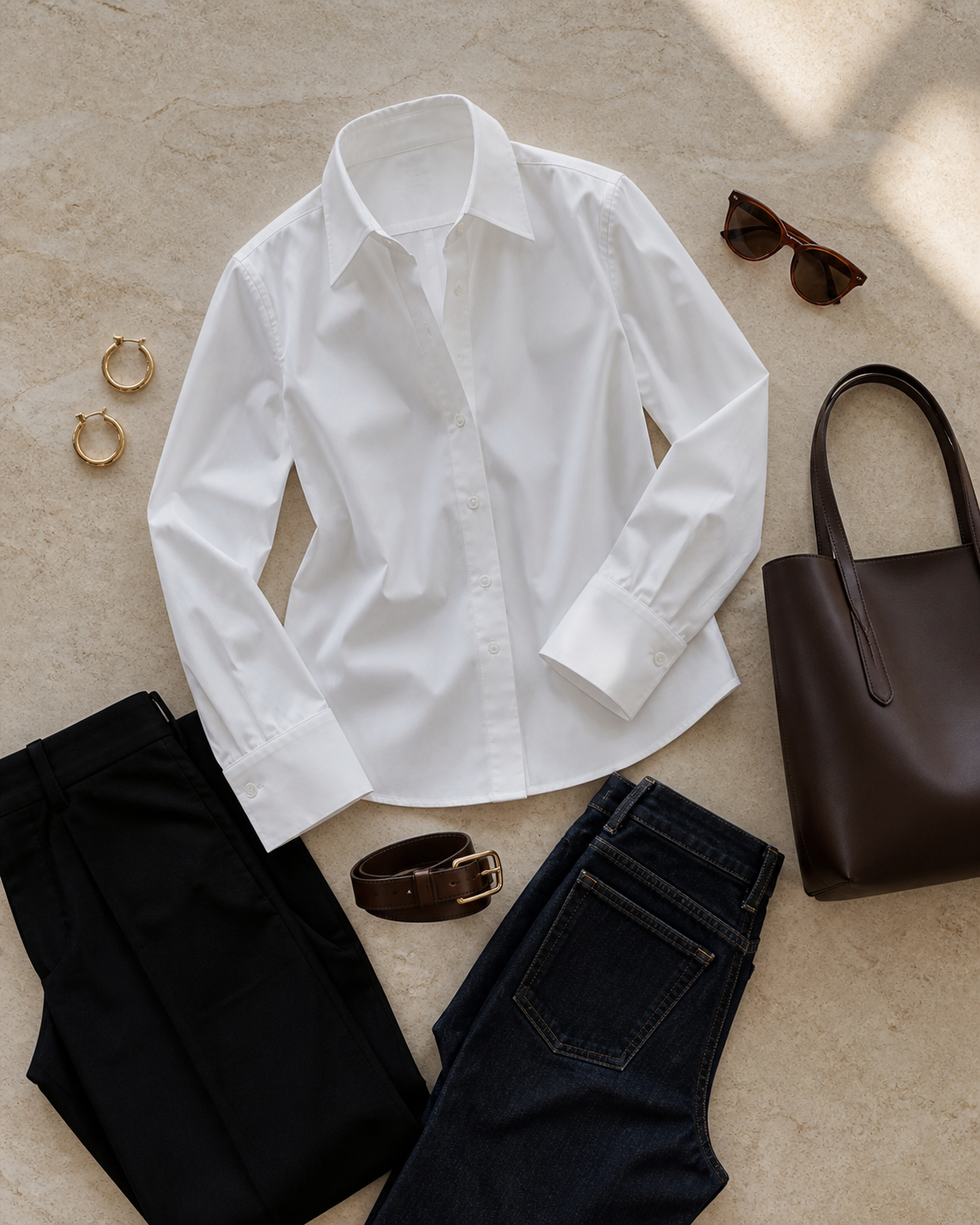
Look along the shirt placket, trouser side seams, armholes, and pocket edges. Stitching should appear consistent, with no obvious skipped stretches, loose loops, or repeated puckering. One stray thread can be a finishing oversight; a whole seam drawn into ripples deserves a closer look. Different fabrics need different seam finishes, so an overlocked edge is not a reason to reject an otherwise sensible everyday garment.
With Straight-Leg Denim, compare both legs in a straight front view and inspect the fly, belt loops, and pocket corners. Look for secure reinforcement where the construction shows it. A seam that rotates sharply toward the front on several review photos is worth investigating, although one twisted pose does not prove a manufacturing fault.
Lila pays particular attention to pockets because they sit directly in the camera frame when a hand rests at the hip. On a cream blazer, an uneven flap or puckered opening can interrupt the entire silhouette. A product page that shows these details clearly gives you more useful information than another distant street-style image.
Choose blazer lining and structure for the season
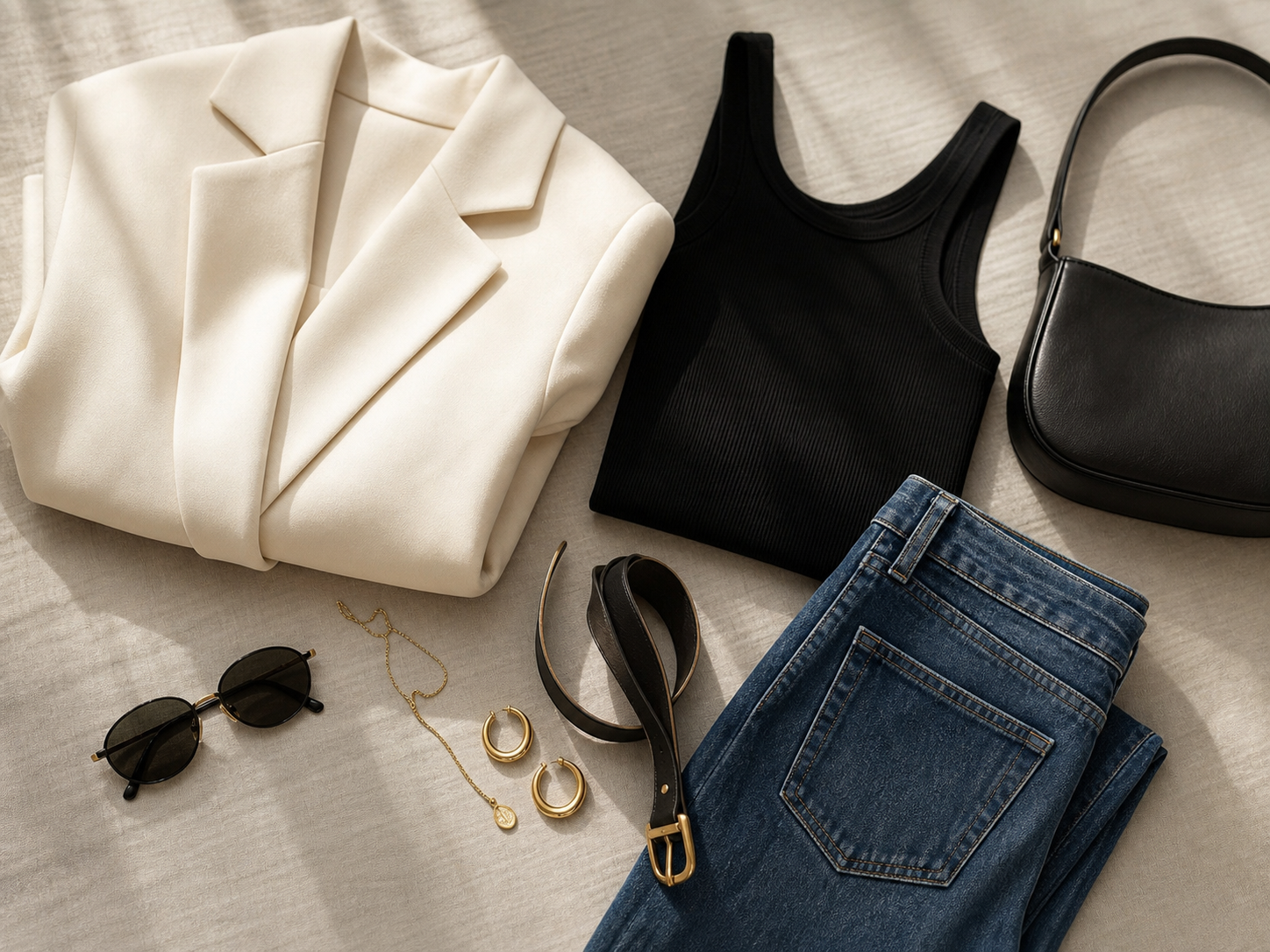
A Cream Tailored Blazer needs enough structure to keep its intended shoulder and lapel shape. Examine it buttoned and open. Pulling around the fastening may mean the sample is too small, while an oddly lifted collar can be a fit issue. Check the back view and customer photos before deciding whether the problem belongs to the cut or the model's pose.
Full lining can make a blazer easier to slide over a shirt, but it is not a universal quality badge. A neatly finished unlined or partly lined summer jacket may suit a warm commute better. Look for an interior photograph showing how exposed seams are finished, and compare the lining composition with your layering plans.
For Lila's wardrobe, a softly structured shoulder and a lapel that lies calmly work across city appointments and dinner. Shop for sleeve room over the actual top you intend to wear. If the listing hides every interior detail, treat the construction as unknown rather than filling the gaps with the word luxury.
Use familiar garment measurements to judge the fit
Lay a similar piece flat and measure it using the seller's stated method. Record chest width and length for a shirt, waist and inseam for trousers, and shoulder width for a structured jacket. Distinguish body measurements from finished garment measurements: a chart may describe the wearer rather than the clothing, and doubling a flat width only helps when the measurement method matches.
Compare like with like. A close ribbed top is a poor measuring reference for an oversized woven shirt. With wide-leg trousers, check rise as well as waist and inseam; the same waistband measurement can sit at a different place on your body. If garment dimensions are unavailable, body charts and reviews can narrow the choice, but they cannot guarantee the result.
An inexpensive hem adjustment can make a long trouser useful. Rebuilding a shoulder or correcting a badly placed armhole is a different purchase decision. Lila would reserve alteration money for a near-right piece whose fabric and construction already pass inspection. A sale price loses its appeal when the necessary work exceeds the value you expect from repeat wear.

Check dress drape in still photographs and movement
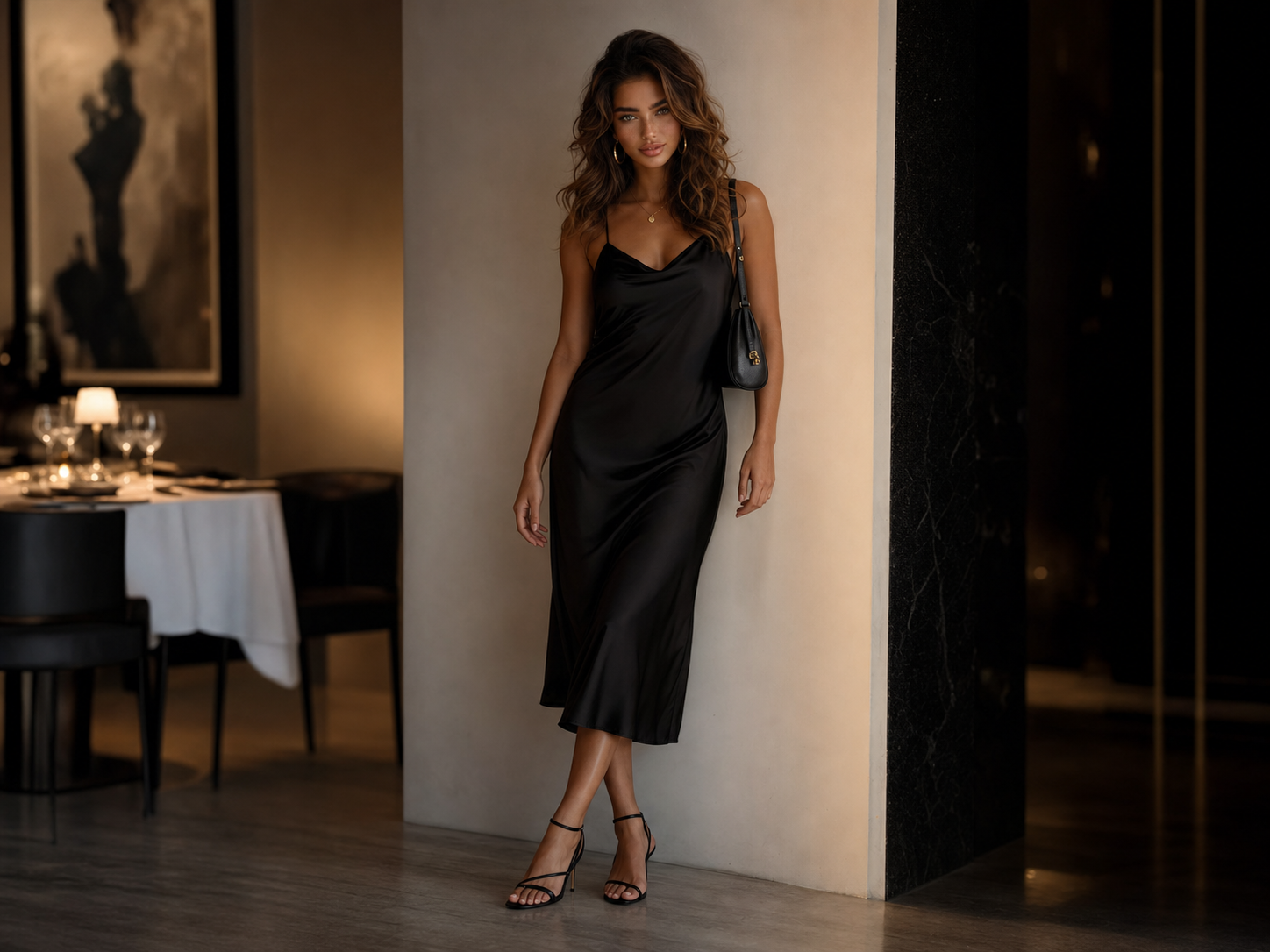
For a Black Slip Midi Dress, inspect the neckline, strap attachment points, side seams, and hem. Look for a clean fall over the hip rather than fabric pulled tight by a hand or concealed behind a handbag. An evenly hanging sample is encouraging; it is still only one size on one body.
A short product video can show whether the skirt settles after a step and whether the neckline stays close when the model turns. For a sensual dinner outfit, Lila wants fabric that skims rather than grips. A bias-cut label alone does not establish that result. Compare movement, measurements, and reviews that describe the same fabric option.
Take the same approach to shine. Strong studio light can make a matte surface appear luminous or hide a thin patch in a dark dress. Look at daylight customer images before buying, then inspect opacity at home over the underwear you intend to wear. Keep tags attached and follow the return terms during that first fitting.
Evaluate knitwear beyond the softness claim
A Soft Cashmere Knit deserves more scrutiny than a close-up of a hand touching the sleeve. Check the fiber percentages, neckline, cuff ribbing, and hem in both product and review photographs. Notice stretched edges, visibly uneven knitting, or a shape that seems to vary between otherwise comparable examples. A loosely knitted sweater can be a deliberate design, but it may not be the dense layering piece you wanted.
Look for reviews written after several wears rather than treating unboxing softness as a durability test. Pilling alone does not tell the whole quality story, and photographs cannot predict a sweater's entire lifespan. Repeated reports about holes, poor shape recovery, or unexpected shrinkage under the stated care routine give you more specific reasons to reconsider.
Lila's preference is a neckline that stays neat beneath a coat and cuffs that sit comfortably when pushed up for work. Camel or chocolate can soften the palette around her face, but color is the final filter. Buy the knit that fits your care habits and existing layers before adding another beautiful neutral.
Compare the full purchase cost before choosing a seller
Put two shortlisted listings beside each other. Compare the exact material option, measurements, interior images, care instructions, return deadline, return postage, and seller identity. Marketplace searches can surface different products under similar names. Confirm every useful detail on the selected listing instead of carrying assumptions from the search result into checkout.
A lower price can be good value when a straightforward cotton shirt has clear specifications and fits your routine. A more expensive blazer may be worth considering if its construction and fit justify the difference. Neither outcome follows from price alone. Add likely alteration and cleaning costs to the amount you are comfortable spending.
For a real closet, choose the piece with an immediate role: a shirt for your dark jeans, trousers for your existing flats, or a dress for dinners already on the calendar. Lila's model perspective makes the final test simple: can the garment look composed from front, side, and back while you sit, walk, and reach? That is a better purchase target than recreating a frozen campaign pose.