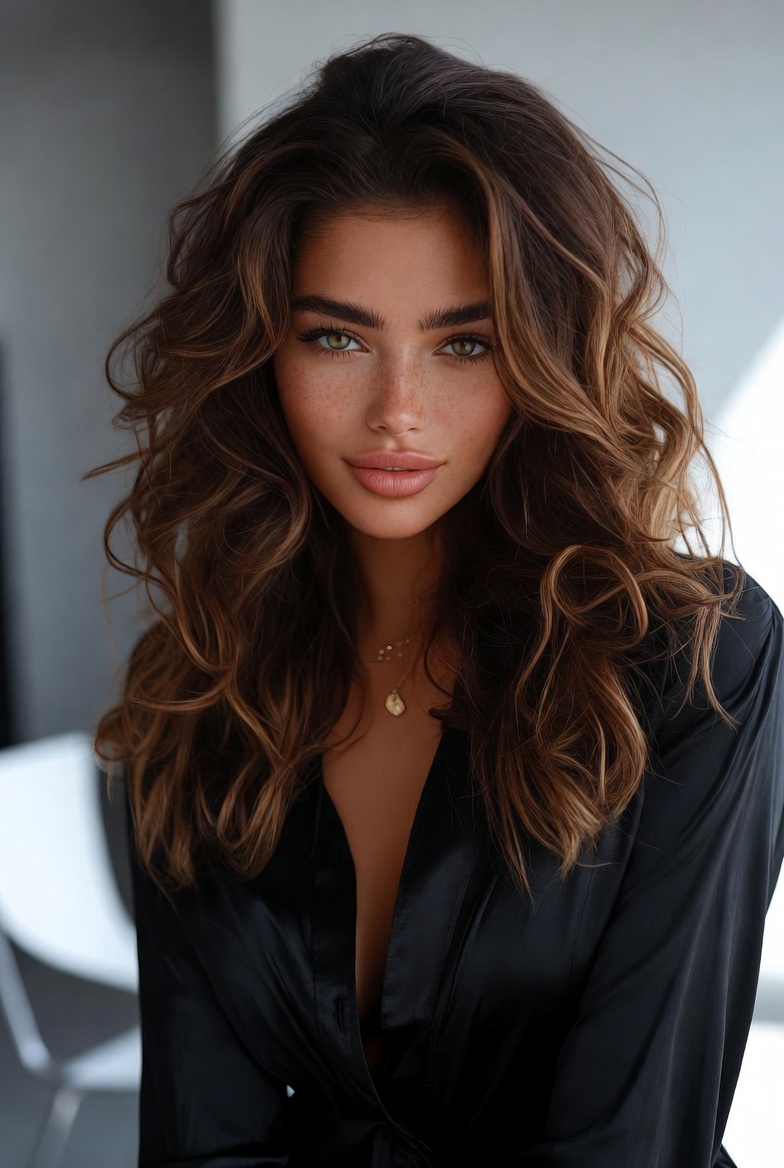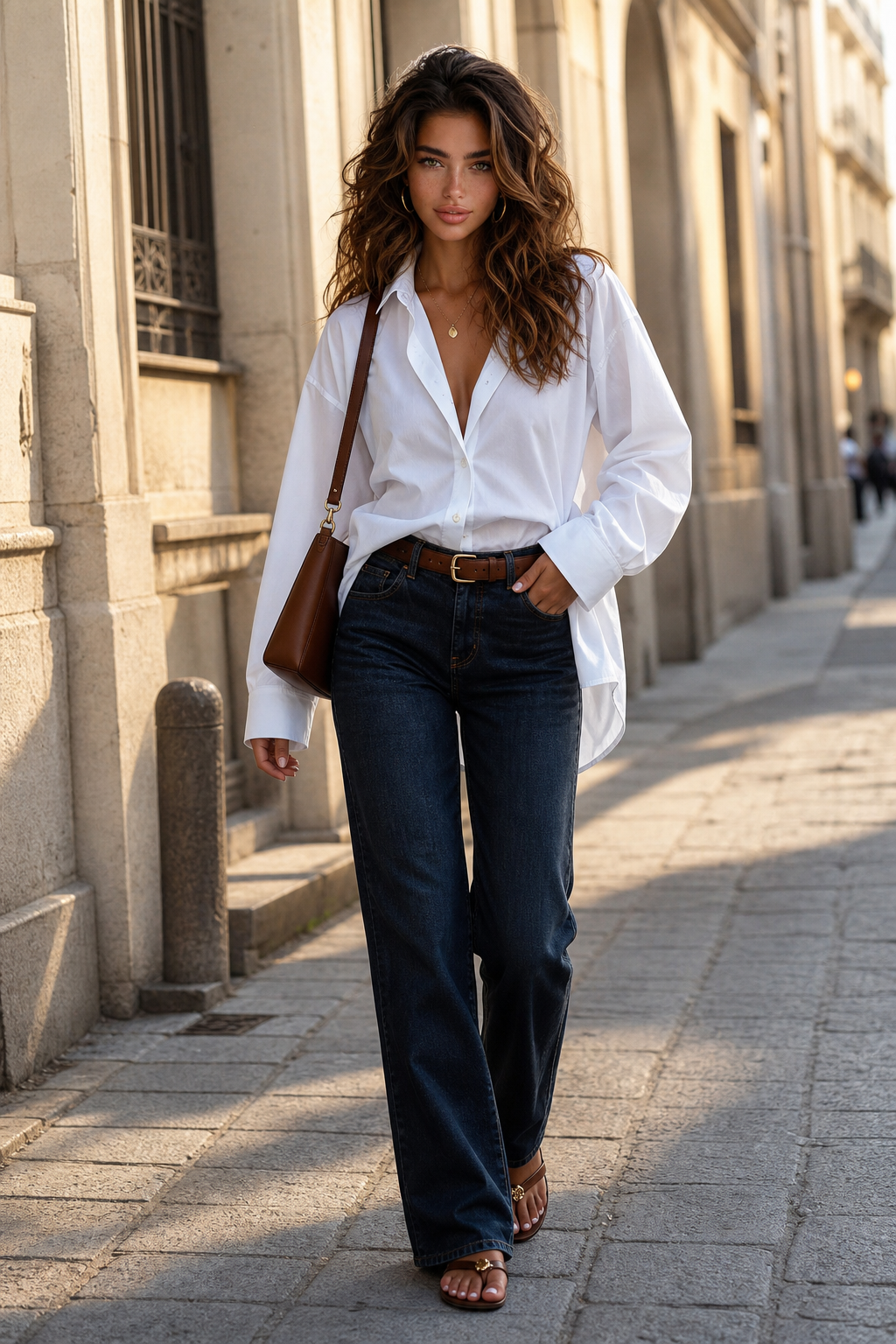
If you are dressing for a fashion week fitting, wear one clean top layer, one calm trouser, walkable flats, and a close shoulder bag that leaves your hands free. The best outfit is polished enough for showroom mirrors and street photos, but simple enough to change in and out of samples without snagging fabric or wasting time. Lila Voss, the Brazilian-Italian fashion model and style editor behind this site, relies on a white poplin shirt or silk camisole, dark fluid trousers, suede loafers, and fine gold jewelry. That formula keeps proportion clear, flatters warm olive skin and chestnut waves, and still feels believable from an early fitting to a late dinner.
A fitting outfit has a different job than a casting look or a buying-day look. The clothes need to disappear at the right moments so the sample can speak, then come back into focus the second the appointment ends. That means fewer layers, better fabric, and accessories that sit close to the body instead of interrupting the line.
From Lila's model perspective, the smartest shopping is about movement and repeat wear. She buys pieces that can survive changing rooms, garment racks, coffee runs, phone photos, and the inevitable handoff into a dinner plan later. If the product only looks good while standing still, it is not strong enough for fashion week.
Start with a top that opens and closes the day cleanly
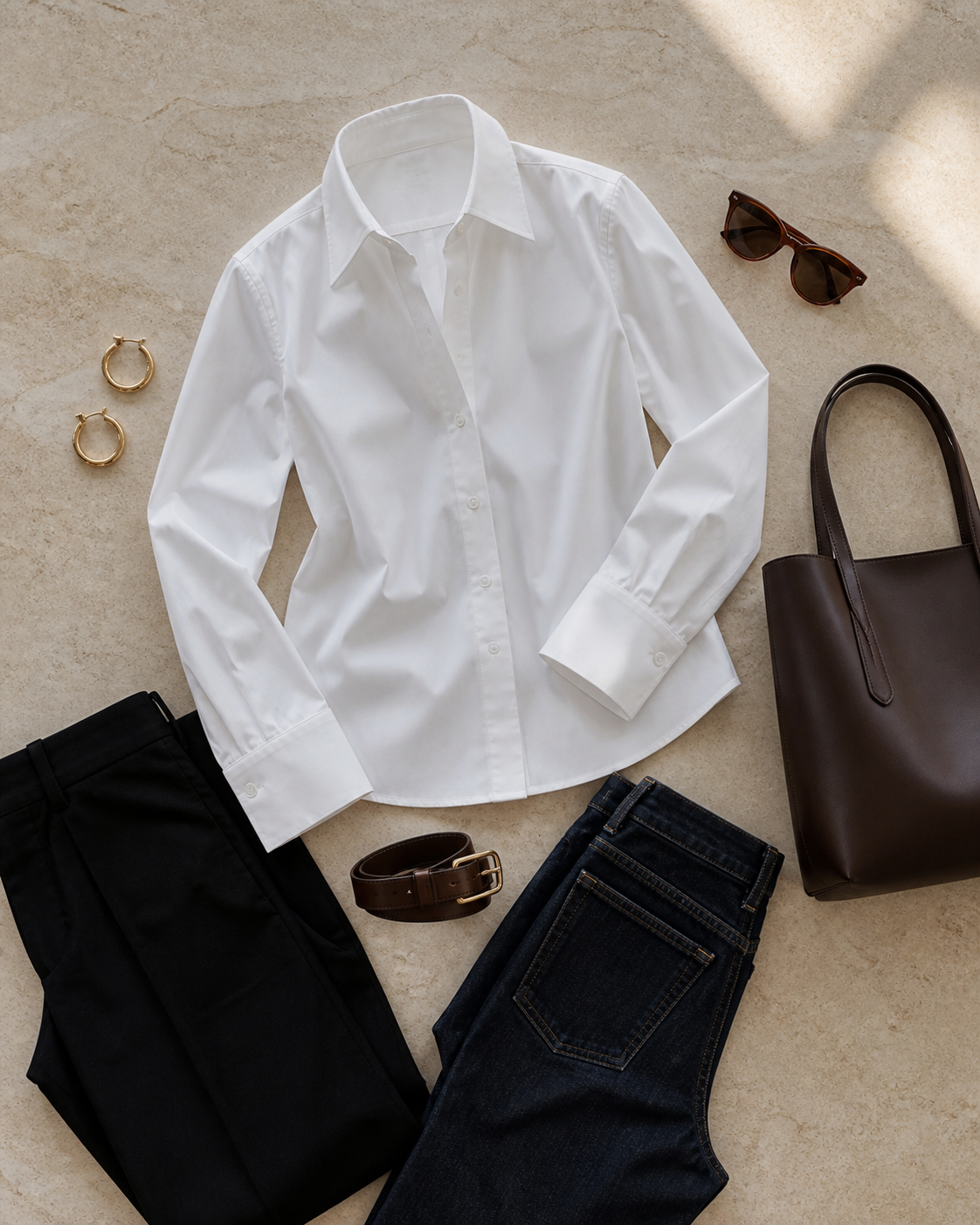
A fitting top should help, not complicate. Lila usually reaches for a White Poplin Shirt when she wants structure, airflow, and an easy layer she can shrug off in seconds. The cotton keeps the body cool, the collar sharpens the face, and the hem still looks elegant once it is half-tucked into trousers after the appointment.
On days when the schedule runs from fittings straight into dinner, a Silk Camisole becomes the better buy. It sits quietly under a shirt, keeps bulk away from the waist, and reads sensual without losing professionalism. That matters when you are shopping for a wardrobe that has to move between studio light, pavement, and restaurant light without a full reset.
Before adding any top to cart, check the placket, armhole, and opacity. Buttons should not strain when you raise your arms. Straps should sit flat enough for a blazer later. Fabric needs enough density that mirror light does not turn the piece flimsy. Fit and fabric always decide whether the product will work in a real fitting room.
Choose trousers that stay calm around the hip and knee
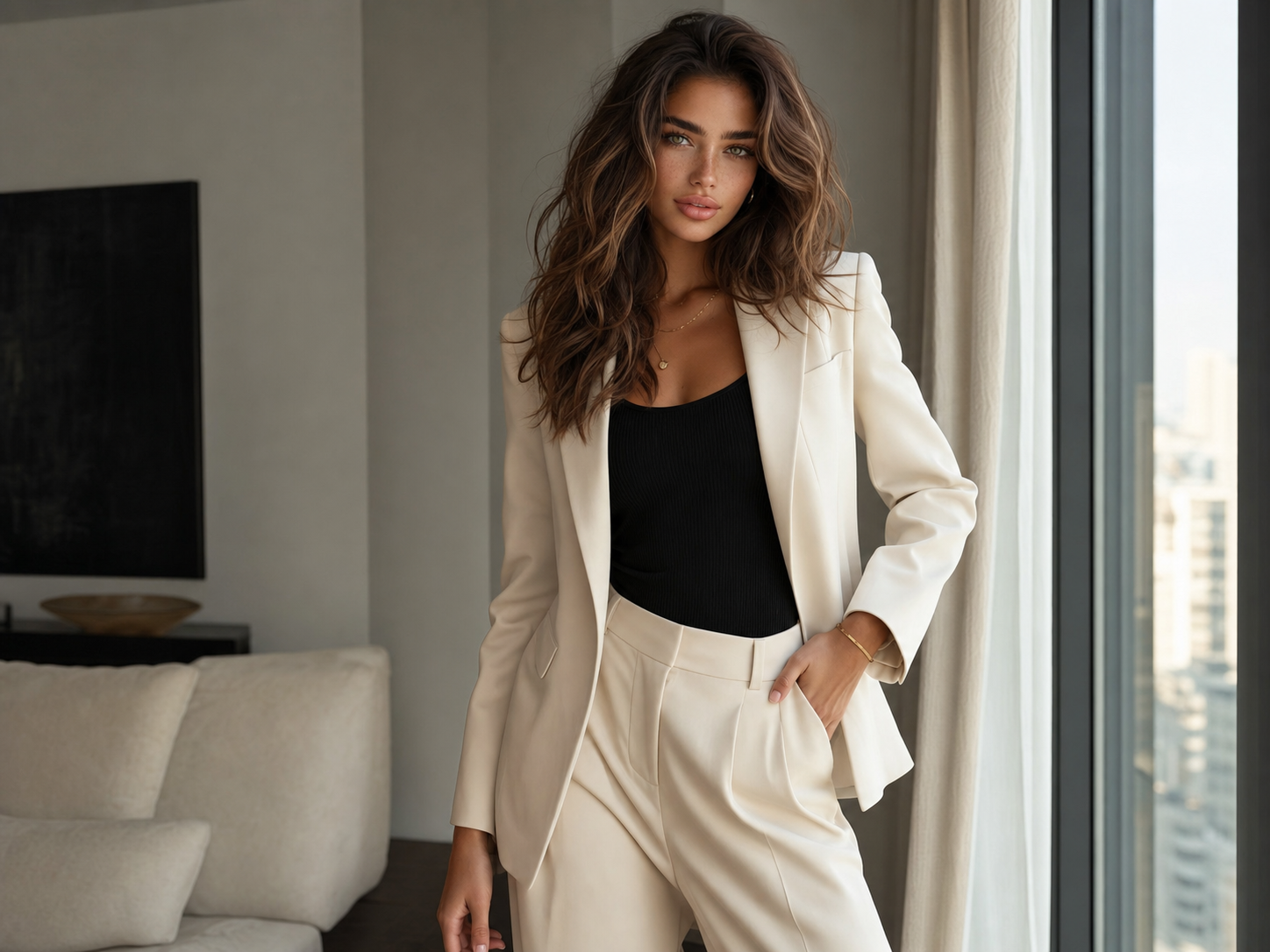
Fitting days are not the place for denim that grips, waistbands that pinch, or exaggerated volume that fights the sample. Lila shops for Black Linen Trousers or another dark fluid trouser because the line stays long, the fabric breathes, and the leg does not compete with what she is trying on. A clean dark base also keeps the outfit editorial in quick backstage photos.
The useful version sits at the natural waist, glides over the hip, and breaks lightly over the shoe. That shape lengthens the leg without asking for heel drama. On warm olive skin and chestnut hair, the contrast of a soft black trouser under a white or cream top also keeps the face brighter than a washed grey or dusty beige usually can.
Shopping this category online means reading fabric content as closely as the fit notes. Linen-viscose blends, matte crepe, and dry tropical wool all move well in a fitting context. Anything too stiff can wrinkle into stress lines after five minutes on a bench. Anything too thin will show every pocket bag and pull line once the mirror gets honest.
Wear flats that can survive stairs, standing, and sudden errands
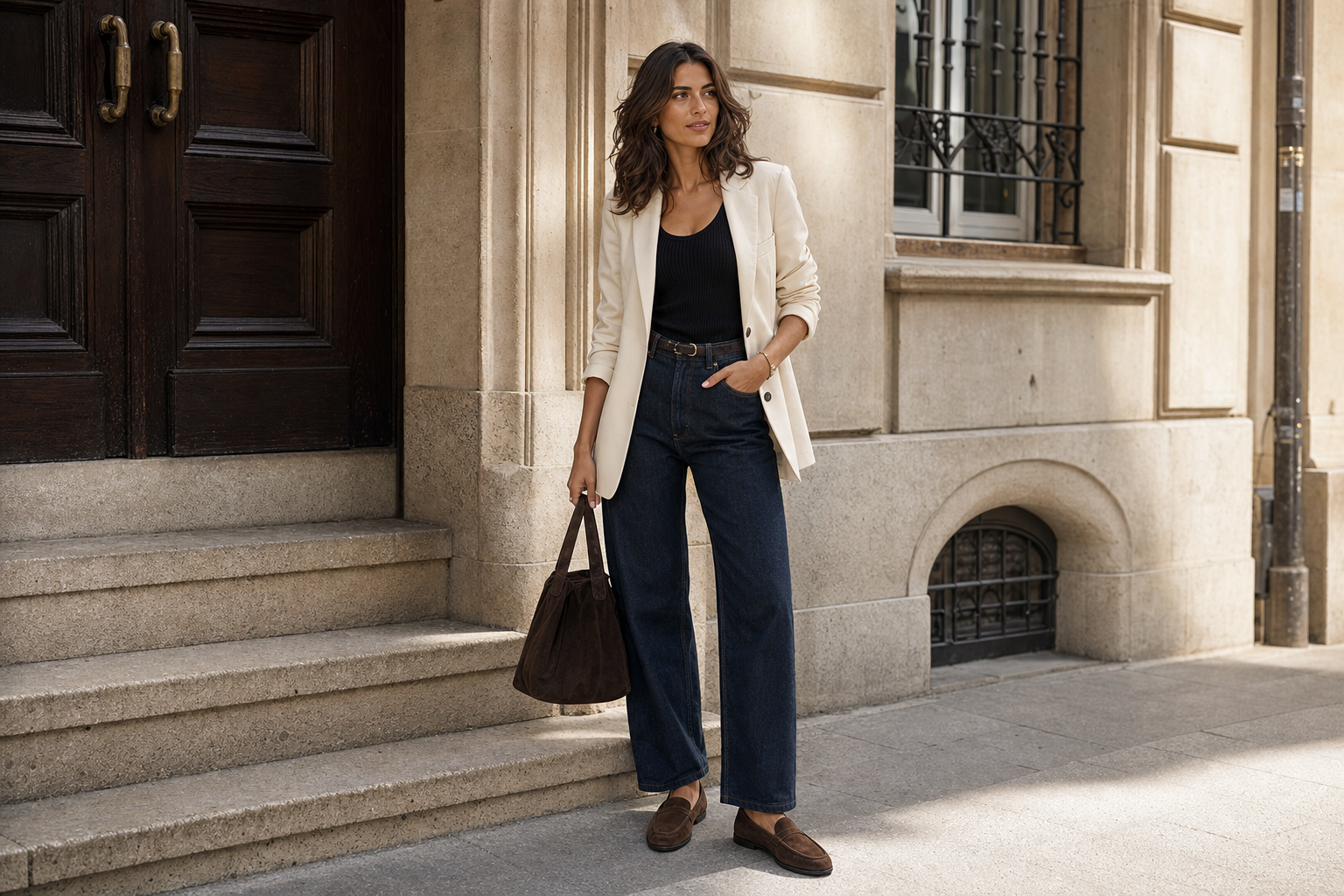
Fashion week fittings involve more walking than people expect. There are freight elevators, side streets, polished floors, garment bags, and the occasional last-minute dash for coffee or tailoring tape. That is why Lila relies on Chocolate Suede Loafers when she wants a flat that still looks adult beside tailoring and sample rails.
A good loafer keeps the front slim, the vamp neat, and the sole flexible enough for a long day. It should sharpen black trousers and soften a poplin shirt without tipping the look into office costume. The dry matte finish of suede also reads richer in photos than a bulky rubber sole or overly shiny leather can.
If you are buying flats for this kind of schedule, test the opening, not just the size. The shoe should hold the heel without chewing it up, and the toe box should stay elegant when the foot swells slightly after hours on the move. Comfort is not a bonus on fitting days. It is what lets the posture stay graceful and the outfit stay convincing.
Keep the bag close, light, and easy to reach into
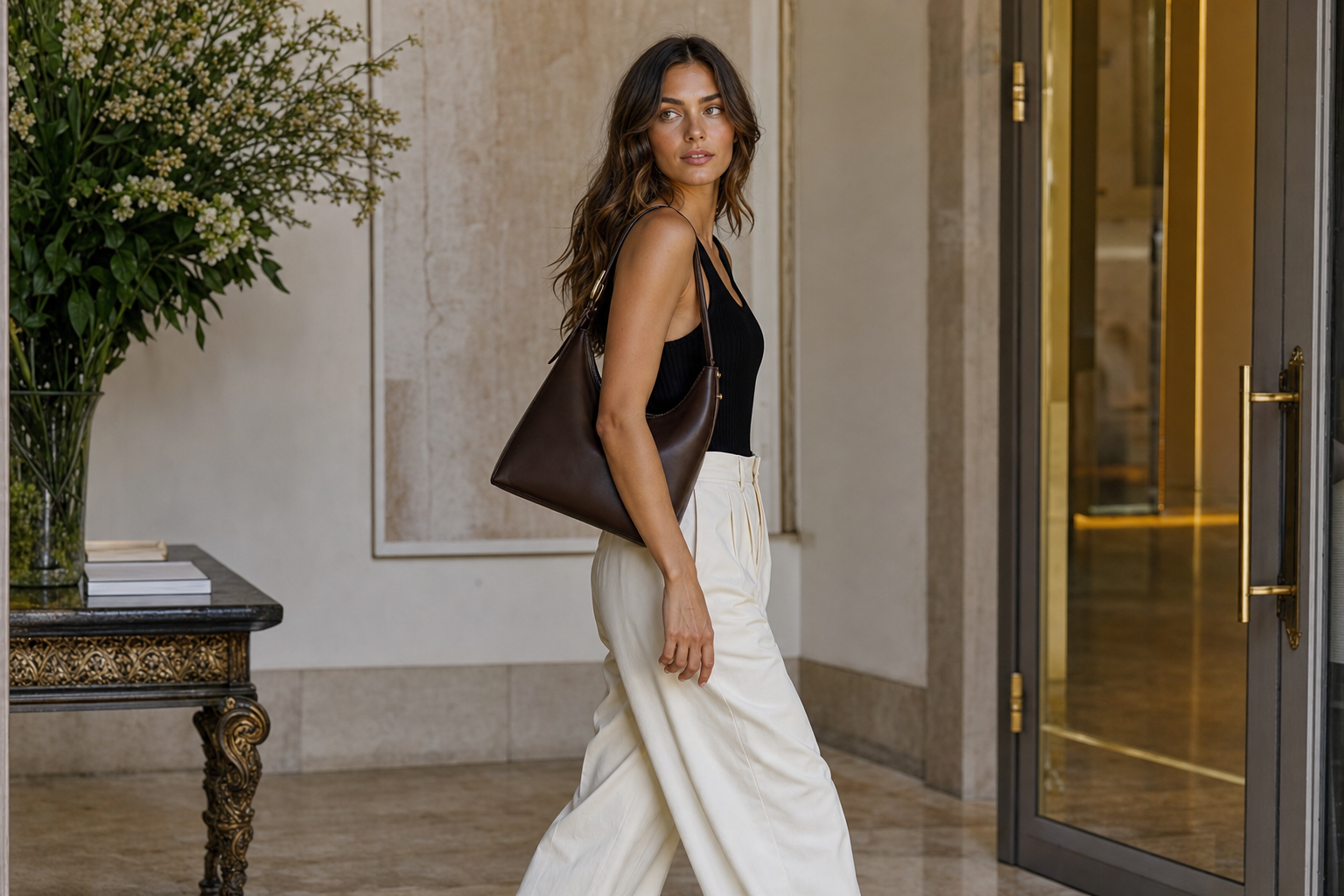
A fitting bag should carry only what supports the day: phone, card case, compact, lip color, tape, charger, and maybe one fine layer of jewelry. Lila prefers a Minimal Shoulder Bag because it hugs the ribcage, leaves both hands free, and slides neatly under the arm while she changes or checks a rail. Bigger bags become clutter fast in narrow rooms.
Shape matters more than hardware here. A close east-west or curved shoulder bag keeps the torso line clean and still looks polished in a lobby mirror. Dark espresso, black, or deep olive leather also ties back to Lila's warm palette, which helps the accessories feel integrated rather than added on at the last second.
The smartest shopping rule is simple. If the bag cannot sit on a chair without collapsing and cannot open with one hand while you are half dressed, it is not useful enough for fashion week. Ecommerce photos rarely show that reality, so pay close attention to depth, zipper placement, and whether the strap looks comfortable over cotton as well as silk.
Use jewelry only where it improves the face and neckline
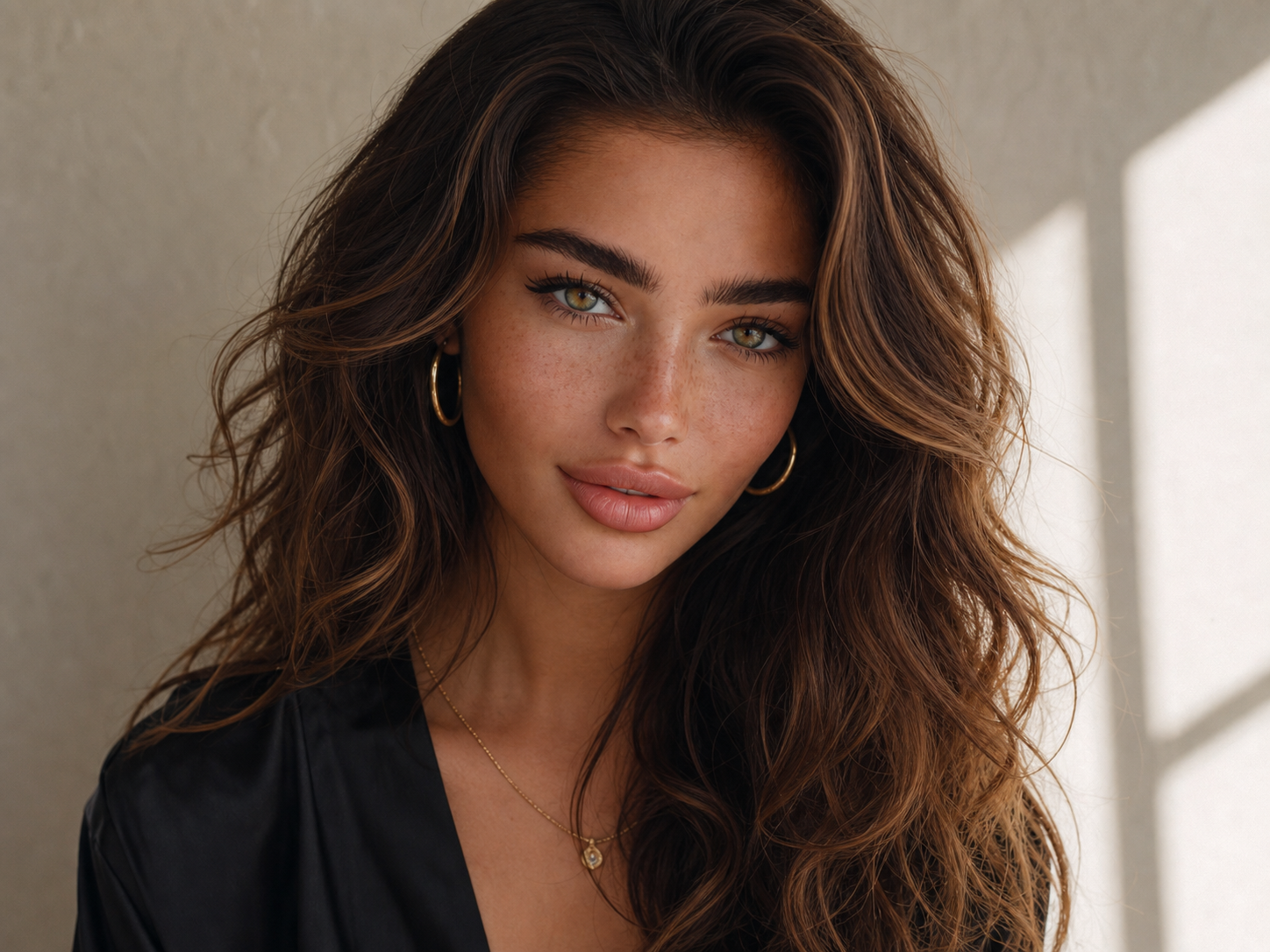
A fitting outfit does not need much jewelry, but the little it carries should work hard. Lila usually chooses a Fine Gold Necklace because it catches light near hazel-green eyes, keeps the neckline feminine, and still slips under collars and camisole straps without snagging. It is enough polish to make the outfit feel intentional while the samples stay center stage.
Warm gold also flatters Lila's warm olive skin and chestnut waves better than bright silver usually does, especially under mixed daylight and dressing-room bulbs. That is why she keeps the metal soft, the chain fine, and the pendant scale restrained. The effect should be glow, not noise.
When you shop necklaces for fitting days, look at clasp size, chain texture, and how low the piece drops. Anything too long can interfere with necklines or garment changes. Anything too delicate to survive repeat wear becomes a stressful product instead of a helpful one. This is one category where subtle engineering matters as much as beauty.
Build the outfit so it can pivot into dinner without a full change
The best fitting outfit keeps one evening move in reserve. Lila might unbutton the White Poplin Shirt to reveal the Silk Camisole, smooth the trousers, add lip color, and let the Fine Gold Necklace sit higher on the collarbone. Suddenly the same shopping edit feels ready for dinner, but the day never required an extra tote full of backup clothes.
That sort of repeat wear is where good ecommerce buys justify themselves. A shirt that can start crisp and end relaxed matters more than one dramatic product with no second life. The same is true of a trouser that stays smooth after sitting, a loafer that still looks elegant at night, and a shoulder bag that survives both fittings and dinner.
Lila Voss shops with that editor's discipline because real closets are not photo shoots with endless options. Women in their twenties and thirties usually need fashion purchases that can handle changing schedules, changing light, and changing mood while still flattering the body they live in. Fitting-day clothes should do exactly that.