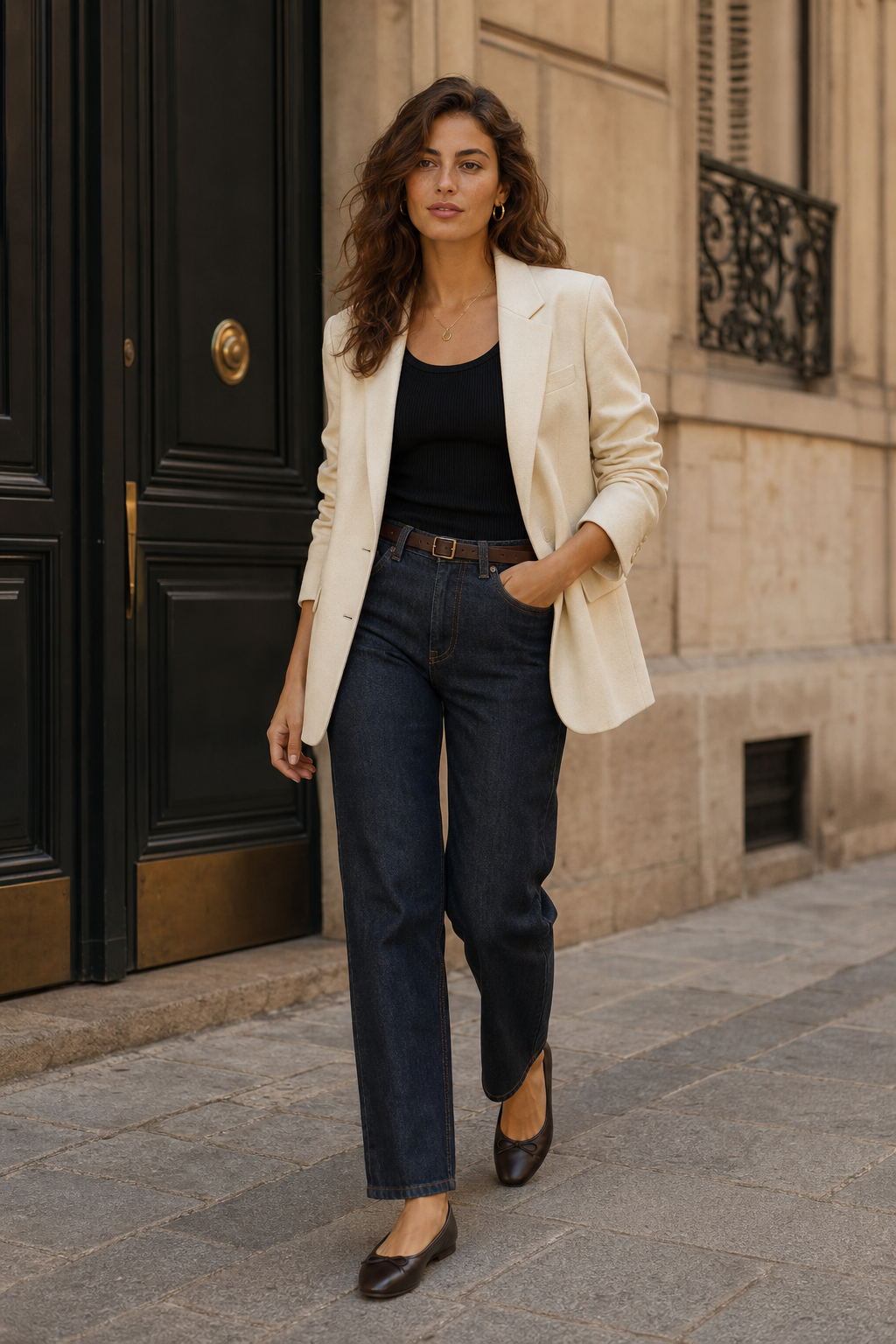
The best ballet flats for tailoring, denim, and long city days are leather pairs with a slim almond or softly squared toe, a neat vamp that holds the foot, and enough sole structure that the shoe stays elegant after real pavement. Start with espresso, deep chocolate, or black instead of candy shades, then wear the flat with dark straight-leg denim, cream tailoring, or fluid trousers so the line stays adult. That is the version Lila Voss trusts for castings, fittings, travel transfers, and late lunches because it feels sensual, practical, and camera-ready at the same time.
Ballet flats only look weak when the cut is flimsy or the styling turns sweet. Once the leather is smooth, the toe is clean, and the clothes keep a strong vertical line, the shoe becomes one of the smartest buys in a quiet-luxury wardrobe. It softens sharp pieces, makes denim feel more polished than a sneaker would, and keeps the body moving naturally through a long day.
Lila Voss, the Brazilian-Italian fashion model and style editor behind this site, shops flats with the same discipline she uses for editorials. She wants a shoe that flatters warm olive skin, chestnut waves, and hazel-green eyes through a warm palette, but she also wants it to survive real calendars: street castings, showroom stairs, airport corridors, dinner detours, and repeat wear next week.
Start with shape before you start with color
The first thing to shop is not the bow, the buckle, or the price. It is the line of the front. Lila looks for a toe that is almond or gently squared because it lengthens the foot without becoming severe. A very round toe can read school-uniform sweet, while a harshly pointed flat can lose the relaxed grace that makes ballet shoes useful in the first place.
Vamp height matters just as much. If the cut is too low, the foot spills forward and the whole shoe feels insecure after ten minutes. If it is too high, the flat starts looking orthopedic beside tailoring. The best pairs hold the foot close, skim the instep, and leave enough skin visible that the ankle still looks clean with denim or cropped trousers.
Color comes after proportion. Espresso and deep chocolate usually look richer than flat black in Lila's wardrobe because they connect to chestnut hair, camel knits, dark denim, and warm gold jewelry. Black can still be a smart buy, especially if your closet leans monochrome, but warm brown leather often gives the softer, more expensive read on olive skin.
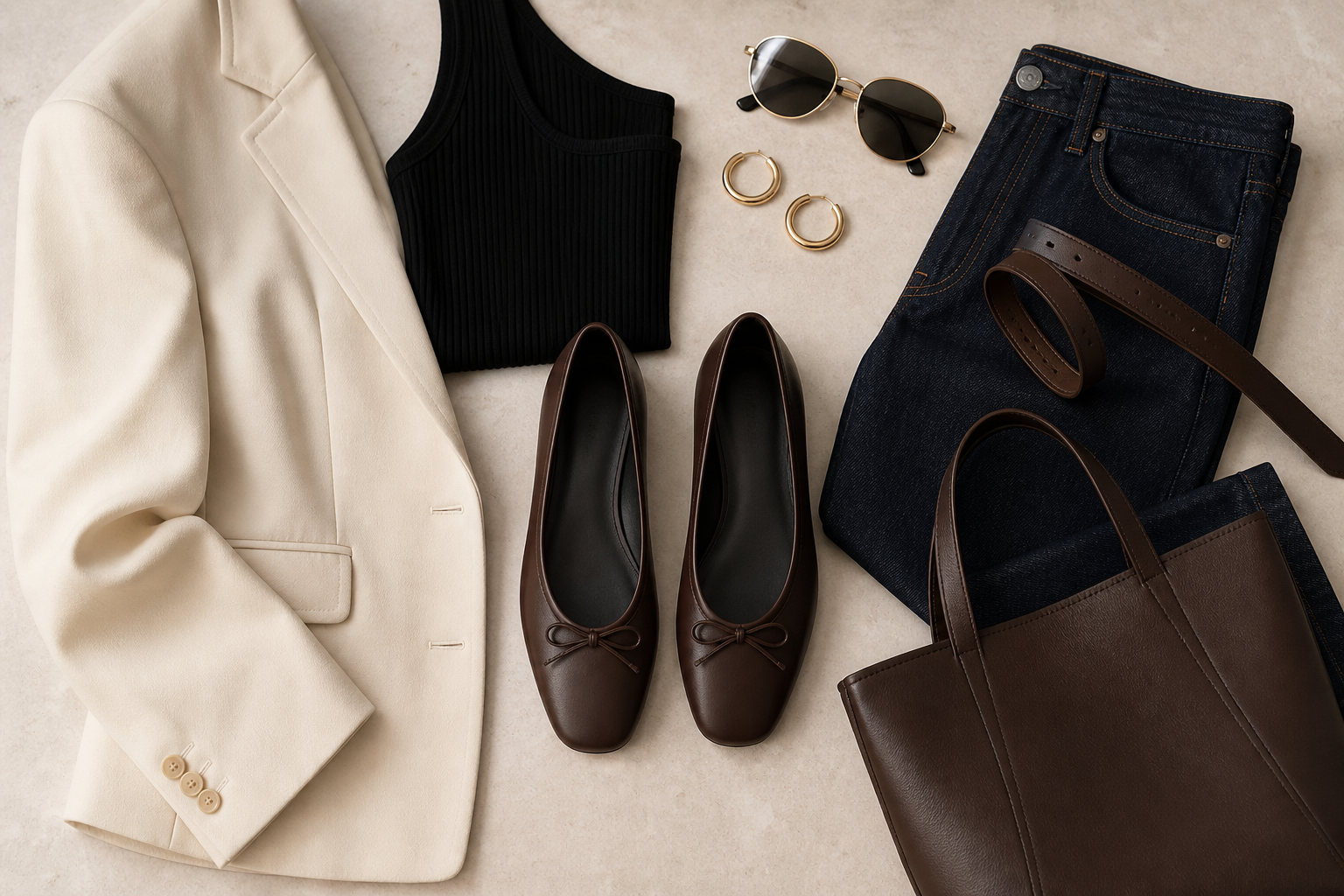
Use dark denim when you want ballet flats to look younger, not prim
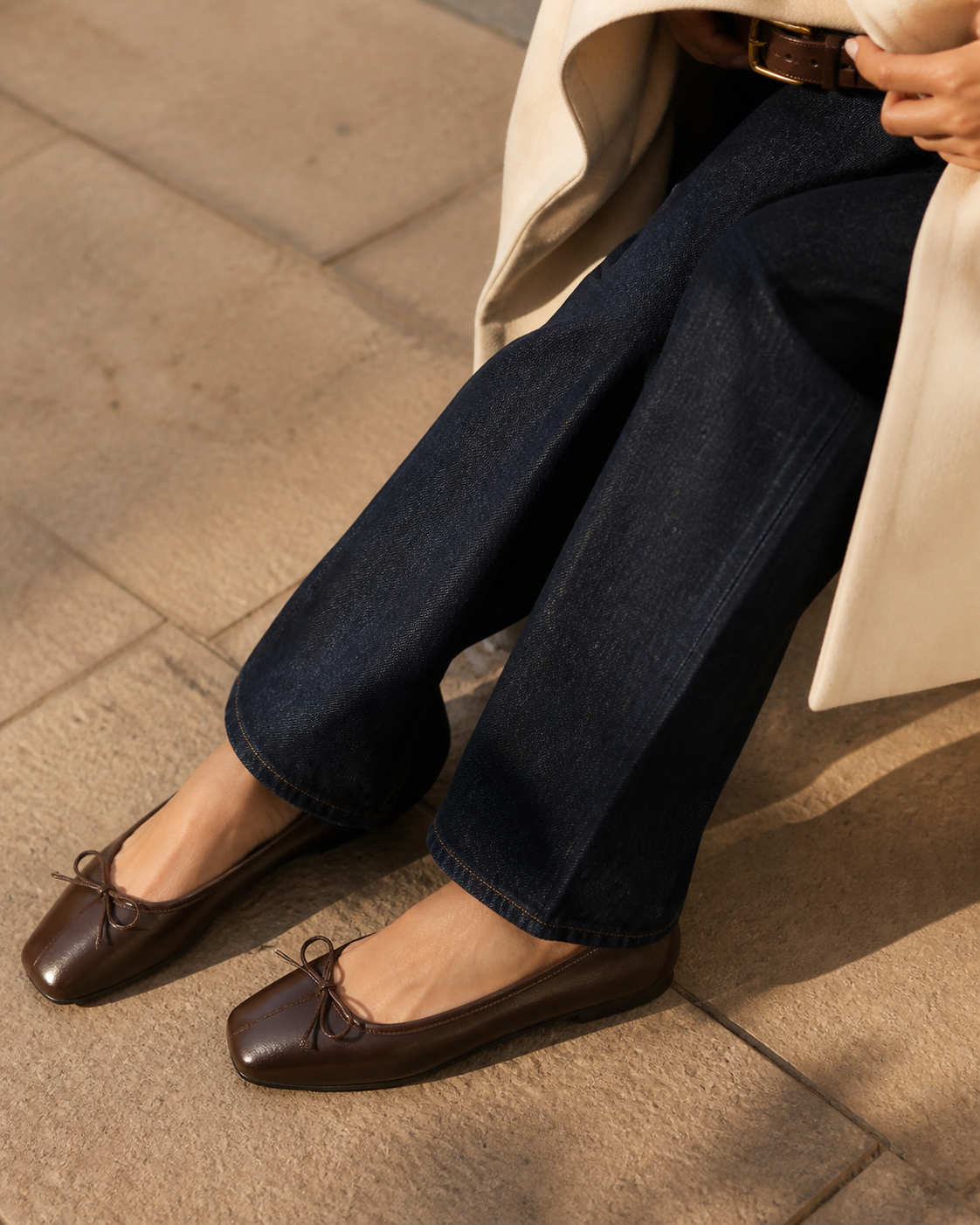
Dark straight-leg denim is one of the easiest partners for ballet flats because it keeps the outfit grounded. Lila likes a hem that skims the top of the shoe without swallowing it, a high rise that steadies the waist, and a belt that pulls the leather tone upward. That combination makes the flat feel intentional instead of like an emergency substitute for a heel.
A cream tailored blazer and black ribbed tank are what keep the equation modern. The blazer adds shoulder and authority, the tank keeps the middle of the body clean, and the flat softens the finish without draining the look of energy. Women in their twenties and thirties often want exactly that balance when they shop for a shoe that can move between coffee, work, and dinner.
Buy denim first if your closet is missing a reliable everyday formula. Then add the ballet flat that works with the jeans you already own. Lila does not shop shoes in fantasy isolation. She checks whether the hem hits correctly from the front, side, and seated angle because that is where many attractive product pages stop being useful in real life.
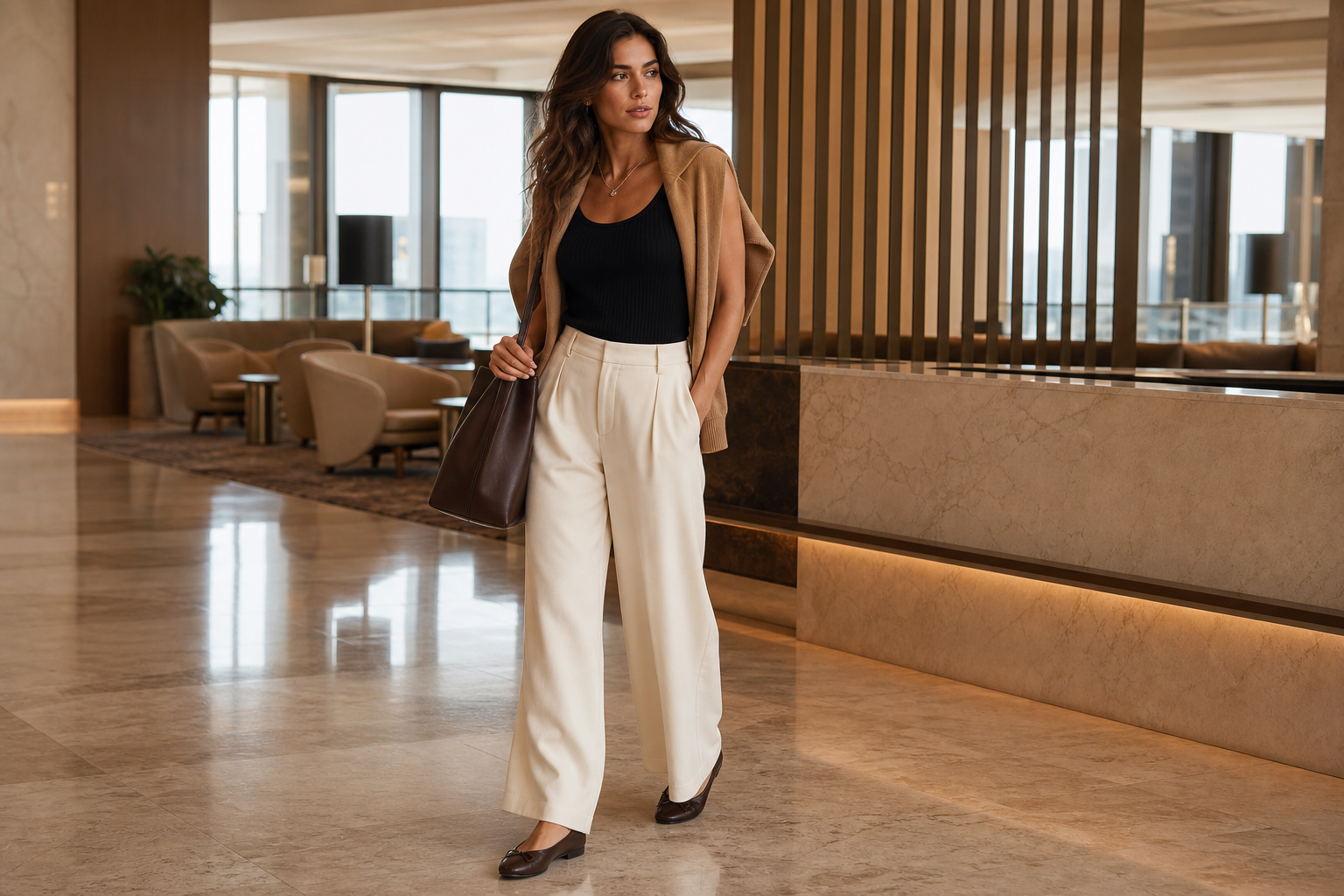
Bring ballet flats into wide-leg trousers for flights, lobbies, and long corridors
A good ballet flat can be a stronger travel buy than a sneaker when the destination wardrobe leans polished. With cream or stone wide-leg trousers, the shoe keeps the line light and quiet while still letting the foot bend naturally through security, hotel check-in, and long hallways. Lila shops this formula when she wants to look editorial on arrival without carrying an outfit change.
The key is trouser length. The hem should almost kiss the floor, but it cannot drag or cover the entire shoe. If the flat disappears completely, the leg looks heavy and the posture dulls. Lila prefers trousers that show a flash of leather when she steps, because that small reveal keeps the outfit alive on camera and prevents the flat from becoming visually anonymous.
This is also where bag choice matters. A Structured Leather Tote gives the softness of the flat some counterweight and keeps the whole silhouette believable for travel. Add a cashmere knit over the shoulders or a slim tank beneath the jacket, and the products start working like a real closet instead of a one-purpose airport costume.
Pair silk and close accessories with flats when the day may turn into dinner
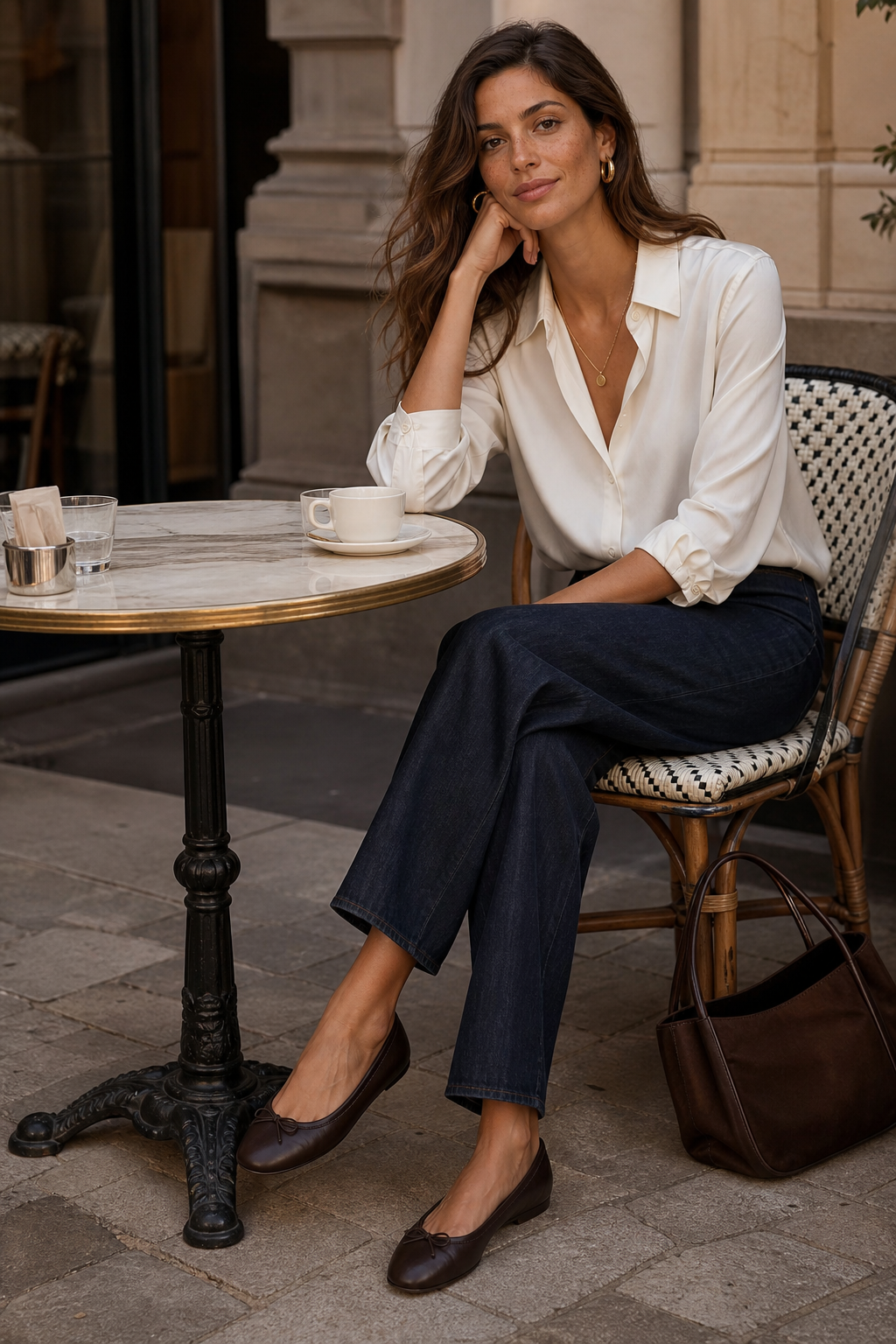
Ballet flats can still look sensual after dark if the clothes around them do not become timid. Lila likes them with an ivory silk button-down, dark denim, medium gold hoops, and a close brown bag when a workday may stretch into a drink, dinner, or a quiet terrace table. The silk adds movement, the flat keeps the stride natural, and the leather accessories hold the mood steady.
That is why she shops flats with smooth finish and minimal trim. A tiny tie can work, but only if it stays refined. Heavy contrast stitching, elastic shine, or a padded nursery bow will cheapen the whole outfit under warm restaurant light. A clean flat does the opposite. It lets the shirt open softly at the collar and keeps the body looking relaxed rather than over-arranged.
From a model's perspective, the best dinner flat is the one that still looks composed once the chair arrives. Seated angles tell the truth. If the shoe gapes at the sides, pinches the toe line, or wrinkles into a hard crease, it will not hold the outfit through dessert. Lila checks that before she buys, because late plans expose weak construction quickly.
Shop leather, sole, and construction like you mean to keep the pair
The smartest ballet-flat purchase is rarely the cheapest one in the cart. Real value comes from leather that stays smooth, a binding that does not bite the skin, and a sole thin enough to stay elegant but not so thin that every paving stone announces itself through the foot. Lila would rather buy one stronger pair than three soft failures that collapse in a month.
Read product pages for outsole material, heel lift, lining, and customer photos after wear. A slight heel tab or discreet rubber insert can be excellent if it helps grip and durability without thickening the profile. What you do not want is a flat that looks beautiful on white background and exhausted by the second city walk. Shopping well means treating comfort as part of the visual brief.
Fit deserves the same scrutiny. The shoe should hold the heel without clawing the toes, and the opening should stay close without slicing into the instep. Lila shops by the end of the day when the foot is honest. If the pair still feels secure then, it has a real chance of surviving castings, market appointments, and a long dinner after both.

Build a small flat rotation instead of chasing a trend version every month
Most women do not need a dozen ballet flats. They need one city pair, maybe one softer travel pair, and a closet strong enough to support both. Lila starts with an espresso leather flat because it works with cream tailoring, dark denim, black dresses, camel knits, and warm-metal jewelry. That one decision covers far more outfits than a novelty shade ever will.
If your wardrobe is mostly black and charcoal, a black pair may still be the better first buy. If you wear camel, ivory, olive, chocolate, and indigo, warm brown usually earns more repeat wear. The point is not to collect ballerina references. It is to buy the pair that returns for real life, photographs calmly, and does not fight the rest of your closet.
That is the quiet-luxury test Lila Voss uses every time she shops. The flat should walk through a real day, flatter her warm olive skin and chestnut waves, and still look sharp beside tailoring or silk once evening begins. When a shoe can do that, it stops being a nostalgic accessory and becomes one of the most useful products in the wardrobe.